BS BRIEF:
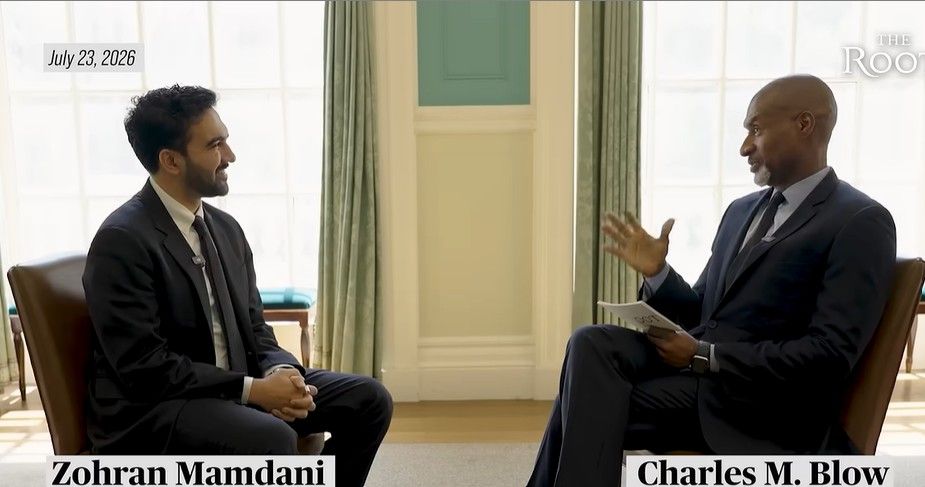
- New York City Mayor Zohran Mamdani says he is open to cash reparations for descendants of enslaved people, declining to rule out direct payments during a wide-ranging interview with columnist Charles Blow.
- Mamdani said any discussion should be guided by New York City’s existing Commission on Racial Equity, which is already studying reparations, truth, healing and reconciliation under a law enacted before he became mayor.
- With New York already wrestling with affordability, housing costs and budget pressures, the prospect of taxpayer-funded reparations is likely to ignite another fierce political fight over who pays, who qualifies and whether city government should take on another multibillion-dollar obligation.
MAMDANI LEAVES THE DOOR OPEN TO CASH REPARATIONS—AND NEW YORKERS COULD END UP HOLDING THE BILL
If New Yorkers were hoping Mayor Zohran Mamdani had finally run out of expensive ideas, they may want to keep one hand on their wallets.
The self-described democratic socialist says he is open to cash reparations for descendants of enslaved people, adding another controversial proposal to an administration already pushing an ambitious progressive agenda.
During a recent interview with columnist Charles Blow for The Root, Mamdani was asked directly whether he would support direct financial reparations.
Rather than rejecting the idea, Mamdani indicated he was willing to consider it, saying he believes the city should continue exploring the issue through its existing reparations process.
The interview touched on race, socialism, Mamdani’s background, his relationship with President Donald Trump and the declining Black population in New York City.
New York City already created a Commission on Racial Equity (CORE), which has been tasked with conducting a multi-year study examining reparations, historical injustice and possible recommendations.
Under the city law establishing the commission, officials are specifically directed to examine options including financial compensation, in-kind restitution, public apologies and other forms of reparative justice. A final implementation plan is scheduled in the coming years.
That means Mamdani would not be creating the conversation from scratch.
But by refusing to rule out cash payments, he has signaled he could embrace one of the commission’s most controversial potential recommendations.
Even supporters of reparations acknowledge that enormous practical questions remain unanswered.
Who qualifies?
Would eligibility be limited to descendants of enslaved Americans?
Would recent immigrants qualify?
Would payments be made directly to individuals?
Would benefits come as housing assistance, education grants, business funding or cash?
Would New York City taxpayers shoulder the burden alone?
Those questions have divided reparations advocates across the country, including during hearings held by New York State’s own reparations commission, where descendants of enslaved Americans disagreed sharply over eligibility standards.
Other jurisdictions have experimented with limited reparations-style programs.
Evanston, Illinois, became the first American city to implement one, offering housing-related grants funded through cannabis tax revenue. That program is now facing legal challenges, with the Trump administration joining litigation seeking to block it as unconstitutional.
For critics, Mamdani’s comments fit an increasingly familiar pattern.
Since taking office, the mayor has championed expanded government spending, city-run programs and greater public involvement in housing and economic policy.
Opponents argue New York should first focus on crime, public safety, affordability, homelessness and keeping middle-class families from leaving the city before considering reparations programs that could carry enormous financial costs.
DBS WIRE SOURCES:
- Charles Blow previews his interview with Mayor Zohran Mamdani
- New York City reparations commission funding and timeline
- Federal government seeks to halt Evanston reparations program
- New York reparations hearing exposes divisions over eligibility
- The Guardian: Explainer on slavery reparations and historical context