

BS BRIEF:
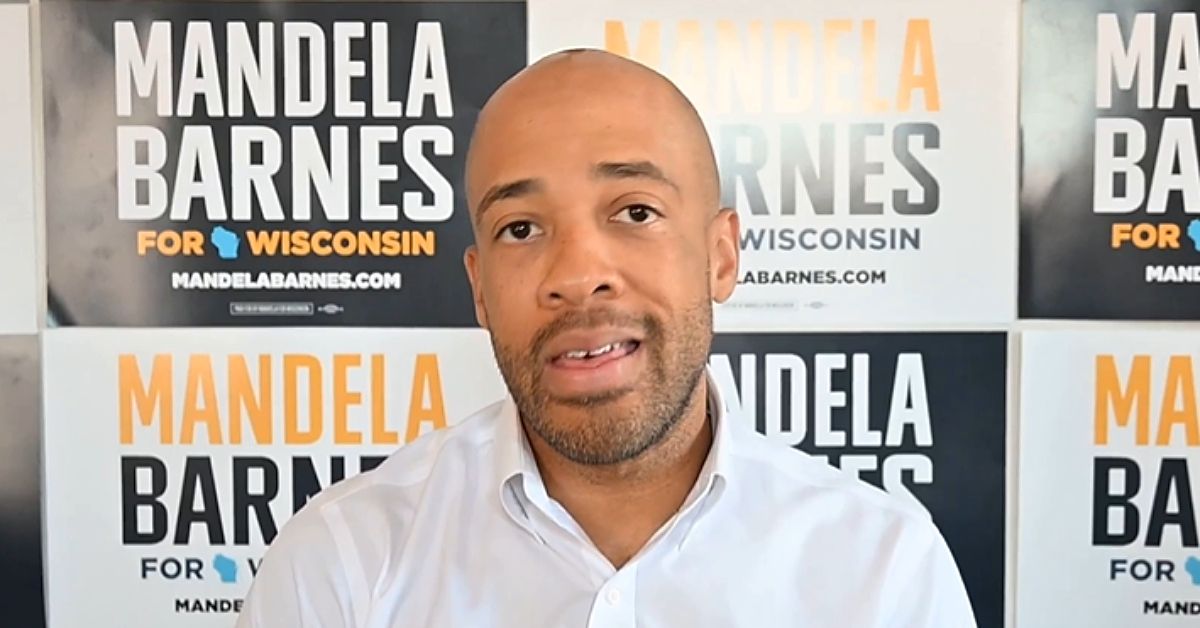
- Former Wisconsin Lt. Gov. Mandela Barnes abruptly ended his campaign for governor less than two weeks before the August 11 Democratic primary, conceding that it had become “very clear” who the party’s nominee would be.
- His departure came as the Milwaukee Journal Sentinel prepared a report about anonymous allegations of inappropriate personal conduct that had been reviewed by Democratic Party officials. Barnes’s representatives said there were no allegations of misconduct or wrongdoing against him, and an outside legal review reportedly found nothing actionable.
- Barnes’s exit leaves democratic socialist Francesca Hong in a commanding position and deepens Democratic fears that Wisconsin’s most important statewide contest may be slipping toward the party’s far-left flank.
BARNES ABRUPTLY DROPS OUT AS ALLEGATIONS SURFACE AND SOCIALIST SURGES
Mandela Barnes began Thursday as one of the best-known Democrats seeking to become Wisconsin’s next governor.
By lunchtime, his campaign was over.
The former lieutenant governor abruptly suspended his bid less than two weeks before the August 11 primary, acknowledging in a video that the race had moved decisively away from him.
“It’s become very clear who our nominee is going to be,” Barnes said.
He did not name the candidate. He did not have to.
Thank you, Wisconsin. pic.twitter.com/FKDjCaPdJZ
— Mandela Barnes (@TheOtherMandela) July 30, 2026
State Rep. Francesca Hong, a democratic socialist backed by some of the national Left’s most recognizable figures, had surged to a dominant lead in the latest Marquette Law School Poll.
Hong drew support from 38% of likely Democratic primary voters, while Barnes stood at 16%. Milwaukee County Executive David Crowley, who only recently reentered the contest, registered 7%. Roughly one-third of voters remained undecided.
Barnes tried to frame his exit as an act of party unity. “While I may be suspending my campaign, I’ll never give up my fight for Wisconsin,” he said. “Now, I said from the very beginning when I launched this campaign that the No. 1 goal was taking on and defeating Tom Tiffany to deliver big wins for Democrats up and down the ticket.”
Barnes was referring to Republican Rep. Tom Tiffany, the Trump-backed frontrunner expected to represent the GOP in November. “Now it’s our time to come together and focus our efforts on that one goal,” Barnes continued. “We have to do everything to beat Tom Tiffany.”
He described the election in stark terms. “This is life or death for Wisconsinites who are losing their healthcare under a Trump administration.”
That was the public explanation: the numbers were bad, Hong was consolidating the Democratic vote, and Barnes no longer saw a realistic path to victory.
But the timing immediately raised another question. Barnes withdrew the same day the Milwaukee Journal Sentinel reported that it had questioned him about anonymous allegations of inappropriate behavior submitted to state and local Democratic officials.
According to subsequent reporting, the allegations involved behavior dating to 2024 and 2025. Party officials reviewed the claims, and an outside lawyer reportedly concluded that the available information did not provide a basis for further action.
Barnes has not been publicly accused by a named woman of criminal conduct. No lawsuit or criminal charge has been announced. His spokesperson flatly rejected suggestions that he had committed wrongdoing. “There are no allegations of misconduct or wrongdoing against Mandela,” the spokesperson told Politico, according to Fox News.
Anonymous claims are not proof. A political campaign’s abrupt collapse does not convert unverified accusations into fact. Barnes is entitled to the same presumption of fairness that should apply to anyone caught in the blast radius of political reporting. Still, the collision of events was impossible to ignore.
The questions reached Barnes. The Journal Sentinel prepared its report. Barnes posted his withdrawal video. And a once-prominent candidate suddenly decided the primary’s outcome had become inevitable. His campaign did not directly answer whether the reporting influenced that decision.
Barnes served as lieutenant governor under Democratic Gov. Tony Evers from 2019 through 2023. He later came within roughly one percentage point of defeating Republican Sen. Ron Johnson in the 2022 Senate election, giving him statewide recognition, an existing donor network and a national Democratic profile.
Sen. Adam Schiff of California endorsed Barnes in December, calling him “exactly the kind of bold leader we need to take on the Trump administration.”
Senator Adam Schiff (D-CA) endorses Mandela Barnes for Governor of Wisconsin pic.twitter.com/Clc4qHPnUq
— Politics & Poll Tracker 📡 (@PollTracker2024) December 13, 2025
Environmental groups, labor organizations and liberal political committees also rallied behind him. The United Auto Workers’ Wisconsin political arm endorsed Barnes just days before he withdrew. Yet Barnes never converted that national support into control of the primary.
Hong did.
The Madison lawmaker and restaurant worker has energized younger and highly progressive voters with an unapologetically left-wing economic platform.
She supports universal child care, government-funded health coverage, expanded public services and aggressive action on housing and labor costs. She has been affiliated with the Democratic Socialists of America, though she has tried to distance herself from portions of the national organization’s platform as the general election draws closer.
Hong previously supported calls to defund or abolish traditional policing structures, positions now being scrutinized by Republicans and nervous establishment Democrats.
Francesca Hong was just on Fox News getting grilled about her onetime support for defunding the police and current support for other DSA-endorsed positions. Here’s the full interview. pic.twitter.com/X0R6lVJwFs
— Aaron Rupar (@atrupar) July 31, 2026
Asked recently whether she still wanted to “abolish police,” Hong avoided a direct yes-or-no answer and instead emphasized investments in public safety, mental-health services and violence prevention.
She also faced criticism after appearing on the livestream of socialist commentator Hasan Piker, whose inflammatory statements have repeatedly drawn controversy. Hong later distanced herself from some of Piker’s views.
None of that appears to have slowed her momentum among liberal primary voters. The latest Marquette poll found Hong with overwhelming backing among voters identifying as “very liberal.” She attracted 74% of that group, while Barnes received just 6%. Her overall support climbed from 26% earlier in July to 38% in the poll released Wednesday. Barnes barely moved, rising from 15% to 16%.
Barnes’s withdrawal leaves Hong and Crowley as the two most consequential candidates in the race, though Joel Brennan and state Sen. Kelda Roys remain on the ballot.
Crowley’s presence is itself the result of Democratic panic. The Milwaukee County executive initially dropped out of the race, then reversed course after another establishment candidate, Lt. Gov. Sara Rodriguez, ended her campaign amid revelations that her campaign finances were in far worse shape than she had been told. Rodriguez acknowledged that donations had been double-counted, expenses had been underreported and promised advertising had not aired because bills went unpaid. She fired her campaign manager before ultimately leaving the race. Gov. Evers then endorsed Crowley, citing his executive experience and ability to compete statewide. Crowley reentered the primary on July 18, giving him barely three weeks to rebuild a campaign and stop Hong’s rise.
The Wisconsin Democratic primary has now become a political revolving door.
Crowley dropped out.
Rodriguez’s campaign imploded.
Crowley came back.
Barnes dropped out.
Meanwhile, tens of thousands of voters had already returned absentee ballots.
More than 128,000 absentee ballots had been submitted by the time Barnes withdrew, according to the Associated Press. A judge recently rejected an effort that would have allowed voters who selected withdrawn candidates to retrieve or replace their ballots.
That means some Democratic voters have cast ballots for candidates who are no longer campaigning and cannot take those votes back.
Crowley immediately began courting Barnes’s supporters. He now presents himself as the experienced, pragmatic alternative to Hong, emphasizing his leadership of Wisconsin’s largest county and his endorsement from Evers. mHong, meanwhile, is running as the anti-establishment candidate in a primary where the establishment appears unable to keep a campaign operating for more than several consecutive news cycles.
Republicans are delighted.
Tiffany characterized the coming election as a choice between a “socialist agenda” and “common sense.” That message will become even more central should Hong win the nomination.
Wisconsin remains one of America’s most fiercely contested states. Evers won statewide as a Democrat, while Donald Trump and Republicans have remained highly competitive. Barnes’s 2022 Senate loss demonstrated how narrow the margins can be.
Earlier Marquette polling suggested Barnes might have been the strongest Democrat against Tiffany. In a July survey, Barnes led Tiffany 44% to 40%, while several other Democrats trailed or ran roughly even. That poll did not include Crowley after his reentry and preceded Hong’s latest surge.
Barnes’s exit therefore removes one of the few Democrats who had previously demonstrated statewide appeal, even if that appeal had not been enough to win his Senate race.
It also leaves the party facing an uncomfortable possibility. The candidate with the strongest energy in the primary may also provide Republicans with the clearest ideological target in November.
DBS WIRE SOURCES:
- Fox News — Schiff-backed candidate abruptly ends gubernatorial campaign amid rumblings of a damaging report
- Associated Press — Mandela Barnes drops out of the Democratic primary for Wisconsin governor
- Wisconsin Public Radio — Hong expands lead as Barnes sits second and Crowley third in new Marquette poll
- Marquette Law School Poll — Barnes sits second and Crowley third as Hong expands support
- The Guardian — Mandela Barnes drops out of high-stakes Wisconsin governor’s race
- Wisconsin Watch — Where the Democratic candidates for Wisconsin governor stand
- Wisconsin Public Radio — David Crowley returns to governor’s race with Tony Evers endorsement
- Wisconsin Examiner — Crowley reenters governor’s race with Evers endorsement
- Associated Press — Wisconsin governor candidate says her campaign has far less money than she thought
- Wisconsin Public Radio — Wisconsin Democrats casting early ballots divided over whether a democratic socialist can win








Maybe the Schiff endorsement was the “Kiss of Death”.