Video below
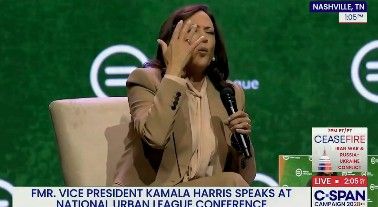
Former Vice President Kamala Harris insists she hasn’t decided whether she’ll make another run for the White House. But judging by the agenda she unveiled Friday, she’s already giving Democrats a preview of what a 2028 campaign could look like.
Speaking before the National Urban League conference, Harris embraced several proposals long championed by the progressive wing of the Democratic Party, including expanding the U.S. Supreme Court, reconsidering the Electoral College, and making Washington, D.C., the nation’s 51st state. She also voiced support for statehood for Puerto Rico and called for greater congressional oversight of federal judicial nominees.
“I know this is going to be controversial,” Harris said as she introduced some of the proposals, acknowledging that they would spark fierce political debate. While declining to formally launch a presidential campaign, Harris left little doubt that she remains interested in returning to national politics. “I have not made a decision yet,” she said when asked directly about another White House bid, adding that her immediate focus remains on helping Democrats in the upcoming midterm elections.
The appearance came amid months of speculation that Harris is positioning herself for another presidential run after her unsuccessful 2024 campaign. Earlier this year, she similarly acknowledged she was “thinking about” another campaign while speaking at the National Action Network convention.
Among Harris’ highest-profile proposals was expanding the Supreme Court from nine justices to thirteen—a move supporters argue would better reflect the nation’s size but critics describe as an attempt to reshape the judiciary for partisan advantage.
She also renewed calls to examine the Electoral College, saying the country should reconsider whether it remains the best method for electing presidents. Harris endorsed statehood for Washington, D.C., which would give the district full voting representation in Congress, along with support for Puerto Rico becoming a state if its residents choose that path.
Those positions closely mirror priorities that progressive activists and several Democratic lawmakers have promoted for years but that have repeatedly stalled in Congress.
During the same appearance, Harris also discussed voting rights, saying Democrats must continue fighting what she described as efforts to weaken minority voting power through court decisions and election laws.
Her remarks quickly generated reaction across the political spectrum.
Conservatives argued the proposals would permanently tilt the nation’s governing institutions toward Democrats by adding reliably Democratic Senate seats through D.C. statehood, altering the makeup of the Supreme Court, and reducing the influence of smaller states through Electoral College reform.
Supporters countered that the proposals are intended to modernize institutions they believe no longer adequately represent today’s electorate.
The speech also produced another notable political moment.
When asked later to name America’s most effective presidents, Harris praised Franklin Roosevelt, John F. Kennedy, Lyndon Johnson and Barack Obama—but noticeably omitted former President Joe Biden, under whom she served as vice president. The omission immediately fueled renewed questions about lingering tensions following the Democrats’ 2024 defeat.
Whether Harris ultimately enters the race or not, Friday’s speech offered perhaps the clearest picture yet of where she believes the Democratic Party should head next.
Kamala Harris says she does not believe the Voting Rights Act will be revived anytime soon: “Registering folks to vote and having an agenda that is about turning out the vote in the greatest numbers we have ever seen… we will be too big to rig.” pic.twitter.com/6mpx2IsGUL
— CSPAN (@cspan) July 31, 2026