Editorial Note: This story has been corrected after updated reporting identified CNN Chief Congressional Correspondent Manu Raju—not Chad Pergram—as the reporter in the exchange. We regret the error.
Chuck Schumer wanted Tuesday’s Capitol press conference to send one clear message: Democrats are united after a bruising Michigan Senate primary.
Instead, the internet ended up talking about one sentence.
Then came the verbal speed bump.
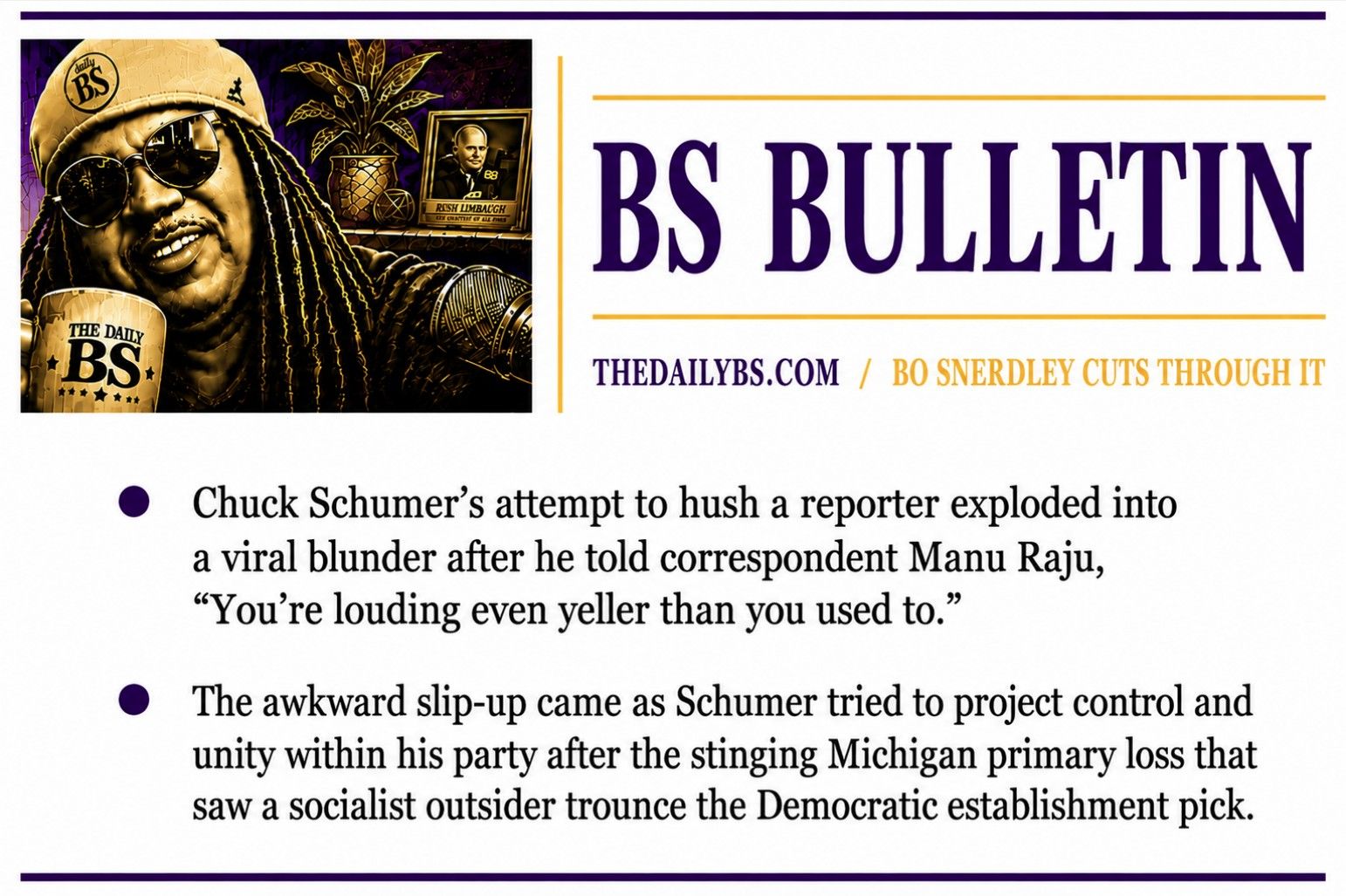
“You’re louding even yeller than you used to.“
Raju laughed off the exchange and asked, “Will you call on me too?”
“I call on you. I do. You get your chances,” Schumer replied.
“Quiet. You can’t yell that loud. You’re louding even yeller than you used to.”
— @SenSchumer to @mkraju pic.twitter.com/PS4jhMcAjW
— Howard Mortman (@HowardMortman) August 4, 2026
The clip quickly made the rounds on social media—not because of the substance, but because it perfectly capped an uncomfortable day for the Senate Democratic leader.
Just moments earlier, Schumer had been peppered with questions about Michigan’s Democratic Senate primary, where progressive candidate Abdul El-Sayed defeated Schumer-backed Rep. Haley Stevens in one of the year’s most closely watched races.
Asked whether he was comfortable with the outcome, Schumer answered without hesitation.
“We are going to win Michigan, take back the Senate, and have the majority.”
When reporters pressed him about the growing influence of the Democratic Socialists of America, Schumer attempted to calm concerns.
“We are a big tent party,” he said. “Being a big tent party is a strength, not a weakness.”
Whether everyone inside that tent agrees is another story.
El-Sayed’s victory has become a rallying point for the Democratic Party’s progressive wing, which has spent months arguing that Schumer and the party establishment have lost touch with the grassroots. During the campaign, El-Sayed repeatedly criticized Washington leadership and promised to challenge the status quo if elected.
The Michigan race was viewed nationally as more than a Senate primary. It became a referendum on the future of the Democratic Party.
Schumer had publicly backed Stevens, while progressive leaders including Bernie Sanders and other left-wing Democrats lined up behind El-Sayed, turning the contest into a proxy war over who should define the party heading into 2028.
Despite the setback, Schumer insisted Tuesday that Democrats remain unified enough to reclaim the Senate majority this November.
His critics inside the party aren’t so sure.
For months, progressive activists have argued that Democratic leadership has become too cautious, too tied to big donors and too resistant to the populist energy that helped propel candidates like El-Sayed.
Now, with Michigan in the rearview mirror, that debate is only intensifying.
And thanks to one unfortunate phrase, Schumer’s attempt to change the subject may be remembered less for what he said about Democratic unity—and more for his unexpected contribution to the English language.
MY QUICK TAKE:
Poor Chuck Schumer.
The man is trying to hold together a Democratic Party that’s starting to resemble one of those old circus tents after the elephants have decided to exit through different flaps.
One side wants socialism with better branding. The other side wants to pretend everything is fine. Chuck’s standing in the middle with a roll of duct tape yelling, “Big tent! Big tent!”
Then out comes: “You’re louding even yeller…”
I almost felt bad.
Almost.
The real Freudian slip wasn’t the grammar—it was the timing. When your own party is staging an ideological food fight, maybe the loudest thing in the room isn’t the Fox reporter.
Maybe it’s the sound of the tent poles creaking.
DBS WIRE SOURCES:
- Mediaite: Schumer Gets Tongue Twisted as He Scolds Fox News Reporter: ‘Louding Even Yeller Than You Used To’
- Associated Press: Van Hollen backed El-Sayed in break from Democratic leadership ahead of Michigan primary
- CBS News: Michigan Democratic Senate race highlighted growing divide within the party
- CNN: CNN coverage of El-Sayed’s challenge to Chuck Schumer and Democratic leadership