DAILY BS BULLETIN:
- Michigan’s liberal arts college plans to replace first-semester letter grades with pass/no-credit marks on external transcripts.
- Contrary to initial reporting, the university currently says the pilot begins in fall 2027—not 2026.
- Students, instructors and advisers will still see the grades, but they won’t affect GPAs.
The University of Michigan plans to conceal first-semester letter grades for incoming students in its largest college, arguing the experiment could ease a mental-health crisis and allow freshmen to adjust without damaging their GPAs.
But there is an important correction to the initial headlines: The university’s official page currently says the pilot begins in fall 2027—not this fall, as the New York Post reported Saturday.
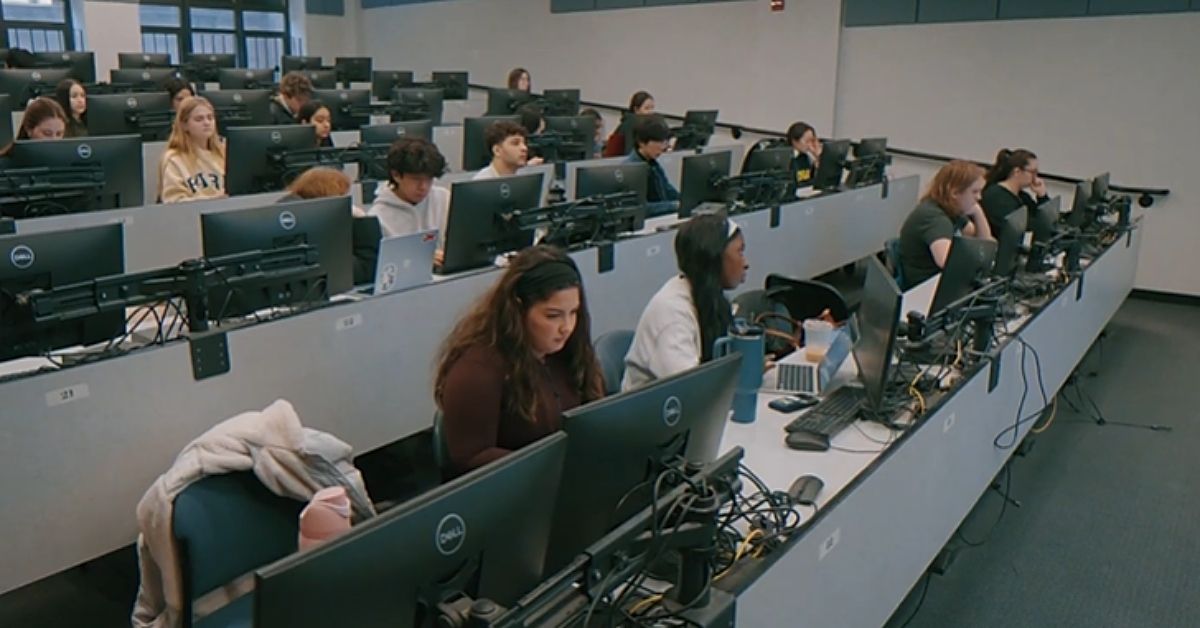
The policy will apply only to first-year students in the College of Literature, Science, and the Arts, which enrolls nearly 20,000 students. It does not cover the entire university.
🚨 UNIVERSITY OF MICHIGAN JUST WENT FULL PARTICIPATION TROPHY
Incoming students will no longer get real grades.
Just “Pass” or “No Credit.”
All in the name of “mental health.”
No more A’s. No more F’s. No distinction between the kid who worked his ass off and the one who… pic.twitter.com/da3hYxBzZI
— Gunther Eagleman™ (@GuntherEagleman) August 7, 2026
Students will still receive traditional grades and feedback from their instructors. Michigan will retain those grades internally for advising, scholarships, awards, internships and transfers into programs outside LSA. Externally, however, transcripts will show only “pass” or “no credit,” and first-semester performance will not be included in the GPA.
The college explained:
We believe that covering grades will help students start strong and curb the mental health crisis unfolding among college-aged individuals.
Administrators say the arrangement will encourage students to explore unfamiliar subjects without fearing that one rough semester could permanently damage their academic records.
Our goal is to help first-year students acclimate to the demands of college and allow intrinsic motivations to guide personally meaningful academic journeys.
The announcement drew criticism from psychotherapist Jonathan Alpert, author of Therapy Nation, who argued that universities are increasingly treating ordinary discomfort as psychological danger.
We’ve gotten to the point where normal stress is being treated like a mental health problem. Getting a bad grade is disappointing. It can be embarrassing. It can make you anxious. But that doesn’t make it psychologically harmful.
Alpert added:
Your boss isn’t going to hide a bad performance review because it might make you anxious. Life doesn’t come with grade covering.
Michigan did not invent the concept. MIT uses a pass/no-record system during the first semester, while Wellesley made its “shadow grading” policy permanent in 2020. Swarthmore has used a similar approach for decades.
Oh wow 😬
University of Michigan will HIDE first-semester grades on transcripts for students in the College of Literature, Science, and the Arts
It’s to “curb the mental health crisis”
AND
The policy is mandatory for all students bc “covering an individual’s grades will… pic.twitter.com/YJylVbIjYf
— Neetu Arnold (@neetu_arnold) August 6, 2026
Those precedents complicate the easy “college snowflakes” narrative. MIT is not generally known for producing graduates unable to handle a spreadsheet. Advocates argue that covered grades can encourage intellectual risk-taking without eliminating standards because students still complete the work, receive evaluations and can fail.
There are also legitimate drawbacks. Johns Hopkins abandoned a similar policy after administrators concluded that it delayed the development of study habits and could disadvantage high-performing students whose strong grades disappeared from their transcripts.
That leaves the central question Michigan says its pilot will test: Does withholding grades from external records help freshmen grow—or merely postpone the moment when consequences become visible?
MY QUICK TAKE:
The grades are not being abolished. They are being placed in academic witness protection.
The professor sees them. The student sees them. The adviser sees them. Scholarship officials may see them. Everybody sees them except the GPA, which apparently must be shielded from traumatic information.
I understand giving freshmen room to adjust. College can be a cold shower after years of high-school gold stars. But calling ordinary academic pressure part of a “mental health crisis” is where the syllabus wanders into therapy-speak.
A bad grade is feedback, not an airborne pathogen. Sometimes that C-minus is the university gently informing you that perhaps theoretical physics is not your spiritual calling.
Try the experiment, measure the results and publish them—including the ones administrators may not like.
DBS WIRE SOURCES:
- University of Michigan — LSA First-Semester Grade Covering Pilot Program
- New York Post — University of Michigan will hide students’ grades
- MIT — Special grading rules for first-year students
- Wellesley College — Shadow grading policy