

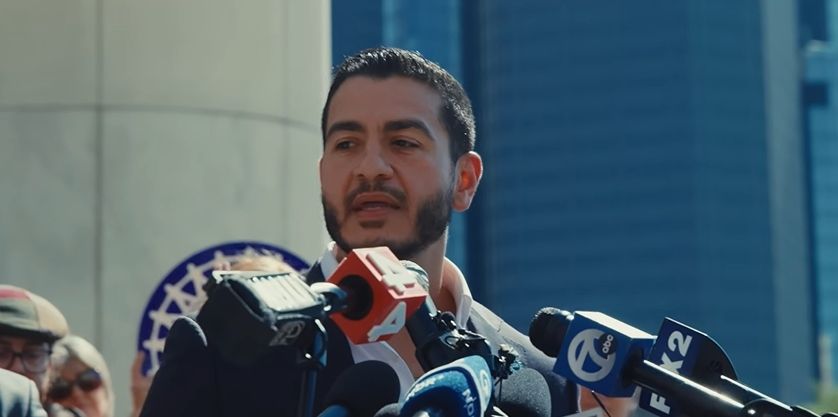
DETROIT — Michigan Democratic Senate nominee Abdul El-Sayed has a new problem on the campaign trail, and this one has four legs.
Old allegations of horrific conditions at Detroit Animal Control — an operation that came under El-Sayed’s Health Department while he was Detroit’s health director — have exploded back into the political conversation, complete with claims of animals dying in filthy cages and thousands of dogs and cats being euthanized.
Republican Senate nominee Mike Rogers quickly pounced. “This is sickening,” Rogers wrote on X. “Abdul El-Sayed wants Michiganders to trust him with their families. Meanwhile, Detroiters couldn’t even trust him with their pets.”
This is sickening.
Abdul El-Sayed wants Michiganders to trust him with their families.
Meanwhile, Detroiters couldn’t even trust him with their pets. https://t.co/a2TDddbfgy
— Mike Rogers (@MikeRogersForMI) August 13, 2026
Even a Biden-world veteran wanted this checked. The story gained traction after horrifying allegations about Detroit Animal Control began circulating online.
Michael LaRosa, former press secretary to Jill Biden, reacted: “I actually really really don’t want to believe this. Can someone verify?”
Yes.
The underlying allegations were real.
🚨 JUST IN: Michigan Senate candidate Abdul El-Sayed was just exposed for overseeing an animal “SLAUGHTERHOUSE” that killed over 4,000 dogs and cats under his watch — Daily Mail
Of COURSE.
He served as executive director and health officer of the Detroit Health Department and… pic.twitter.com/QMzOjiQ36F
— Eric Daugherty (@EricLDaugh) August 13, 2026
Former Detroit Animal Control officer Brittany Roberts filed a whistleblower lawsuit in October 2015 alleging animals were kept in filthy conditions, deprived of adequate food and medical care and sometimes became sick or died as a result.
Michigan Public reported at the time that Roberts alleged “specific incidents of animals dying from lack of food and medical care,” unsanitary conditions and deliberate cruelty. FOX 2 Detroit reported Roberts’ devastating description of the facility: “I was almost embarrassed with myself to be part of a team that played a role of the death of so many dogs in their cages.” She described walking through the facility each morning to “see who was alive before we could even feed.”
Roberts reportedly called the facility a “dog slaughterhouse.” Those are not campaign talking points invented in 2026. They came from a city employee in 2015.
A federal court record from a separate lawsuit also documented allegations that animals became sick, contracted diseases and sometimes died because of inadequate treatment and shelter conditions. The judge noted that Detroit offered “little of value” in response to some of the evidence at that stage beyond saying it was working to improve conditions.
This is where the political version of the story can become misleading.
Roberts filed her whistleblower lawsuit in October 2015, when Animal Control was still under the Detroit Police Department.
That same month, Detroit transferred the troubled operation to the Health Department headed by El-Sayed as part of an effort to overhaul it.
By December, the old animal-control director was out and Melissa Miller was brought in to run the agency. FOX 2 reported that the change followed weeks of protests sparked by Roberts’ allegations and disturbing photographs from the shelter.
El-Sayed himself later described what he inherited this way: “It was a mess at the time, and I needed somebody who I could trust, who could come in and do right by the animals and right by the people of the city of Detroit.”
That person, he said, was Miller. And here’s the number El-Sayed’s critics will have to contend with, the live-release rate went up dramatically.
In 2015, Detroit Animal Care and Control had a live-release rate of approximately 26 percent. By September 2016, it had climbed to 61 percent.
A month later, Miller put it at 62 percent — nearly triple the previous year’s rate.
By December 2016, CBS Detroit reported that staffing and the budget had doubled while the adoption rate had jumped from 28 percent to 63 percent. Mayor Mike Duggan said the previous number of animals being euthanized had been “unacceptable” and that the new rate was more in line with national standards.
According to figures reported by Fox News, records covering the broader period showed 4,680 dogs and cats were euthanized, including 1,056 dogs and 29 cats during 2016, the first full calendar year Animal Control operated under El-Sayed’s Health Department.
El-Sayed’s campaign argues those raw numbers are being stripped of context. The campaign says he inherited a profoundly dysfunctional operation, increased frontline pay, expanded staffing, brought in new leadership, improved shelter facilities and partnered with rescue and foster groups to get more animals out alive.
The Michigan Humane Society donated a new facility to Animal Control in 2016. The agency began working with outside rescue groups, and the larger facility reduced overcrowding.
By October 2016, DACC was hiring as many as 13 additional workers — almost doubling its existing staff. The shelter continued to face serious controversies while under the Health Department.
A federal judge in February 2016 temporarily restricted Detroit Animal Control’s ability to seize dogs from private property without a warrant, consent or exigent circumstances after owners challenged the city’s practices. Court records included accounts of dogs becoming seriously ill or dying after being taken to the shelter.
And later that year came an almost unbelievable case involving a dog named Coco. The Washington Post reported that Coco was euthanized because of what officials ultimately acknowledged was a computer error. Her owner arrived expecting to retrieve her dog, only to learn Coco had already been dead for six days.
Meanwhile, Detroit ultimately paid $63,000 to settle Roberts’ whistleblower lawsuit.
DBS WIRE SOURCES:
- Fox News — El-Sayed in the hot seat after ‘sickening’ animal control record goes viral on social media
- Michigan Public — Detroit settles whistleblower lawsuit with former animal control officer
- FOX 2 Detroit — Michigan Humane Society gives building to Detroit Animal Control following lawsuit
- FOX 2 Detroit — New leadership, building add up to new start for Detroit Animal Control
- WDET — Detroit Animal Control and Care shows signs of improvement
- Federal court record — Hardrick v. City of Detroit











Muslims do not like dogs..
cvdgfbfg