BS BULLETIN
- Trump’s DOJ has opened a Title VI review of William & Mary over scholarships and student programs that may use racial or ethnic preferences.
- DOJ flagged a fellowship preferring Hispanic women and law scholarships reserved for HBCU graduates.
- William & Mary must turn over information by Sept. 8.
The Trump Justice Department has opened another front in its campaign against race-based preferences in higher education — and this time one of America’s oldest and most prestigious public universities is under the microscope.
The Civil Rights Division announced Monday that it is investigating the College of William & Mary in Virginia to determine whether scholarships, fellowships and other student benefits violate Title VI of the Civil Rights Act by discriminating on the basis of race, color or national origin.
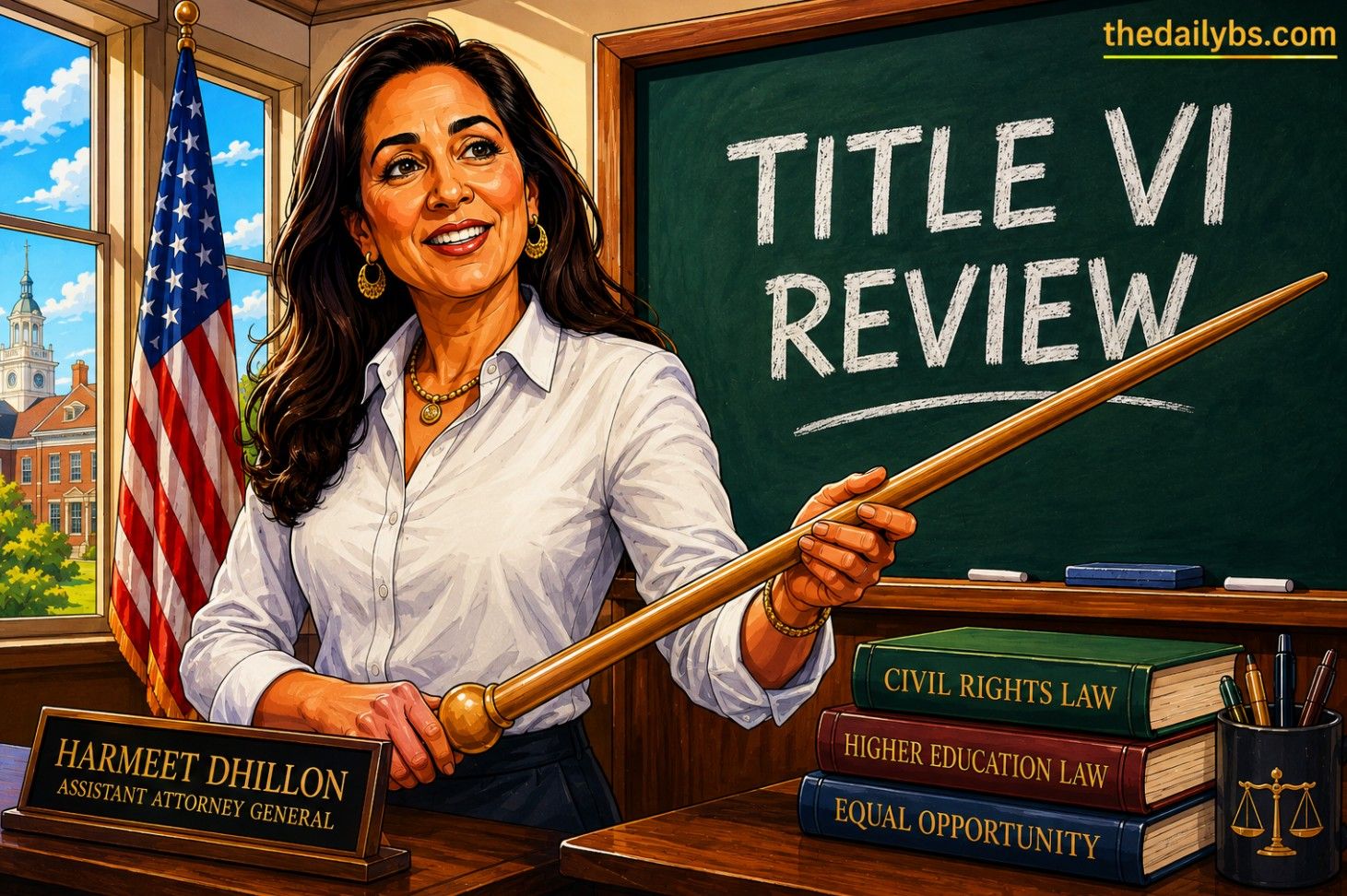
And Assistant Attorney General Harmeet Dhillon isn’t being coy about what the department is looking for. “Awarding scholarships or offering coveted opportunities to students based on the color of their skin is illegal and offends the guarantees of our color-blind Constitution,” Dhillon said.
“We will find out if scholarships or other student benefits at William & Mary favor applicants of certain races,” she continued. “The Department will not turn a blind eye to race-based preferences, however they are packaged or portrayed by universities.”
That’s a rather different message from Washington than universities became accustomed to hearing during the DEI boom years. At issue are several programs scattered across William & Mary’s undergraduate, graduate education and law-school offerings.
The university’s W&M Scholars program offers first-year students scholarships covering at least full in-state tuition and fees. The scholarship itself is not expressly limited by race, but DOJ highlighted university language giving “top consideration” to applicants demonstrating an “interest in diverse people and perspectives.” William & Mary lists that factor along with academic potential and first-generation or limited-income status.
The department also singled out the School of Education’s Martha L. Muguira Fellowship, a need-based graduate fellowship that DOJ says gives a “preference” to Hispanic or Latino women.
Then there is the Holmes Scholars program, which DOJ said provides mentorship, job opportunities, professional development and advocacy training to “future education leaders of color.” William & Mary’s current description uses the broader language “traditionally under-represented backgrounds.”
But perhaps the most eye-catching program is at William & Mary Law School. The Lemon Legal Scholars Program promises full scholarships covering tuition and fees to graduates of Historically Black Colleges and Universities who are admitted to the J.D. program.
And this one isn’t merely DOJ’s characterization. William & Mary’s own current website says the law school “will award at least five full scholarships” to HBCU graduates and says HBCU graduates are automatically considered. Recipients also receive networking, individual academic advising and special access to events with faculty, administrators and alumni.
Graduating from an HBCU is not itself a racial classification, and students of any race can attend HBCUs. DOJ’s allegation is that the collection of programs may involve unlawful racial criteria or preferences; the department has explicitly said it has not yet reached a conclusion. That is precisely what the compliance review is supposed to determine.
The Lemon program traces its origins to William & Mary’s attempt to confront its own history with slavery and segregation. The university says its Board of Visitors acknowledged in 2009 that William & Mary had owned and exploited enslaved labor and later failed to oppose Jim Crow segregation. The resulting Lemon Project was created as an effort at reconciliation.
The question now being asked by the federal government is whether correcting historical discrimination can legally include preferences in present-day educational benefits. DOJ also pointed to William & Mary Law School’s “Reaching Back Scholarship,” which it says gives preference to HBCU graduates or applicants “who contribute to the diversity” of the law school.
William & Mary responded that it is “committed to nondiscriminatory learning environments across our campus and complying with all state and federal laws.”
The university now has a deadline. DOJ has demanded documents and information by September 8, and the department says it initially hopes to obtain compliance through “informal voluntary means.” If that doesn’t happen and investigators ultimately find violations, proceedings could potentially threaten federal financial assistance.
And William & Mary is hardly being singled out in a vacuum. The Civil Rights Division opened an investigation in June into Arizona State University’s DEI-related practices involving admissions, recruitment, scholarships, tutoring and educational support. One day later, DOJ announced investigations of 15 additional medical schools over potential race discrimination in admissions.
The department had already issued broader guidance in July 2025 warning recipients of federal funds that antidiscrimination law applies regardless of whether programs carrying racial preferences are marketed under the label of “DEI” or described as serving some benign purpose.
That approach grows out of the enormous legal shift triggered by the Supreme Court’s 2023 decisions against Harvard and the University of North Carolina, which struck down their race-conscious admissions programs.
DBS WIRE SOURCES:
- Fox News — DOJ opens probe into prestigious college over alleged discrimination favoring minority students
- Justice Department — Justice Department investigates William & Mary’s scholarships & student benefits for unlawful race-based criteria
- Reuters — DOJ probes College of William & Mary alleging discrimination in favor of minorities
- William & Mary Law School — Lemon Legal Scholars Program
- 13News Now — DOJ opens civil rights review into William & Mary scholarships and student benefits
- Justice Department — DOJ launches Title VI investigation into DEI programs at Arizona State University
- Justice Department — DOJ expands admissions investigations to 15 additional medical schools