BS BULLETIN
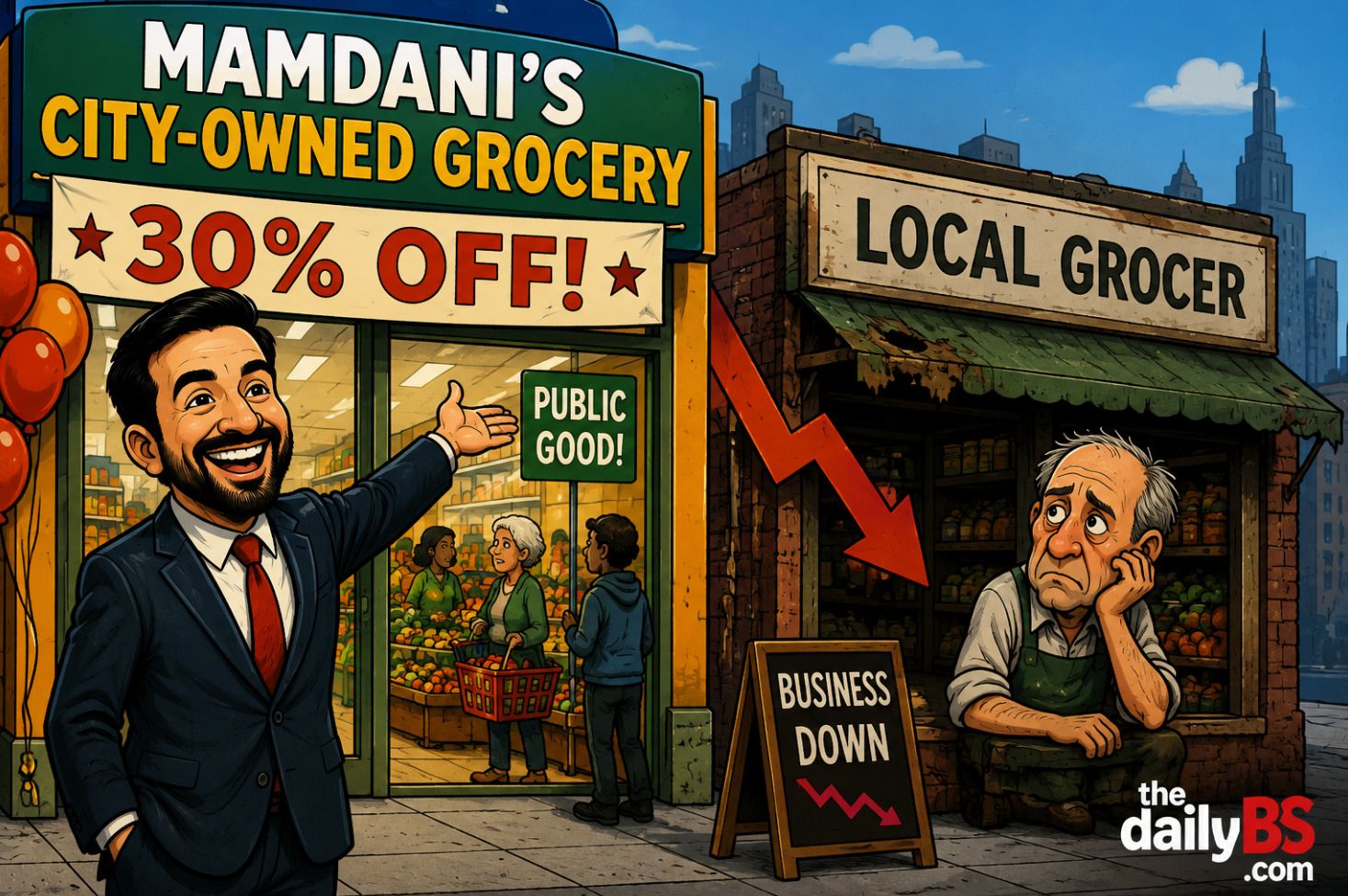
- NYC is already planning to spend about $70 million on five city-owned grocery stores, with taxpayers additionally subsidizing a promised 30% discount on meat, produce and other staples.
- An Economic Development Corporation official then suggested grants and incentives could help private grocers affected by the government-backed competition. After backlash, EDC said grants are not currently being considered.
- The city is still considering tax abatements, incentives and zoning relief for private grocers, while a coalition representing immigrant-owned businesses is preparing legal action against the municipal-store plan.
New York City may have discovered the perfect government solution to a problem created by government. Spend taxpayer money opening government-owned grocery stores.
Give those stores free real estate and tax advantages. Use more taxpayer money to make their groceries cheaper than the private stores down the block. Then, when the private stores complain that they cannot compete with City Hall… Consider giving them government assistance too.
Welcome to aisle five. The circular logic is on special.
The latest twist came from Waverly Neer, a senior vice president at the New York City Economic Development Corporation, which is helping build Mayor Zohran Mamdani’s signature municipal-grocery program. During an NY1 interview Wednesday, Neer was discussing ways the city could support neighborhood grocers operating alongside the five planned city-owned stores.
Asked specifically whether grants for private businesses were possible, Neer replied: “Something on the table.”
“We’re exploring a lot of different options and opportunities,” she added.
By Thursday, EDC was clarifying that “we are not currently considering any grant programs for existing grocers.”
But the agency did not close the door on government help altogether. An EDC spokesperson said officials are examining “tax abatement, incentives, and zoning benefits through existing City programs” intended to reduce cost pressures on small businesses.
Which means the grant idea may have disappeared for now, but the underlying problem remains: The city is constructing heavily subsidized competitors to existing grocery stores and simultaneously trying to figure out how to protect those private businesses from the consequences.
Mamdani’s plan calls for five city-owned stores, one in each borough, by the end of 2029. The city says a basket containing all fresh produce, meat and seafood plus roughly 20 categories of pantry and refrigerated staples will be priced 30% below average retail prices for every shopper, regardless of income.
How will the stores accomplish that? Not merely through brilliant grocery management.
Taxpayers. The city will supply rent-free locations, eliminate property-tax costs and subsidize construction. Private companies will actually operate the stores day-to-day.
And earlier this month, EDC officials acknowledged something important: even all of those advantages may not be sufficient to deliver the promised 30% discount.
Potential operators have been instructed to calculate how much additional direct taxpayer subsidy they would need. The city even has a name for it: “Affordability Payment.”
“The Affordability Payment is designed to make the core basket financially viable,” EDC official Jamie Horton told prospective operators.
Translation: If the supermarket cannot sell groceries 30% cheaper and remain financially viable, taxpayers make up the difference.
The five-store project already carries an estimated public investment of roughly $70 million. The East Harlem store alone is expected to cost about $30 million to build from scratch on city-owned land near La Marqueta. And private grocers have been warning for months that the model gives City Hall an advantage they cannot possibly match.
They pay rent. They pay property taxes. They have to cover their own losses. The city-owned competitor does not.
That has prompted a coalition representing immigrant-owned grocers and other small businesses to prepare a lawsuit against the city. The Multicultural Business Coalition, which says it represents dozens of business groups, argues that below-market prices backed by public money could seriously damage stores that have served neighborhoods for years.
New Yorkers are getting hammered by food prices. The Mamdani administration says grocery costs nationally have risen about 33% since 2019, and its projected 30% discount could save a participating household roughly $90 a month, or around $1,000 annually.
There are also other government-backed grocery experiments around the country, with mixed results. Some have succeeded in underserved neighborhoods; others have failed because of operating costs, theft and competition from existing retailers.
And Mamdani has tried to limit direct competition with bodegas by excluding products such as alcohol, cigarettes and prepared hot food from the municipal stores. But none of that eliminates the economic contradiction now staring City Hall in the face. If the city can offer groceries 30% cheaper partly because it doesn’t have to pay the expenses private businesses pay, then nearby grocers are not competing against another supermarket.
They are competing against the New York City treasury. And if government then has to subsidize those businesses so they can survive the government competitor…
We may have reached peak municipal economics.
DBS WIRE SOURCES:
- New York Post — NYC might subsidize local grocers losing business to Mamdani’s city-owned stores: ‘Utterly insane’
- NY1 — Grocers tour site of future city-run store in East Harlem
- NY1 — Tax money would make Mamdani’s food discounts ‘viable’
- Associated Press — Mamdani plans 30% discount on meat and produce at city-owned grocery stores
- NYCEDC — Mayor Mamdani unveils 30% discount at new municipal grocery stores
- New York Post — Immigrant-owned grocers prepare lawsuit over Mamdani’s NYC-owned supermarkets