Hey folks—I know not everyone gets a chance to catch Rush Hour live, so I’m going to start including a link to each episode right here in the blast. That way, if you missed the show or just want to hear it again, it’s only a click away – or check out my thoughts below.
VIEW HERE:
Look out for the Rush Hour link Tuesday – Saturday in your Daily BS email blast.
Every once in a while, somebody dies and the country seems to agree on something.
Tuesday, sadly, it was Dolly Parton.
Dolly died at 80, and within hours the tributes were everywhere. Country singers. Rock musicians. Actors. Conservatives. Liberals. People who couldn’t tell you the difference between a dobro and a dinner bell.
Everybody loved Dolly.
The Babylon Bee may have captured the feeling better than anybody with its joke that the apocalypse must be near because the last universally beloved human being had died.
Funny.
And unfortunately, it felt a little true.
What struck me wasn’t simply Dolly Parton’s enormous talent. She wrote thousands of songs. She gave us “Jolene,” “Coat of Many Colors” and, of course, “I Will Always Love You.” She built businesses. She became an actress. She built Dollywood. She came from extraordinary poverty and became extraordinarily wealthy.
But she did something increasingly rare for an American celebrity.
She didn’t spend her life demanding that half the country hate the other half.
Was Dolly Parton a liberal? I don’t know.
Was she conservative? I don’t know.
And somehow we all survived without knowing. Imagine that.
She cared about literacy. She gave away books to children. She gave enormous amounts of money to causes she believed in. She was proud of where she came from without spending her life lecturing everybody else about where they came from.
She became rich without apologizing for it and generous without turning generosity into a political weapon.
Maybe that’s part of why America loved her.
Because on the very same day that we were remembering Dolly Parton, Washington was giving us another demonstration of just how impossible normal human interaction has become in politics.
Hakeem Jeffries met with Jared Kushner.
That’s it.
They had a meeting.
You would have thought somebody had discovered Hakeem sneaking out of Mar-a-Lago wearing a MAGA hat.
The meeting reportedly touched on housing, immigration and the cost of living. Kushner apparently suggested Jeffries also meet with White House Chief of Staff Susie Wiles.
And suddenly everybody needed smelling salts.
Jeffries released a video assuring the progressive faithful that nobody in the “Trump cartel” was getting a pass and promising that Democrats would hold people accountable.
Translation: Please don’t be angry with me. I only talked to him.
Then James Carville arrived.
Carville was not burdened by diplomatic language.
His basic position was that Democrats consider these people crooks and traitors, so why are you meeting with them? He argued that if Democrats want something from Kushner, drag him before Congress, put him under oath and start asking questions.
There, in about 90 seconds, was one of the biggest problems with modern American politics.
We’re reaching the point where simply sitting across a table from somebody on the other side has to be explained as though you’ve committed adultery.
Jeffries didn’t endorse Donald Trump. Kushner didn’t become a Democrat. Two people talked. Perhaps they disagreed about practically everything.
Good. Talk anyway.
If the political class cannot even have conversations with one another without enraging its own activists, how exactly is a country of more than 300 million people with wildly different beliefs supposed to function?
I don’t need Republicans and Democrats to hold hands and sing “Kumbaya.” I’d simply like them occasionally to be able to occupy the same room without somebody calling the authorities.
And while Washington was arguing about who is permitted to speak to whom, ICE quietly did something rather interesting.
Quietly is the operative word.
During a two-week operation in Maryland and Virginia, ICE arrested more than 1,300 people who federal authorities say were in the country illegally. DHS says nearly 400 of those arrested had criminal convictions or pending charges, including cases involving murder, attempted murder, rape and kidnapping.
And they did it without turning the operation into a television production. No big advance announcement. No opportunity for every professional protester within a 50-mile radius to arrive with a bullhorn. They went out and did the job.
There is a lesson there.
For years, immigration enforcement has increasingly been treated like political theater. ICE conducts an operation, activists surround vehicles, politicians arrive, cameras arrive, everybody starts screaming at everybody else and the actual question — should somebody who is illegally in this country and accused or convicted of serious crimes remain here? — gets buried beneath the spectacle.
This operation apparently took another approach.
Go find them. Arrest them. Process the cases.
What a concept.
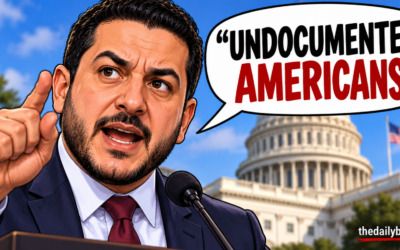
And it made an interesting counterpoint to the interview we played with Michigan Democrat Abdulrahman Mohamed El-Sayed. El-Sayed and Jesse Watters had one of those conversations where you occasionally wonder whether both people are participating in the same interview. They argued about transgender medical procedures involving minors. They argued about reparations. They argued about the broader progressive agenda.
But I thought El-Sayed made a point worth taking seriously when he talked about the long-term consequences of public policy for Black communities.
Fine. Let’s take that seriously. Let’s have that conversation. My question is: With whom?
El-Sayed talked about Detroit schools, segregation and government policies that created generational disadvantages. Those are legitimate subjects. But Detroit has been controlled politically by Democrats for generations. So has Philadelphia. So have many of the cities where Democrats point to persistent racial inequality and failing public institutions.
If bad public policy created these conditions, shouldn’t we occasionally ask who wrote the public policy? You cannot simultaneously argue that government policy caused enormous damage and then demand that we never examine the political party that has controlled that government. That’s not accountability. That’s branding.
The answer isn’t that Republicans have never made mistakes or that every problem in America’s cities can be laid at Democrats’ feet. Of course not.
But after decades of one-party control, “somebody else did this to us” becomes a less convincing explanation.
If a school district has been failing children for 40 years, I want to know who was running it. If crime policies aren’t working, I want to know who wrote them. If billions of dollars are being spent and people aren’t getting results, I want to know where the money went.
That’s not partisan hatred. That’s what voters should demand from everybody.
Which brings me back to Dolly.
Maybe that’s why her passing felt different. She lived through decades in which America became angrier, more polarized and increasingly determined to sort every human being into a political tribe. And somehow Dolly Parton remained Dolly Parton.
She didn’t need you to vote like her. She didn’t need you to live like her. She didn’t need to tell you which half of America was deplorable.
She wrote songs. She made people laugh. She built things. She helped children read. And she left behind a country full of people who disagreed about almost everything and could still agree that we were lucky to have her.
That’s quite a legacy.
There was plenty more packed into Tuesday’s fastest hour in American media — more from El-Sayed, immigration enforcement, the escalating political fights of the day, and of course Wayne Shorter getting his deserved birthday musical salute.
But Tuesday belonged to Dolly. Politics will be here tomorrow. The arguments will be here tomorrow. Somebody will undoubtedly say something ridiculous tomorrow. We can count on that.
Dolly Parton we only got once.
If you want the rest of Tuesday’s conversation — the actual soundbites, James Carville going completely Carville, Jesse Watters and El-Sayed sparring, the immigration numbers, the music and Karolos trying to keep the fastest hour in American media somewhere in the vicinity of the tracks — listen to the full edition of Bo Snerdley’s Rush Hour on the Red Apple Podcast Network.
The written wrap gives you the argument.
The audio gives you the ride.
Rush Hour airs Monday through Friday and moves quickly through the day’s hottest political stories, breaking developments and media absurdities. It is the fastest hour in American media because there is always more happening than the legacy media has time—or desire—to explain.
And if you want my daily stack of news and commentary delivered directly to you, sign up for The Daily BS here. It is free, arrives daily and, unlike a New York Democratic event, questions are not removed for exceeding ideological capacity.