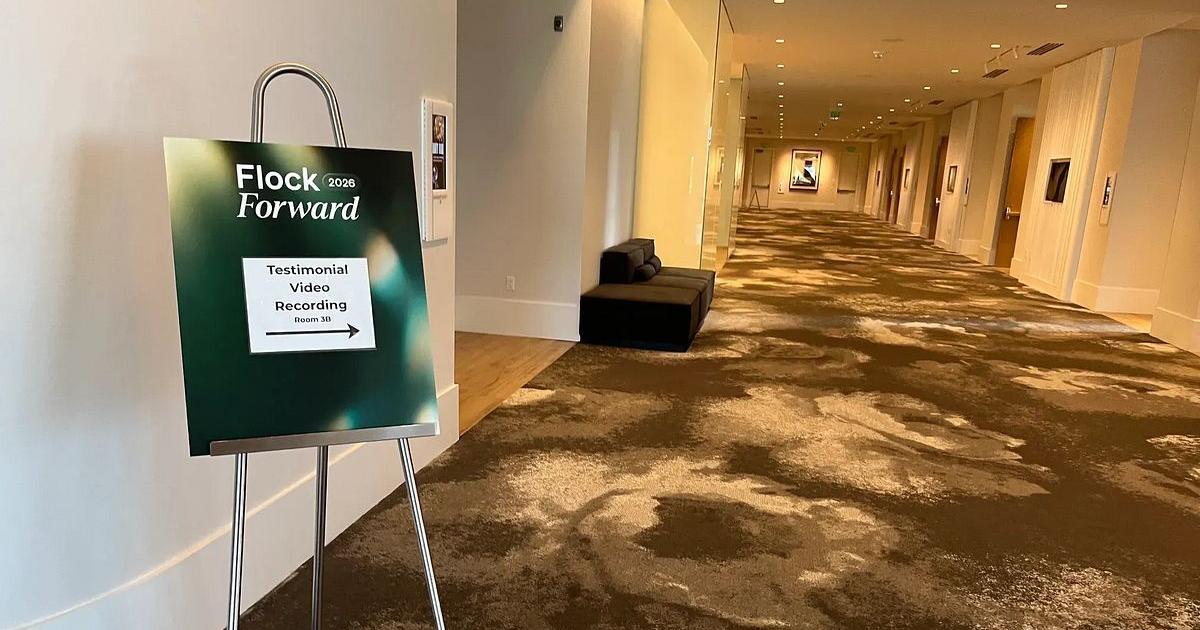
A sign directs Flock Forward 2026 attendees to a testimonial video recording area at the Signia by Hilton Atlanta, Aug. 20, 2026. Photo: Johnny Edwards / The Center Square
(The Center Square) – Wisconsin Gov. Tony Evers said Tuesday the state is looking into banning Flock cameras as communities throughout the state question if they should continue to use the cameras.
“Whether that is the answer, all’s I know is we have to have an answer,” Evers told reporters.
The license-plate-reading camera company is facing pressure across the country over privacy concerns with the technology and abuse of its database by law enforcement.
“I don’t know what the solution is, but I think there’s people all across our country that are talking about it,” Evers said. “I was talking to the governor in Minnesota just yesterday.”
Milwaukee Mayor Cavalier Johnson and the Milwaukee Police Department announce new restrictions on its use of Flock this week, including limiting access to the Milwaukee Flock data to just supervisors in the department and not sharing the data outside of Milwaukee.
The department also will limit their use to a category of crimes including homicide, rape, robbery, aggravated assaults (to include non-fatal shootings), burglary, larceny, motor vehicle theft, arson and human trafficking.
“I recognize the benefits of the Flock cameras system,” Johnson said in a statement. “On multiple occasions this tool has located critical missing persons and helped apprehend violent criminals in Milwaukee. The technology has also been misused in several notable instances, both locally and nationally, compromising the rights of individuals.”
Cities like Sheboygan have pushed back against Flock, with the city covering up all 15 of its cameras and looking to vote to end its contract with the company.
The Wisconsin Institute for Law and Liberty, meanwhile, is working with a group preparing a Flock camera lawsuit in Waukesha County while highlighting the privacy concerns about the use of the cameras without warrants.
“Many PDs in Wisconsin have allowed thousands of outside agencies to search their cameras about a million times a month,” WILL Attorney Dan Lennington wrote. “Sometimes for live video. If city councils don’t know this is happening, or can’t defend it, they should be voted out. Public records are easy to obtain.”
The group has pushed back against the presumption that it is against the technology completely, however.
“Dan, @WILawLiberty and I have NOT advocated for the elimination of Flock cameras,” WILL President Rick Esenberg wrote. “In fact, we have made clear that we aren’t. What we have said is that querying the data base should be subject to the Fourth Amendment.
“That will require probable cause for the query. Sometimes it will require a warrant. Other times there will be an exception to permit responses to exigent circumstances. If you think those guardrails shouldn’t exist, then explain why. That’s where the debate is.”