BS BULLETIN:
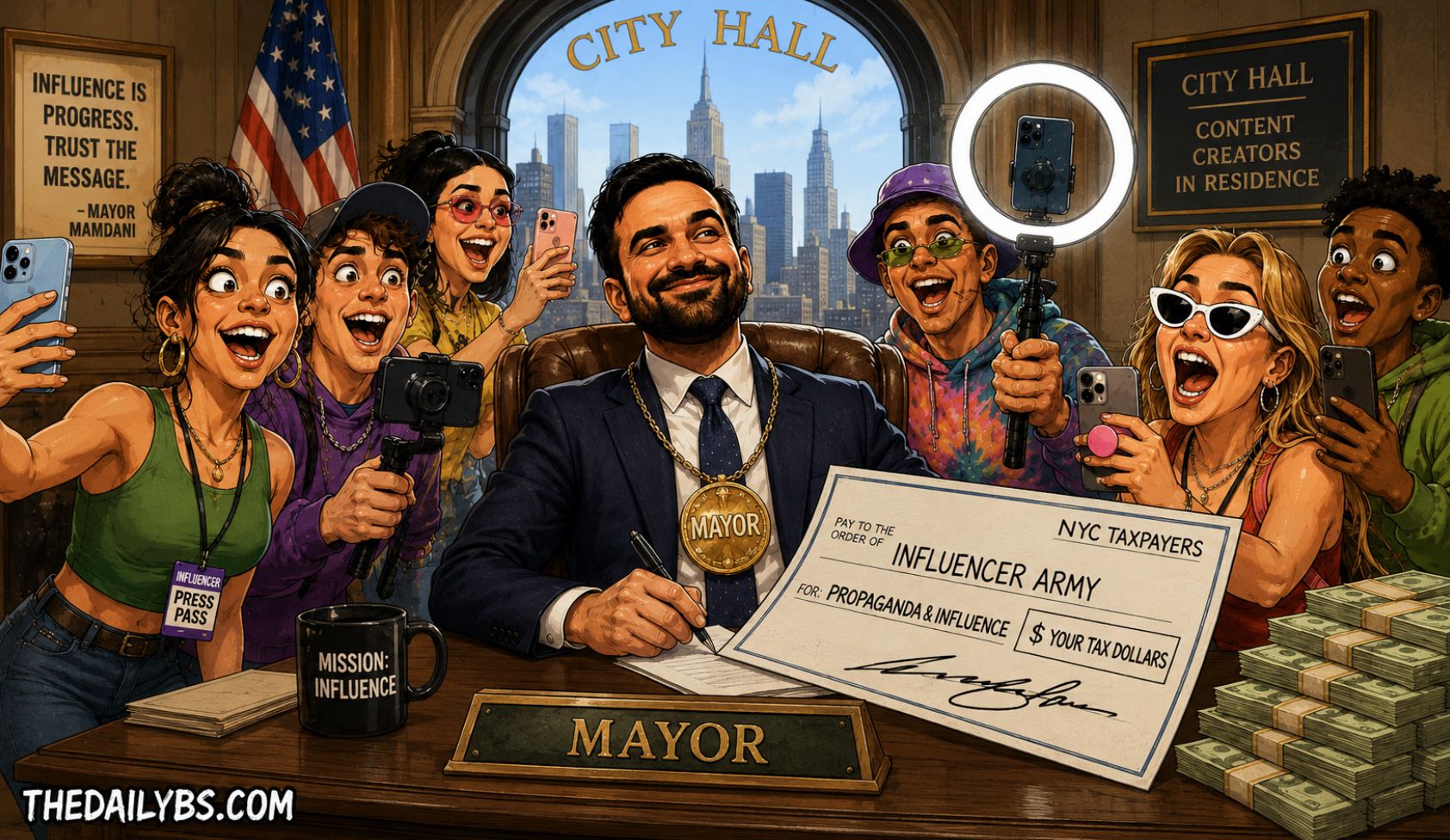
- Mayor Zohran Mamdani’s administration has built a network of roughly 200 social-media influencers who receive City Hall updates, talking points, clips and access through a private Signal group.
- The group grew out of “Creators4Zohran,” which supported Mamdani’s mayoral campaign, raising questions about where campaign promotion ends and taxpayer-funded government communications begin.
- Influencers aren’t paid simply for belonging to the group, but some have separately received money through city-agency messaging campaigns, with researchers told typical payments can range from $5,000 to $20,000 per campaign.
Zohran Mamdani figured out something during his mayoral campaign that plenty of older politicians still haven’t.
The people staring into their phones are sometimes more valuable than the people staring into television cameras.
Now he’s apparently brought that lesson into City Hall.
A Columbia Journalism Review investigation has mapped an extraordinary network of social-media creators surrounding the Mamdani administration — including 189 influencers identified by researchers and a private Signal group that members say contains more than 200. The group has a suitably bureaucratic name: “NYC Creators Announcements.” But its origins are considerably more political.
It grew out of “Creators4Zohran,” the network of influencers assembled during Mamdani’s successful mayoral campaign. After the election, the operation didn’t disappear. It evolved.
The Signal group is now run by City Hall’s director of new media and cultural communications, Emilia Rowland, and her staff. Members receive daily updates, official talking points and video clips they can incorporate into their social-media posts. They also receive invitations to events, influencer-only briefings and opportunities to interview administration officials.
City agencies have used influencers for specific campaigns involving issues including health care, voting, immigration, tenants’ rights, participatory budgeting and even composting. City employees told CJR that influencers hired through marketing and advertising firms can typically receive between $5,000 and $20,000 per campaign.
The New York Post also found that the Department of Social Services has spent more than $100,000 this year on an unidentified social-media campaign under a three-year contract originally signed during the Eric Adams administration.
And that’s where the arrangement starts getting considerably more interesting.
If someone watches a television commercial paid for by New York City, it’s obviously advertising.
If someone watches a TikTok from a favorite creator enthusiastically discussing a city program, is it government messaging? Personal opinion? Paid advertising?
Or some combination of the three?
Good-government groups say the public deserves to know. “We don’t know who is getting paid and who isn’t, and the public has no way to tell a paid supporter from an organic voice,” Citizens Union Executive Director Grace Rauh told the Post.
There is another issue: Signal. Government communications don’t stop becoming public records simply because officials conduct them on an encrypted messaging app. Critics are questioning whether the administration is properly preserving the messages under New York’s record-retention and Freedom of Information requirements.
City Hall chief counsel Ramzi Kassem said there is no city policy prohibiting Signal and that authorized use must comply with applicable record-retention rules and state FOIL law. Mamdani also said his administration would comply with legal requirements and correct any departures that are discovered. And there is nothing inherently improper about a mayor trying to communicate with residents through new forms of media.
Mamdani’s campaign was unusually skilled at exploiting those platforms, producing viral videos that helped transform a relatively obscure state assemblyman into mayor of America’s largest city.
But bringing the same network that promoted Candidate Mamdani into an operation dispensing messaging from Mayor Mamdani’s City Hall creates an obvious question: When does political promotion become government communication?
And when taxpayers enter the equation, shouldn’t everyone watching know exactly which one they’re getting?
We couldn’t resist this one yesterday.
TOTAL BS took the real influencer operation one logical step further: Read TOTAL BS: Mamdani hires 200 influencers to convert city problems into content
MY QUICK TAKE
Mamdani deserves credit for understanding the modern media environment better than many politicians twice his age.
But that makes transparency more important, not less.
When a campaign’s influencer network follows the candidate into government, receives official talking points in a private Signal chat and exists alongside taxpayer-funded influencer campaigns, New Yorkers shouldn’t need a Columbia Journalism School investigation to figure out who is simply enthusiastic and who is part of the city’s messaging machinery.
Rush used to talk about the difference between reporting the news and advancing a narrative.
In 2026, apparently we’ve added a third category:
Make a TikTok about it.
DBS WIRE SOURCES
- New York Post — Mamdani’s 200-strong influencer army revealed
- Columbia Journalism Review — Mayor Mamdani’s friendly influencers and the funding of public messaging in NYC
- Mediaite — Mamdani built a 200-strong influencer network to push NYC initiatives
- News 12 — Inside the mayor’s influencer-only press conference
- The Daily BS — TOTAL BS: Mamdani hires 200 influencers to convert city problems into content