Twenty-five years.
I still remember that morning. Of course I do.
If you were old enough on September 11, 2001, chances are you remember where you were when you heard. You remember watching those towers. You remember trying to understand what you were seeing.
For many of us in New York, it wasn’t something happening on television somewhere else. We knew people who died that day. I did.
Nearly 3,000 Americans went to work, boarded airplanes, reported for duty at the Pentagon, kissed somebody goodbye that morning and never came home.
Twenty-five years later, you’d think remembering that would be the easy part.
Apparently it isn’t.
New York Mayor Zohran Mamdani went to the Ground Zero commemoration, and before he even arrived there were people who didn’t want him there. Then video circulated showing Mamdani and Alexandria Ocasio-Cortez appearing to share a laugh while names were being read.
People were angry. I reposted the video myself.
Then I read more.
There was reporting suggesting the interaction may have occurred while they were greeting each other. I don’t know exactly what happened. If they were laughing while the names were being read, I think that’s inappropriate. But I’m not going to tell you I know something I don’t know simply because a clip on social media made me angry.
And I also played Mamdani’s own commemorative remarks on the show.
They were beautiful words.
He spoke about the 2,753 people killed in New York that morning and the thousands who later died from illnesses connected to the toxic air. He remembered the New Yorkers who lined up to give blood, opened their homes and carried coworkers down stairwells before turning around to help somebody else.
I can disagree with this man about a great many things and still tell you when he says something right.
That’s supposed to be how this works.
But almost immediately, we were back to everything else.
His associations. His chief counsel’s past representation of a Guantanamo detainee. AOC’s association with Hasan Piker. Arguments over Islamophobia. Arguments over what schools should teach about September 11.
I played a video from a Muslim woman advising Muslim parents to contact their children’s teachers before 9/11 lessons and demand to know whether the curriculum contained racist, anti-Muslim or “Zionist propaganda.”
Of course parents should know what their children are being taught.
But something about this bothered me.
Twenty-five years later, are we becoming afraid to tell children plainly what happened?
On September 11, 2001, Islamist terrorists hijacked four commercial airplanes.
They flew two into the World Trade Center.
They flew another into the Pentagon.
The passengers and crew of Flight 93 fought back, and that airplane crashed in Pennsylvania before the terrorists could reach their intended target.
Nearly 3,000 innocent people were murdered.
Those facts are not anti-Muslim.
They are not anti-anybody.
They’re history.
And history doesn’t become hateful merely because somebody is uncomfortable hearing it.
Pete Hegseth spoke at the Pentagon and described what happened there without euphemism. He also talked about what happened afterward—first responders running toward fire and smoke, Americans stepping forward to serve, and the passengers of Flight 93 launching what he called the first American counterattack of the war.
That’s part of the story too.
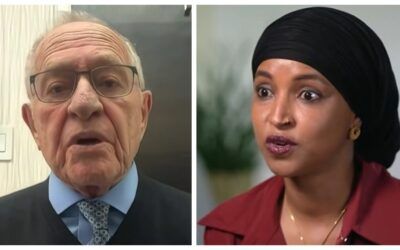
Then there is Ilhan Omar’s phrase that seems to return every September: “some people did something.”
She has explained what she meant. She has said September 11 was an attack on all Americans and has spoken about the discrimination Muslim Americans experienced afterward.
That discrimination is part of the history and shouldn’t be erased either.
But neither should the thing that came first.
September 11 wasn’t a vague occurrence that somehow descended upon America and produced a series of unfortunate social consequences.
People did something.
Specific people did a specific thing.
They murdered Americans.
And I wonder whether our inability to say simple things simply anymore tells us something about where we are as a country.
We can acknowledge that innocent Muslim Americans should never have been blamed for terrorism they did not commit while also telling the truth about the terrorists who did commit it.
We can criticize a politician without blaming his religion.
We can praise something that politician says when he deserves it.
We can disagree about the wars that followed September 11—and there is plenty to disagree about—without rewriting what happened on September 11.
None of those things contradict each other.
Maybe that’s what bothers me most about the way we talk now. Everything has to be sorted into teams before we’re allowed to decide whether it’s true.
September 11 should be bigger than that.
I remember the people.
I remember the firefighters and police officers running toward those buildings while everybody else was trying desperately to get out.
I remember the people on Flight 93 deciding that if they were going to die, they were going to fight.
I remember the photographs that appeared all over this city afterward.
And I remember how Americans treated one another in those terrible days.
We weren’t perfect before September 11. We weren’t perfect afterward.
But for a little while, we remembered that before we were Republicans and Democrats, conservatives and liberals, Christians, Jews, Muslims, black, white or anything else somebody could put into a political demographic box, we were Americans.
Twenty-five years later, maybe the best tribute we can give the people we lost isn’t another argument over who is permitted to remember them.
Just remember them.
Remember what happened.
Remember who did it.
Remember who ran toward the fire.
And remember who we were when the smoke cleared.
— Bo Snerdley
LOOK FOR RUSH HOUR IN THE DAILY BS BLASTS TUESDAY – SAT!
Look out for the Rush Hour link Tuesday – Saturday in your Daily BS email blast.