BS BULLETIN:
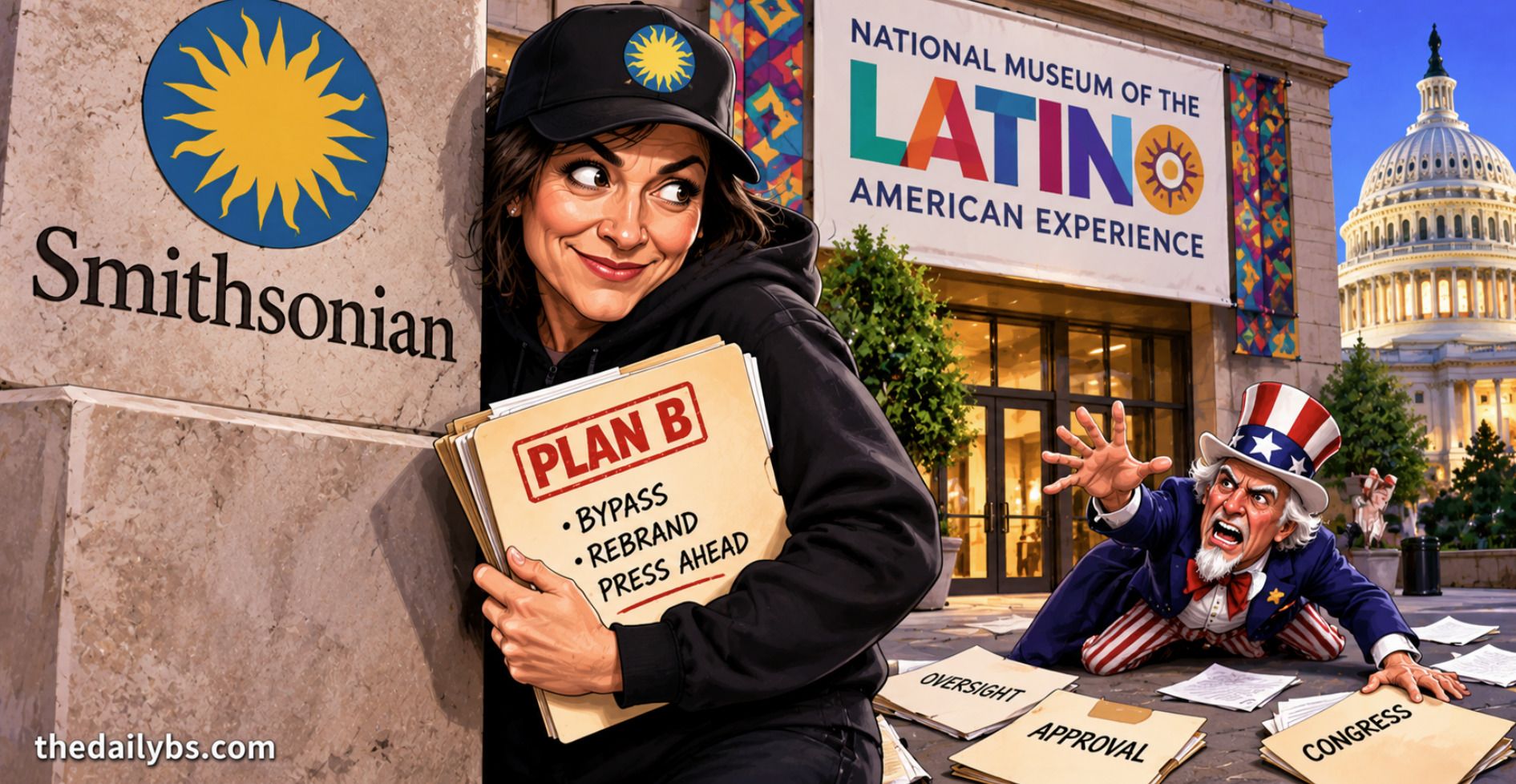
- The Smithsonian has selected its historic Arts and Industries Building as the permanent home of the National Museum of the American Latino.
- The Smithsonian already controls the building, meaning the choice avoids the additional congressional approval required for previously favored undeveloped sites on the National Mall.
- Conservative critics are reviving complaints that the museum’s earlier exhibitions promoted left-wing political themes; museum supporters say its mission is to tell the history and contributions of American Latinos.
The Smithsonian’s controversial Latino museum finally has a permanent home — and its new address comes with one very useful feature.
It doesn’t require another vote in Congress.
The Smithsonian Board of Regents has designated the 145-year-old Arts and Industries Building on the National Mall as the permanent home of the National Museum of the American Latino.
The museum itself was authorized by Congress in 2020, and Congress specifically directed the Smithsonian to consider the Arts and Industries Building during its site-selection process.
But the Smithsonian had previously preferred undeveloped sites near the Washington Monument.
Those locations sit on National Park Service property in a specially protected area of the Mall and would have required additional congressional approval before construction could proceed.
Arts and Industries is different.
The Smithsonian already controls it. That means the institution can move forward with converting an existing building without returning to Congress for approval of one of those new sites. And that has critics crying foul.
Mike Gonzalez, a senior fellow at the conservative Heritage Foundation and longtime opponent of the museum, told Fox News he believes the Smithsonian changed course because congressional approval had become politically difficult. “They want to use this as kind of a ruse,” Gonzalez said.
Gonzalez argues the problem isn’t merely where the museum will sit but what visitors will eventually find inside it. His criticism centers heavily on “¡Presente! A Latino History of the United States,” the museum’s inaugural exhibition, which opened in a temporary gallery inside the National Museum of American History in 2022.
Among the subjects highlighted by Gonzalez are immigration, gender identity, U.S. foreign policy and political figures associated with the left.
One exhibit featured José Julio Sarria, a drag performer who became the first openly gay person known to run for public office in the United States.
Another included Orlando Letelier, the former Chilean diplomat who served under socialist President Salvador Allende and was assassinated by agents of Augusto Pinochet’s dictatorship in Washington in 1976.
Gonzalez characterized the exhibition’s worldview as Marxist.
The museum describes its mission very differently.
It says it intends to preserve and present the “history, culture, and contributions of Latinos in the United States,” and founding director Jorge Zamanillo called the permanent-site decision a milestone decades in the making.
“Designating the Smithsonian’s Arts & Industries Building as the home of the National Museum of the American Latino places the U.S. Latino story at the heart of the National Mall and the American story,” Zamanillo said.
The choice also resurrects an idea that’s hardly new. Arts and Industries had been considered as a possible Latino museum home for years, and Congress explicitly included the building among the locations to be evaluated when it established the museum. The Victorian building opened in 1881 as the country’s first U.S. National Museum and has housed collections that eventually became parts of several other Smithsonian museums.
So the controversy isn’t that the Smithsonian secretly invented a site Congress never contemplated. It’s that choosing this particular congressionally contemplated site gives the Smithsonian something its previously preferred locations didn’t:
A path forward without having to ask Congress again.
DBS WIRE SOURCES:
- Fox News — Smithsonian move reignites criticism as Latino museum avoids new congressional approval
- Smithsonian — Board designates Arts and Industries Building as permanent Latino museum site
- Washington Post — Smithsonian changes course, will put Latino museum in existing building
- Smithsonian — National Museum of the American Latino fact sheet
- Smithsonian — Arts and Industries Building history