BS BULLETIN:
- Sunny Hostin says her children excelled academically at a predominantly White private school but endured racist bullying and what she called “psychological trauma.”
- Her comments followed Nikole Hannah-Jones’s admission that she regrets putting broader social ideals ahead of some of her daughter’s educational needs.
- The stories highlight two different problems often folded into the same debate: school resources don’t guarantee results, and bullying can follow children into schools rich or poor.
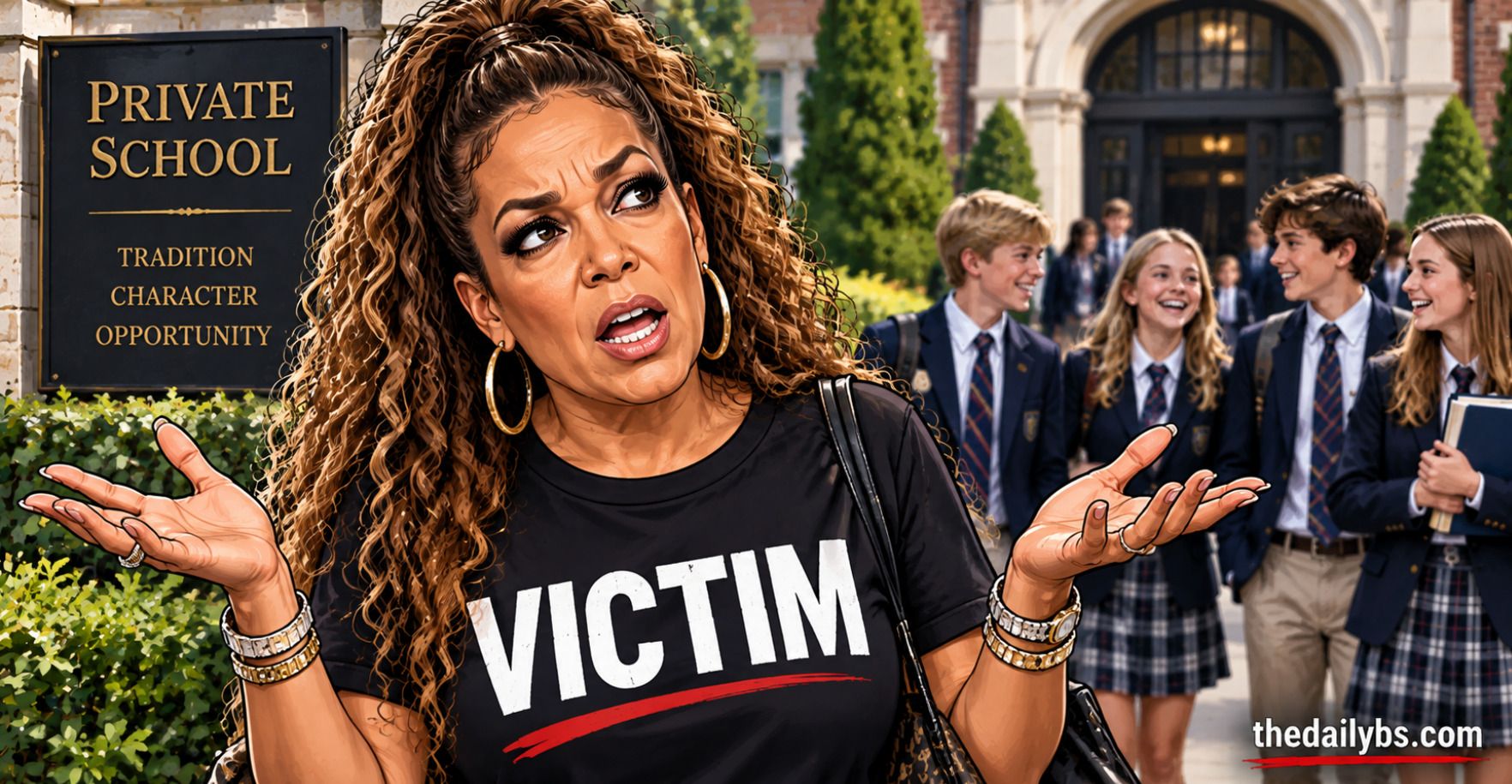
Sunny Hostin says her children got the strong education she wanted from a predominantly White private school.
What money apparently couldn’t buy was protection from other kids behaving badly.
The View co-host described her family’s experience Monday during a discussion of 1619 Project founder Nikole Hannah-Jones and the controversy surrounding her own daughter’s education.
Hannah-Jones has written that she and her husband deliberately enrolled their daughter in a mostly Black, low-income Brooklyn public school in part because they believed their presence could help improve the school for everyone.
“We thought by sending Najya to a mostly low-income and Black school, we could help improve it for all the children there,” Hannah-Jones wrote.
Her daughter later confronted her about the decision and complained about the education she received. Hannah-Jones ultimately apologized, telling her, “I feel like you got cheated.”
Hostin told The View that she made essentially the opposite choice.
“I sent my children to private schools, a predominantly White private school,” Hostin said.
Academically, she said, her children excelled.
But Hostin said they experienced racism, bullying and “psychological trauma.” She described children trying to put pencils in her daughter’s afro and boys calling her daughter “butter face.”
Those are examples of bullying and should be treated as such. They also complicate the attempt to turn the two families’ experiences into one simple story about race and school funding.
Bullying isn’t exclusive to struggling public schools. Children can be cruel in an expensive private school just as they can in an underperforming neighborhood school. More money, smaller classes and impressive facilities cannot eliminate every rotten interaction between students.
And money presents another complication.
Public education already consumes enormous resources in the United States, while spending and educational results vary considerably among states and districts. Critics of the existing system have long argued that simply increasing funding cannot solve problems caused by how money is allocated, administered or spent.
That doesn’t mean resources are irrelevant. Schools serving poorer communities can face significant challenges that wealthier schools do not.
But funding alone does not guarantee a good education, either. A well-funded system can still spend inefficiently, suffer from poor administration or fail to translate its resources into better classroom results.
That distinction matters in the Hannah-Jones controversy. Her daughter’s complaint wasn’t that wealthy White students had nicer buildings somewhere else. Hannah-Jones described a teenager who believed the educational choices made for her — partly in pursuit of her parents’ larger ideals about integration and equality — had left her academically shortchanged.
Hostin described something else: children who were succeeding academically in a well-resourced private school but encountered racist and cruel behavior from classmates.
One is fundamentally a question about educational choices and results.
The other is a question about bullying and how a school responds to it.
Combining both into a single explanation about inequality risks obscuring the very different problems parents are actually trying to solve.
A school can need more resources. Another can have plenty of resources and use them poorly. A wealthy private school can have bullies. So can a struggling public school.
The uncomfortable lesson may be considerably less ideological: money matters, but how schools use it matters too — and no tuition bill or school demographic can guarantee that children will never encounter cruelty once they walk through the doors.
DBS WIRE SOURCES:
- Fox News — Hostin says her children experienced racism at private schools
- Fox News — Video of Hostin’s remarks
- New York Post — Hostin describes children’s private-school experience