BS BULLETIN:
- Ithaca’s Common Council voted 9-1 to freeze new city event permits for Cornell and affiliated student organizations amid outrage over the university’s handling of rape allegations.
- City officials want Cornell to turn investigations of violent sex crimes over to Ithaca police, after a 2024 fraternity case raised serious questions about the school’s response.
- The council meeting erupted into a confrontation over a discarded public comment card, adding another bizarre chapter to an already explosive controversy.
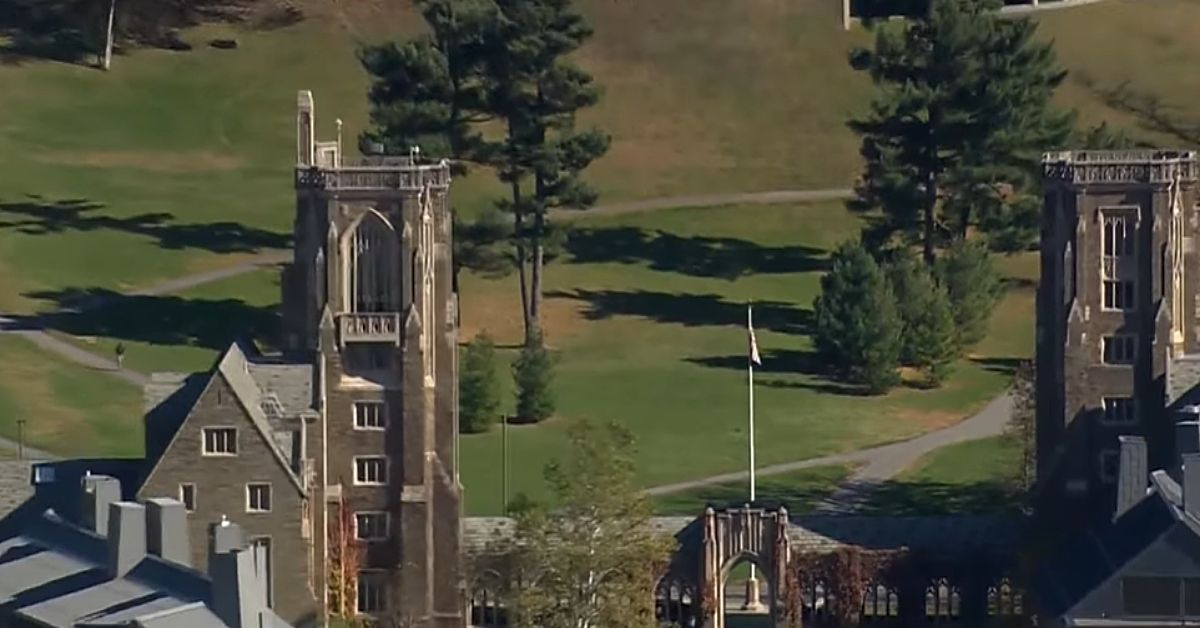
Cornell University has its own police department, a sprawling administration, disciplinary boards, investigators and enough institutional machinery to fill an Ivy League textbook.
Apparently, the city of Ithaca has decided that’s not enough.
In an extraordinary 9-1 vote Wednesday night, the Ithaca Common Council temporarily suspended new city event permits for Cornell University, its fraternities, sororities and affiliated student organizations.
And the message from city hall was considerably more serious than a canceled fraternity party. Officials want the university to hand investigations of violent sex crimes over to the Ithaca Police Department.
That’s quite a vote of confidence in Cornell’s ability to police itself. Or, more accurately, a rather spectacular vote of no confidence.
“Cornell, as an institution, thinks it’s above the law,” Council member Jorge DeFendini declared. “But they are not above the law.”
The confrontation follows explosive allegations that seven members of Cornell’s Chi Phi fraternity drugged and sexually assaulted a female student in October 2024.
The woman, identified in court documents as Jane Doe, filed a civil lawsuit in September describing the alleged attack and raising questions about how the university and local authorities handled her complaint. The original criminal investigation ended without charges.
According to the woman’s attorney, Cornell police left her with the impression that the criminal investigation was continuing even after the local district attorney had decided not to prosecute.
District Attorney Matthew Van Houten has said he instructed university police to notify her of that decision. Ithaca police, meanwhile, say they were never informed about the alleged assault.
Now the city wants the arrangement changed.
New York Gov. Kathy Hochul has already appointed Attorney General Letitia James as special prosecutor to examine the case. Cornell has hired former Deputy Attorney General Sally Yates to conduct an independent review.
The university’s disciplinary process resulted in two expulsions and two suspensions. One accused student graduated before punishment could be imposed, and two were found not responsible for sexual misconduct.
Some of the accused have denied wrongdoing. The allegations remain subject to legal proceedings. But Ithaca officials clearly aren’t satisfied with Cornell’s response. Mayor Robert Cantelmo has demanded greater transparency and stronger safeguards against sexual violence.
And the city has decided to use one of the tools it actually controls. Permits.
The moratorium runs through November 5 and affects new city permits for certain student events, including activities requiring noise permits. First Amendment-protected protests and assemblies remain permitted.
That distinction matters because the restrictions could affect students who had nothing to do with the allegations. Some graduate students warned the council that the moratorium could interfere with conferences, service activities and other legitimate events.
“Parties do not cause sexual violence,” graduate student Cecily Cox argued.
It’s a fair objection to consider. But other students insisted that Cornell needs outside pressure before meaningful changes will happen. And judging from Wednesday night’s meeting, there was no shortage of pressure.
The session was already contentious when political commentator Michael Tracey interrupted proceedings, claiming officials had thrown away the public comment card he submitted to speak.
“Excuse me. Motion to reconsider,” Tracey interjected. Mayor Cantelmo wasn’t impressed. “You’re definitely not eligible to make motions,” he replied.
Tracey accused city officials of denying him an opportunity to speak. At one point, Council member David Shapiro escorted him from the chamber, where the argument continued in the hallway.
A second activist protested that Tracey’s right to speak was being denied. Tracey eventually returned, declaring that his card had ended up in the garbage and calling for the mayor to resign.
Earlier this evening @mtracey was denied the opportunity to speak at the Ithaca Common Council. I had invited him to add additional context to the Cornell 7/Jane Doe case the meeting would otherwise lack. I turned in two speaking cards to the clerk before the meeting began; one for myself, which made it to Mayor Robert Cantelmo @RGC_NYS, and one for Michael Tracey, whose card I later found folded up in the trash can. There is additional video wherein Michael had a conversation with a Common Council member in the hallway outside Council chambers. I retrieved the camera in time to capture the majority of what was said. Michael had spent more than an hour preparing comment. Not a single Common Cuncil member stood up for his right to speak. I hope he can post it, for the Streisand Effect. Here is the link to the meeting itself, which is still live. https://t.co/kof8jxzwqA
— Ithaca Crime (@IthacaCrime) October 8, 2026
So there it was.
More than 1,000 students, faculty members and residents have demonstrated over Cornell’s handling of sexual misconduct allegations. Some faculty members have also called for a vote of no confidence in the university’s central administration.
The city council can reconsider or extend its permit moratorium when it meets again November 5. By then, Cornell will have had nearly a month to demonstrate that it is prepared to address the city’s concerns.
For an institution accustomed to setting its own rules, that’s an uncomfortable new arrangement. Ithaca is reminding Cornell that even an Ivy League university has neighbors — and those neighbors have a government of their own.
MY QUICK TAKE
There’s something remarkable about watching a city tell one of America’s most prestigious universities that it no longer trusts the institution to handle serious allegations on its own.
For decades, colleges have built their own elaborate systems for investigating misconduct. Offices. Committees. Hearings. Consultants. Independent reviews.
And when something goes badly wrong, what do we get? Another review.
Now, Cornell did impose disciplinary penalties in this case, and the criminal allegations still have to be tested through the legal process. Those distinctions matter. But the bigger question is why the city’s police department was reportedly left outside an investigation involving allegations of violent felony conduct.
A university campus isn’t an independent country. A student handbook isn’t a criminal code. And an Ivy League seal doesn’t confer immunity from scrutiny.
I’m not convinced that withholding event permits from students who had nothing to do with this case is the ideal remedy, either. But here’s the irony: Ithaca is trying to force accountability from Cornell using noise permits.
After years of administrative machinery, legal proceedings and institutional statements, the city has apparently discovered that the most effective way to get a university’s attention might be to threaten the next fraternity DJ.
Only in academia.
DBS WIRE SOURCES:
- Fox News — Ithaca council halts Cornell event permits amid scrutiny over handling of rape allegations
- Cornell Daily Sun — Common Council passes moratorium on student event permits after a trash can confrontation
- CBS News — Ithaca council passes moratorium on new Cornell events permits, calls for city police to handle sexual violence cases
- Associated Press — Cornell gang-rape accuser was ‘misled’ about criminal investigation, her lawyer says
- CNY Central — Ithaca Common Council passes moratorium targeting Cornell permits after hours of debate