THE DAILY BS: HOW MUCH CAN YOU HANDLE?
SPARE ME THE BS. I’ve got things to do.
-
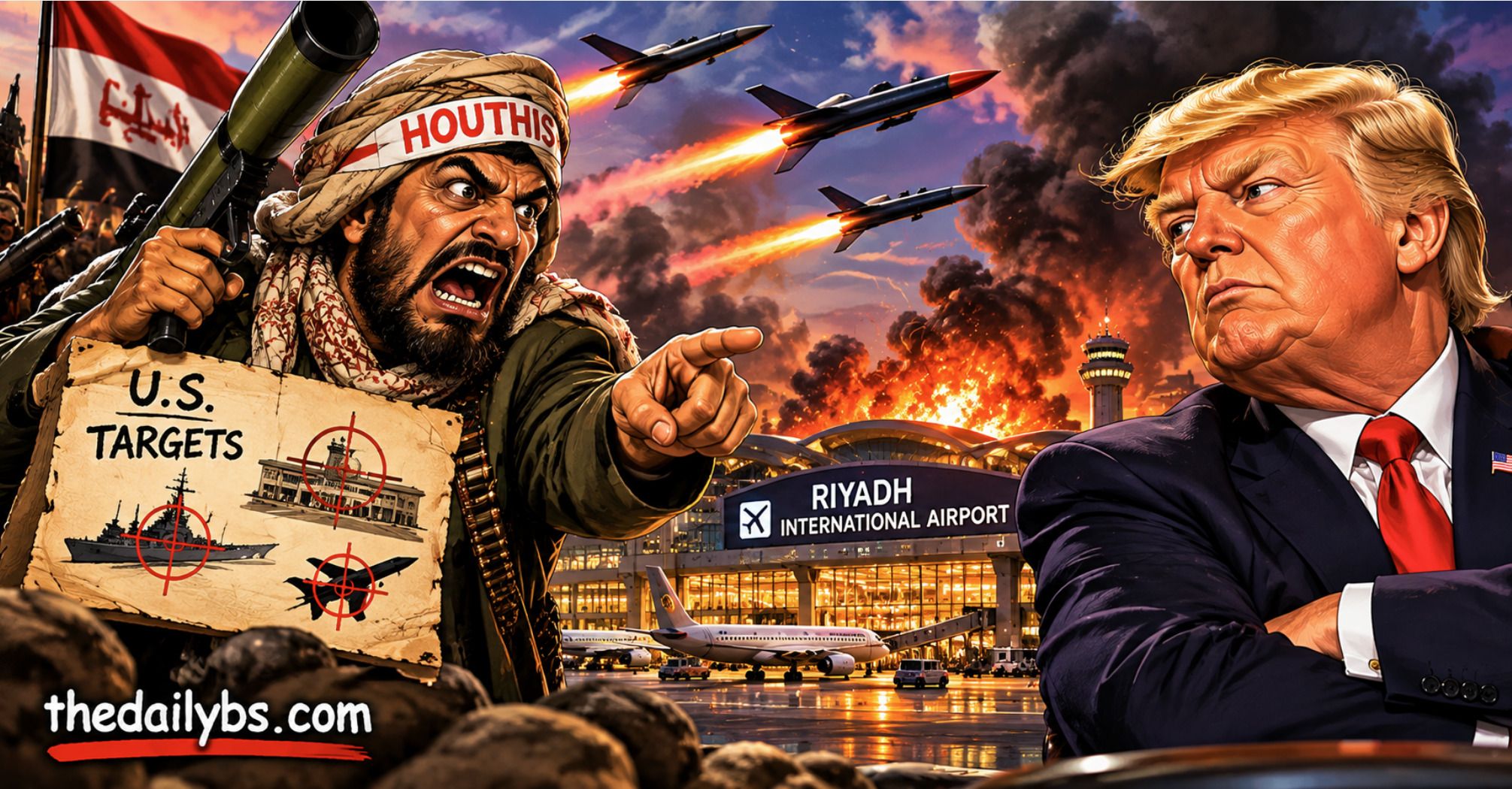
Iran-backed Houthi rebels threatened a “swift and painful response” against the United States and its interests throughout the Middle East if President Donald Trump joins Saudi Arabia’s military campaign in Yemen.
-
The warning follows a devastating October 10 attack on Riyadh’s King Khalid International Airport that killed 13 people, including an American, and wounded more than 300. The Houthis also warned workers to stay away from Saudi oil facilities and airports, calling them “legitimate targets.”
-
Trump confirmed he is considering military action and has discussed the crisis with Saudi Crown Prince Mohammed bin Salman. Meanwhile, fresh Houthi missile attacks have kept Riyadh’s main airport closed and raised fears of a wider regional confrontation.
MORE TO IT. I’ve got time.
Iran-backed Houthi rebels have issued a direct warning to President Donald Trump, threatening attacks against American interests across the Middle East if the United States joins Saudi Arabia’s military campaign in Yemen.
The threat comes after a devastating series of missile and drone attacks on Saudi Arabia, including a strike on Riyadh’s King Khalid International Airport that killed 13 people on Saturday, October 10, and injured more than 300 others.
Houthi political bureau member Mohammed Al Bukhaiti delivered the warning Monday in an interview with Agence France-Presse.
“If the US becomes involved in the aggression against Yemen, we will not deliberate over the decision to respond, rather, there will be a swift and painful response targeting the US and all its interests in the region,” Bukhaiti declared.
He also issued a warning to civilians working at Saudi Arabia’s airports and energy facilities.
“All employees and workers at Saudi oil facilities and airports” should stay away, he said, because those locations had become “legitimate targets.”
The remarks followed Trump’s acknowledgment that Washington was considering joining Saudi strikes against the Houthis after the deadly attack on Riyadh’s airport.
“We may. We’re gonna look at it,” Trump told reporters Saturday. “We just found out about the recent attack. So we’ll make a decision — we move very quickly.”
Trump also addressed the attacks Monday at the White House.
“The Houthis are misbehaving very badly. They’re misbehaving very badly. No good,” the president said.
He described the airport strike as “not acceptable” and confirmed that he had spoken with Saudi Crown Prince Mohammed bin Salman about the crisis.
Saudi Arabia has been pressing Washington for more direct military assistance as Houthi forces expand their attacks on airports, oil facilities, and other strategic infrastructure.
Until now, the Trump administration has provided intelligence, targeting assistance, and military coordination while stopping short of directly joining Saudi airstrikes against the rebels.
That position could change as the death toll rises.
Saturday’s attack on King Khalid International Airport was the deadliest strike on Saudi soil in more than a decade. One American was among those killed, according to U.S. officials.
The violence continued Sunday when another projectile struck the airport’s passenger terminal, killing a Pakistani national and injuring 11 others.
By Monday, the Saudi-led coalition reported intercepting additional ballistic missiles launched toward Riyadh, while the Houthis claimed responsibility for another attack targeting the capital’s airport.
Houthi military spokesman Yahya Saree claimed the group’s forces had successfully struck the airport with a ballistic missile.
“Our armed forces were able to target (King) Khalid International Airport in the Saudi enemy’s capital Riyadh this evening with a ballistic missile and the hit was precise,” Saree said, according to AFP.
Saudi authorities, however, reported intercepting the incoming missiles. The competing claims could not be independently reconciled.
The attacks have severely disrupted commercial aviation. Riyadh’s main international airport remained closed, while several airlines suspended or canceled flights to Saudi destinations.
The U.S. Embassy in Saudi Arabia urged American citizens to exercise “extreme caution” and imposed additional travel restrictions on government personnel.
Saudi Arabia has also launched an investigation into why its air defenses failed to prevent Saturday’s deadly airport strike. Regional officials told the Associated Press that investigators were examining how Houthi drones and missiles penetrated defenses protecting the capital.
Meanwhile, Saudi airstrikes in Yemen have reportedly caused civilian casualties.
The Houthi-run health ministry said strikes on the capital, Sanaa, killed one person and wounded 12 others. Saudi authorities had not independently confirmed responsibility for those particular strikes.
The confrontation also carries major economic consequences.
Houthi attacks have threatened oil facilities, shipping routes, and transportation infrastructure across the region. Brent crude climbed above $105 a barrel Monday as concerns grew over additional disruptions to Middle Eastern energy supplies.
The Houthis have also expanded their presence along Yemen’s Red Sea coast, increasing concern about the security of the Bab el-Mandeb Strait, a major shipping passage connecting the Red Sea with the Gulf of Aden.
Any direct American involvement could widen the fighting beyond Yemen and Saudi Arabia, particularly given the Houthis’ explicit threat to target U.S. interests throughout the region.
For now, Trump has not announced a decision to launch American strikes.
But the choice facing Washington has become more consequential following the deaths of civilians at Riyadh’s airport, including an American, and the Houthis’ declaration that U.S. intervention would trigger retaliation.