THE DAILY BS: HOW MUCH CAN YOU HANDLE?
SPARE ME THE BS (I’ve got things to do).
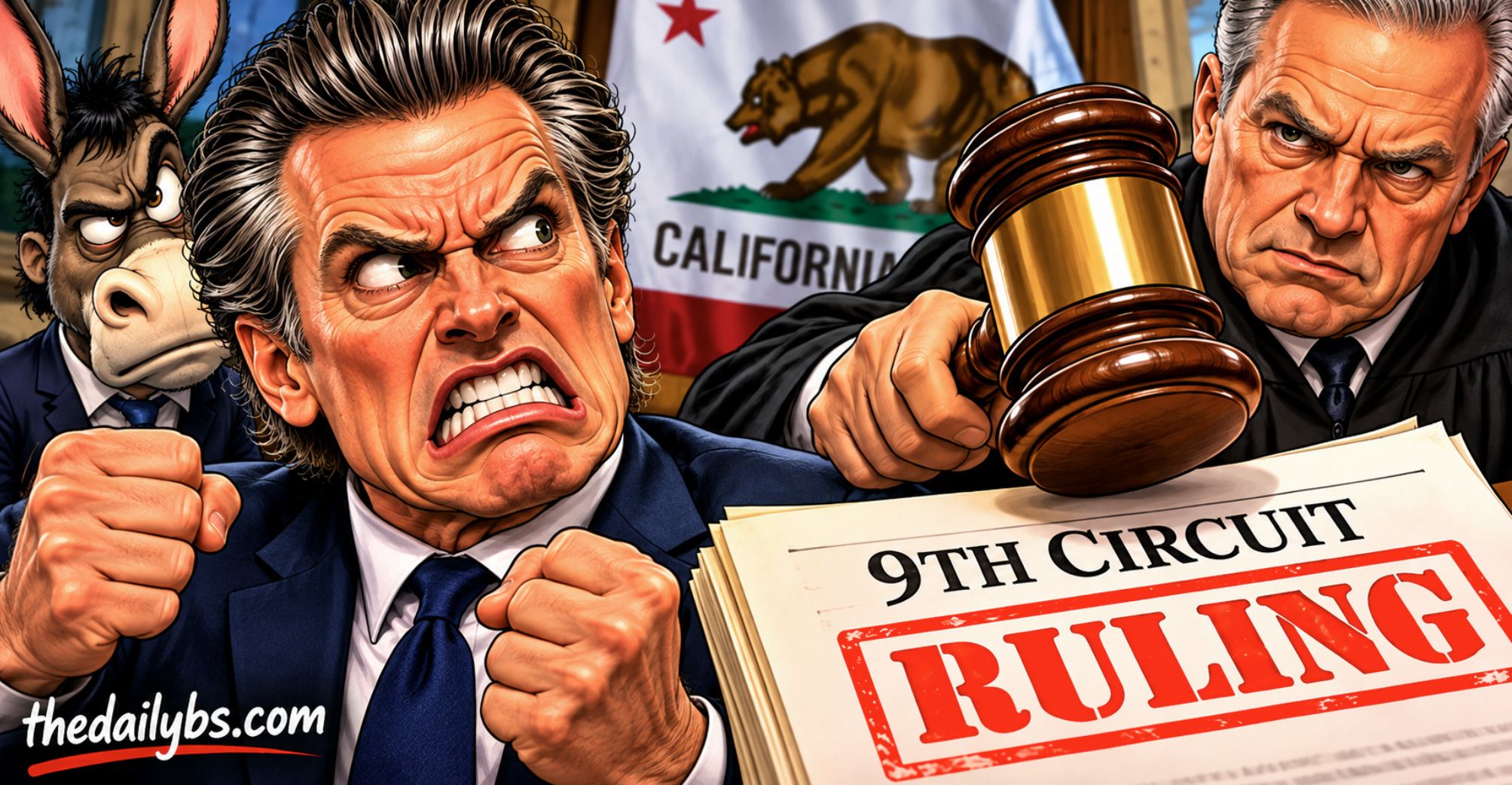
- The Ninth Circuit ordered a preliminary injunction against California’s law requiring plainclothes federal agents to display identification during enforcement operations.
- The judges said Trump’s administration was “certain to succeed” because California’s requirement unlawfully regulates federal operations under the Constitution’s Supremacy Clause.
- Newsom’s administration loses another round in its legal battle over ICE enforcement, with the appeals court rejecting California’s argument that the restriction was permissible because it imposed limited burdens.
LAY IT ON ME (I’ve got time).
President Donald Trump just scored a legal victory against California Gov. Gavin Newsom in a courtroom that hasn’t exactly been famous for giving Republican presidents the benefit of the doubt.
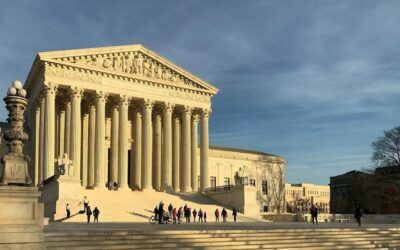
The famously liberal-leaning Ninth Circuit Court of Appeals ruled Wednesday that California cannot force plainclothes federal law enforcement officers to display identification while carrying out their federal duties.
And the three-judge panel didn’t sound particularly uncertain about its decision.
“Indeed, we conclude that the United States is certain to succeed,” the court declared.
Not merely likely. Certain.
The dispute centers on California’s No Vigilantes Act, signed by Newsom in September 2025 as part of his administration’s effort to increase oversight of federal immigration enforcement.
The law required nonuniformed federal officers working in California to visibly display identification identifying their agency and either a name, badge number or both.
Violations could expose federal agents to state criminal penalties.
California argued that the requirements were reasonable public-safety measures intended to help residents distinguish legitimate law enforcement officers from impostors.
The Trump administration saw something considerably different: A state government attempting to dictate how federal officers perform duties authorized by Congress.
Wednesday’s ruling sided with Washington.
“Section 10 explicitly overrides the federal government’s power to determine whether, how, and when to publicly identify its officers,” the judges wrote.
The court concluded that the identification mandate violated the Supremacy Clause because California was directly regulating federal government operations without congressional authorization.
California had argued that its law should be permissible because it did not impose substantial burdens on federal activities.
The judges weren’t persuaded.
“The burden of the regulation on federal operations, whether substantial or otherwise, is irrelevant,” the court explained.
In other words, the constitutional question wasn’t whether Sacramento considered its requirements reasonable. It was whether Sacramento had the authority to impose them on federal agents in the first place.
The Ninth Circuit said it did not.
The panel reversed a lower court’s refusal to grant a preliminary injunction and directed the district court to block enforcement of Section 10 against federal agencies and officers.
There is an important procedural distinction: The Ninth Circuit had already temporarily blocked the provision in February and granted an injunction pending appeal in April. Wednesday’s ruling now directs the lower court to enter a preliminary injunction while the litigation proceeds.
The decision does not invalidate every provision of California’s law or resolve all the separate litigation involving restrictions on federal officers wearing masks.
But it is a significant ruling against one of Newsom’s attempts to impose state requirements on federal enforcement operations.
And the Justice Department was delighted.
“The Ninth Circuit agrees that California cannot regulate federal law enforcement,” Brett Shumate, assistant attorney general for the Justice Department’s Civil Division, wrote on X.
Associate Attorney General Stanley Woodward Jr. went further, declaring that the court had reaffirmed the constitutional limits on California’s authority.
“Today, the Ninth Circuit again affirms what common sense makes clear: California cannot regulate how Federal law enforcement officers carry out their jobs authorized by Congress,” Woodward wrote.
He called the decision “a huge WIN” for federal officers’ safety and the administration’s immigration enforcement agenda.
The ruling arrives amid a prolonged confrontation between Newsom and the Trump administration over immigration raids, enforcement tactics and the relationship between state and federal authorities.
Newsom has supported restrictions on officers concealing their identities, arguing that transparency helps protect the public and prevents confusion during enforcement operations.
Federal officials have countered that such requirements can compromise officers’ security and interfere with operational decisions that belong to the federal government.
Wednesday’s decision came from Judges Jacqueline Nguyen, Mark Bennett and Daniel Collins, with Bennett writing the opinion.
The Ninth Circuit has previously ruled against major Trump administration immigration policies, making this result noteworthy given the court’s history.
But the ruling also illustrates a legal principle that doesn’t depend on whether a particular governor likes the president or his policies.
States have considerable authority over their own law enforcement systems. That authority does not automatically extend to controlling how federal agencies perform their congressionally authorized duties.
Newsom may continue challenging the Trump administration’s immigration enforcement practices through the courts.
For this particular legal battle, however, the Ninth Circuit has told California that federal agents answer to federal authority, not Sacramento’s identification rules.
And when even the Ninth Circuit says the Trump administration is “certain to succeed,” that’s a sentence Newsom probably wasn’t hoping to read.
DBS WIRE SOURCES (I’ve got all day).
- Fox News — Trump scores win from liberal-leaning Ninth Circuit in ICE enforcement showdown
- Ninth Circuit Court of Appeals — United States v. California, October 14, 2026, full opinion
- U.S. Court of Appeals for the Ninth Circuit — Official published opinion, Case No. 26-926
- Los Angeles Times — California’s No Vigilantes Act identification requirement blocked by Ninth Circuit