LISTEN TO THE SHOW HERE
Look out for the Rush Hour link Tuesday – Saturday in your Daily BS email blast.
Elon Musk made a flying car. I can barely be trusted with a pressure washer.
There are four words that have probably sent more men to emergency rooms than just about anything else in the English language.
“I wonder what happens…”
I know this because I’ve said them myself. And on at least one occasion, I have the medical history to prove it.
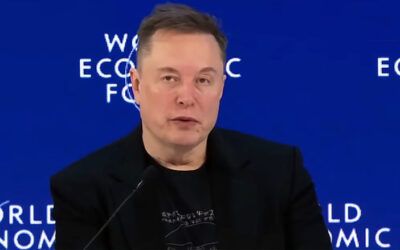
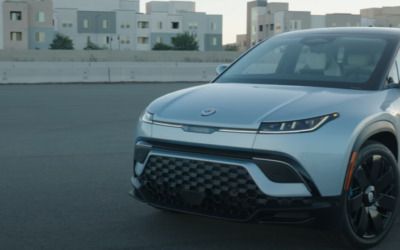
We got into a wonderful discussion on Friday’s Rush Hour about Elon Musk, Tesla, and the extraordinary prospect of cars that can actually fly. We were talking about reports of a new Tesla Roadster doing things that would have seemed impossible not so long ago. Flying through the air. Flipping over. Landing back on its wheels.
Now, before anybody starts clearing space in the driveway for a personal aircraft, I should point out that the spectacular demonstration we discussed still needs independent verification. But the idea alone was enough to get my imagination going.
Think about it. For generations, Americans have been promised flying cars. We’ve seen them in cartoons, science-fiction movies, and those wonderful old illustrations of what the year 2000 was supposed to look like. By now, we were all supposed to be zipping around in the sky, avoiding traffic jams and arriving at work without ever touching a highway.
Instead, most of us are still sitting behind somebody doing 40 miles an hour in the passing lane.
But the prospect of a flying Tesla raised an interesting question in our studio. Karolos wondered whether somebody operating one of these machines ought to have a pilot’s license.
A pilot’s license!
Imagine that conversation at the Department of Motor Vehicles. You show up to renew your license, and the clerk asks whether you’ll be parallel parking or attempting a barrel roll.
Personally, I think the insurance companies would have a nervous breakdown before the first flying Tesla ever left the showroom.
And that brings me to a subject that got me into a little trouble with some of the ladies listening to the show.
I started talking about certain women I know and how much I’d enjoy watching them attempt to operate a car that could suddenly launch itself into the air. Apparently, some of our female listeners didn’t appreciate my observations.
Imagine that.
One of them, Princess Diana, came armed with statistics. She informed me that men receive the majority of speeding tickets and are responsible for a disproportionate share of fatal crashes.
She even sent me the numbers.
Now, I appreciate a woman who comes prepared for an argument. I especially appreciate one who takes the time to research exactly how wrong she believes I am.
But I began to wonder whether those statistics tell the entire story. What about the tickets people talk their way out of? What about the motorists who get a warning instead of a citation? And how many traffic arguments have begun because somebody decided the passing lane was a perfectly reasonable place to take a leisurely Sunday drive?
These are questions, ladies and gentlemen. I am merely asking questions.
Of course, somewhere along the way, the conversation turned to the differences between men and women when it comes to machines.
And I have to admit something.
Men have a particular weakness.
Give a man a machine with an impressive capability, and his first instinct is often to find out whether the manufacturer is telling the truth.
Tell him a car can go 140 miles an hour, and he doesn’t necessarily want to drive 140 miles an hour. He just wants to know whether it really can.
Tell him a Tesla can accelerate from zero to 60 in two seconds, and somewhere in his brain a little voice begins whispering, “I wonder if I can get it down to 1.8.”
Even the GPS gets dragged into this foolishness.
You climb into your car, enter a destination, and the navigation system announces that you’ll arrive in an hour and fifteen minutes.
For a perfectly sensible person, that’s useful information.
For a certain kind of man, it’s a challenge.
An hour and fifteen minutes? We’ll see about that.
I am not recommending that anybody speed, by the way. I’m simply acknowledging the competitive streak that can turn an estimated arrival time into a personal insult.
But the best example I can give you comes from my own life, and it involves a pressure washer.
I had purchased one of these marvelous machines, and I was fascinated by how powerful it was. If you’ve ever used a pressure washer, you know what I’m talking about. You point that thing at a dirty surface, squeeze the trigger, and years of accumulated grime disappear.
It’s deeply satisfying.
You begin looking around for other things to clean. The driveway. The sidewalk. The patio furniture. Anything that hasn’t moved recently becomes a potential target.
And then I had a thought.
I looked at that powerful stream of water and wondered what would happen if it touched my skin.
Now, a reasonable person would have recognized that this was an excellent moment to stop wondering.
I, however, was conducting scientific research.
So I found out.
The next thing I knew, my arm was bleeding. The pressure washer had taken skin right off.
I ended up at the doctor’s office, where my physician examined my arm and asked the perfectly reasonable question: What happened?
I explained that I had been using a pressure washer and wanted to see what the water would do to my skin.
She looked at me.
Then she delivered a medical diagnosis that I have never forgotten.
“You’re stupid.”
And she wasn’t finished.
“You’re stupid, but you’re not unlike many other men. You’re just stupid.”
Now, I don’t recall whether my insurance company was billed for that diagnosis, but I can tell you it was memorable.
And the worst part?
She wasn’t entirely wrong.
What possessed me to do that? Curiosity. Pure, unfiltered, spectacularly ill-advised curiosity.
I wanted to know.
That is the same impulse that makes a little boy take apart a perfectly good toy to see what’s inside, even though he has absolutely no idea how to put it back together.
It’s the impulse that makes somebody stare at a machine and think, “I bet I could make that go faster.”
Sometimes that curiosity produces a breakthrough.
Sometimes it produces a trip to the doctor.
The trick, I suppose, is learning the difference before the bleeding starts.
And this is where I come back to Elon Musk and the larger idea of extraordinary technology.
Whatever the eventual capabilities of a flying Roadster, the ambition behind inventions like reusable rockets and radically different vehicles is something I find fascinating. Somebody has to look at what exists and ask why it can’t be done another way.
Of course, the engineers who actually make these things work spend years studying physics, testing materials, calculating risks, and making sure the machine doesn’t kill somebody.
That is an important distinction between their curiosity and mine.
They run computer simulations.
I point a pressure washer at my arm.
Nevertheless, I understand the instinct to push boundaries, to challenge assumptions, and to wonder whether something can be made better, faster, or more remarkable than it was yesterday.
Human progress owes an enormous amount to people who refused to accept that something couldn’t be done.
It also owes quite a bit to the sensible people who stood nearby and said, “Before you try that, perhaps we should test it.”
Which brings me back to the flying car.
Would I want one?
Absolutely.
Would I want to take it up into the sky, feel the power, and experience something that generations of Americans could only dream about?
You bet.
But given my history, perhaps Karolos has a point about requiring additional training.
And if I ever do get my hands on a flying Tesla, I promise to approach it with maturity, caution, and a healthy respect for the laws of physics.
At least until somebody tells me how fast it can go.
Then, naturally, I’ll have just one question.
I wonder what happens if…
— Bo
Rush Hour airs Monday through Friday and moves quickly through the day’s hottest political stories, breaking developments and media absurdities. It is the fastest hour in American media because there is always more happening than the legacy media has time—or desire—to explain.
And if you want my daily stack of news and commentary delivered directly to you, sign up for The Daily BS here. It is free, arrives daily and, unlike a New York Democratic event, questions are not removed for exceeding ideological capacity.