THE DAILY BS: HOW MUCH CAN YOU HANDLE?
SPARE ME THE BS (I’ve got things to do).
- Federal Judge Ana Reyes withdrew her demand that Justice Department attorneys personally sign a contentious filing in Trump’s golf-course lawsuit.
- Associate Attorney General Stanley Woodward Jr. and government lawyers refused the demand during a nearly seven-hour hearing.
- Reyes abandoned the requirement, but the dispute over hundreds of felled trees and Trump’s East Potomac Golf Links renovation continues.
LAY IT ON ME (I’ve got time).
Washington’s increasingly entertaining courtroom battle over Donald Trump’s golf course has produced a new development: The judge who spent hours demanding signatures from Justice Department lawyers decided she didn’t need them after all.
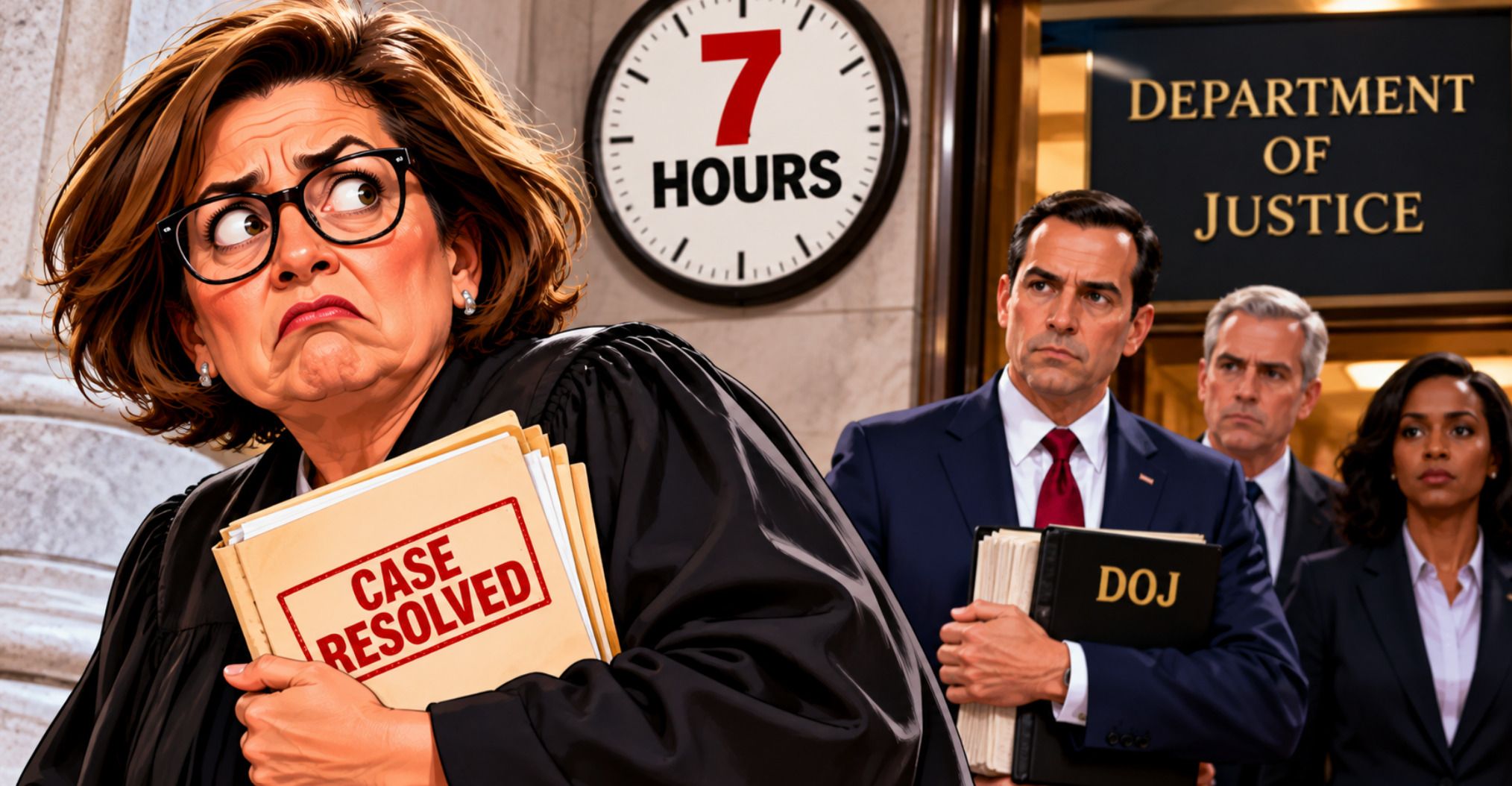
And it only took nearly seven hours.
U.S. District Judge Ana Reyes, already locked in an extraordinary confrontation with the Trump administration over plans to renovate East Potomac Golf Links, abruptly withdrew her demand that government attorneys attach their names to a disputed court filing.
The announcement came after Associate Attorney General Stanley Woodward Jr., the Justice Department’s No. 3 official, and other government lawyers refused to comply.
“Late breaking news,” Reyes announced near the conclusion of Monday’s hearing.
She then withdrew her request to have the Justice Department resubmit the filing with additional attorneys identified as signatories.
The judge explained that everyone had better things to spend their time on.
Well, that certainly would have been useful information about six hours earlier.
The dispute centered on a legal brief filed Sunday by Woodward in response to questions about the Trump administration’s plans to transform the federally owned public golf course into a championship-level facility.
Woodward had signed the filing himself. Reyes wanted the government lawyers appearing before her to put their names on it as well.
At one point, she demanded that attorneys raise their hands if they were willing to sign.
Woodward objected, calling the request inappropriate.
Reyes wasn’t satisfied. She invoked Rule 11, the federal court rule requiring attorneys to stand behind the factual representations they submit and providing for possible sanctions when those obligations are violated.
She directed lawyers toward the podium to sign the document.
They refused.
The judge initially imposed a 3 p.m. deadline, subsequently extended it until noon Tuesday, and offered a compromise under which the attorneys could have their names added without individually signing.
Then she dropped the whole demand.
Quite a journey for a signature that apparently became unnecessary somewhere between the morning confrontation and the afternoon’s closing arguments.
Outside the courtroom, Trump had already turned up the temperature.
Earlier Monday, the president blasted Reyes on Truth Social, calling her a “crazed lunatic” and questioning whether she “may be insane.”
Trump insists the Interior Department has every right to renovate East Potomac Golf Links, which he describes as rundown and unsafe. He wants the course transformed into a prestigious public venue capable of hosting major tournaments.
The judge has been questioning the administration’s handling of the project since federal crews removed roughly 430 trees from the course over a holiday weekend.
The Interior Department says the tree removal was part of an older restoration plan, separate from Trump’s proposed redevelopment.
Reyes has questioned whether the administration’s public statements about beginning construction match its representations in court that no final agency action has been taken.
And that is where Woodward entered the picture.
The senior Justice Department official signed the Sunday filing after the judge demanded additional information. When Reyes pressed the attorneys appearing before her to sign it personally, Woodward held his ground.
Former federal prosecutor Abhishek Kambli offered an explanation for why a senior DOJ official might sign a contentious filing rather than expose junior attorneys to the controversy.
Writing on X, Kambli said senior officials sometimes sign such documents so that responsibility for disputed arguments falls on leadership rather than lower-level government lawyers.
He also questioned whether the judge should have been demanding an explanation for that internal decision.
The courtroom confrontation was the latest episode in an increasingly personal legal battle.
Woodward previously sought Reyes’ removal from the case, accusing her of hostility toward the administration. She rejected that request.
Meanwhile, Trump has demanded the release of courtroom audio recordings, arguing they would expose the judge’s behavior.
Reyes has also reported receiving threats against her life amid the controversy.
The golf-course lawsuit itself remains unresolved, and the judge’s withdrawal of the signature demand does not give the administration unrestricted permission to proceed with construction or additional tree removal.
But the immediate courtroom contest over whose names belonged on Woodward’s brief has ended.
After hours of demands, objections, deadlines and threatened legal consequences, the judge decided to move on.
In a case involving a golf course, Washington has somehow managed to turn a dispute over signatures into a nearly seven-hour match.
And this time, the Justice Department didn’t have to pick up the pen.
DBS WIRE SOURCES (I’ve got all day).
- Fox News — Judge Trump called a ‘lunatic’ backs off demand after DOJ showdown
- Associated Press — Judge grills Trump administration over East Potomac golf-course plans
- Washington Post — Inside the tense October 19 hearing
- Associated Press — Earlier order restricting tree removal at the golf course