THE DAILY BS: HOW MUCH CAN YOU HANDLE?
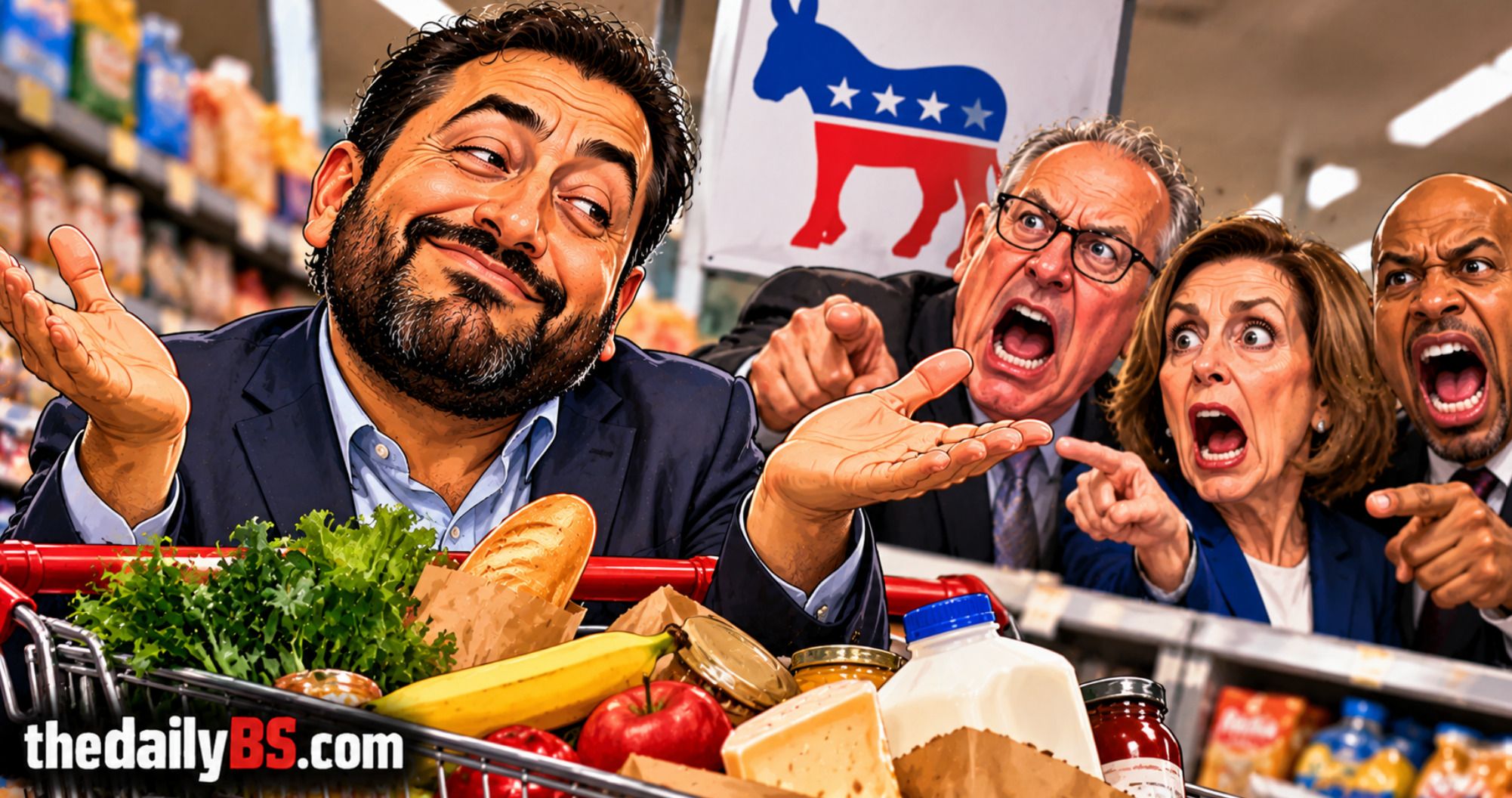
SPARE ME THE BS (I’ve got things to do).
- Cenk Uygur responded to accusations of antisemitism over his PAC’s pro-Abdul El-Sayed grocery advertisement by declaring that critics were “in a cult” and had lost their minds.
- Rebellion PAC spokesperson Kara Eastman went further, telling people who interpreted the ad as antisemitic to “get clinical help.”
- The ad has now drawn criticism from Jewish organizations, Democratic lawmakers and even Jewish Democrats supporting El-Sayed, whose campaign says it had nothing to do with producing the commercial.
LAY IT ON ME (I’ve got time).
Apparently, the people behind that controversial Michigan grocery-store advertisement have decided there’s only one possible explanation for the backlash.
Everybody criticizing them must be crazy.
And Cenk Uygur, co-founder of The Young Turks, is prepared to deliver the diagnosis himself.
As the criticism of his Rebellion PAC’s pro-Abdul El-Sayed advertisement spread Monday, Uygur took to X with a message for those calling the commercial antisemitic.
“If you think this ad is antisemitic, you’re in a cult and don’t know it,” he declared.
That’s a fascinating way to persuade people who think your political advertisement crosses a line.
His PAC’s spokesperson, Kara Eastman, offered a similar assessment to the Jewish Telegraphic Agency.
“If you think this ad is antisemitic, you’ve lost your mind, and you don’t know it,” she said.
She added that people who equate criticism of Israel with hatred of Jewish people should “get clinical help.”
Well, so much for the gentle art of political persuasion.
The controversy centers on a commercial supporting Michigan Democratic Senate nominee Abdul El-Sayed against Republican Mike Rogers.
The advertisement, produced by Rebellion PAC, depicts a couple shopping for groceries and discovering they cannot afford everything in their cart.
The problem, according to the characters, is that American taxpayers are sending billions of dollars to Israel.
The woman suggests putting back groceries because the money is needed for Israel’s military operations against Palestinians.
The commercial also implies American taxpayers are helping finance Israel’s universal health-care system.
Then comes the political pitch.
As images of Israeli leaders appear, the narrator declares that Rogers is for “they/them,” while El-Sayed is for Michigan voters.
One little complication: This isn’t even an entirely new production.
The grocery-store footage originated with Uygur’s unsuccessful 2024 presidential campaign and was repackaged with messaging for Michigan’s 2026 Senate race.
Apparently the commercial has been through more political campaigns than some candidates.
The criticism has been unusually broad.
Anti-Defamation League CEO Jonathan Greenblatt accused the PAC of scapegoating Israel for American grocery prices, calling the advertisement a “case study in antisemitism.”
Former Biden administration ambassador to Israel Dan Shapiro argued that Americans can oppose U.S. aid to Israel without claiming the assistance is responsible for the cost of groceries.
And the American Jewish Committee criticized the advertisement for presenting misleading economic claims.
These objections aren’t simply about whether the United States should send foreign assistance to Israel.
That’s a legitimate budget and foreign-policy debate, and Americans are entitled to question how their tax dollars are spent.
The dispute is over the commercial’s suggestion that ordinary Michigan families are paying inflated grocery bills because Israel receives U.S. support.
And the grocery numbers make that message particularly vulnerable.
The advertisement invokes a seven-dollar carton of eggs. But federal price data cited in reporting on the controversy put the national September average at approximately $2.27 per dozen.
Bananas, another featured item, averaged approximately 66 cents per pound.
National averages don’t establish what every Michigan shopper pays. But the ad doesn’t demonstrate that Israel-related spending caused the prices shown in its dramatized supermarket scene.
There’s also a problem with its use of foreign-aid figures.
The commercial references billions in annual assistance alongside a roughly $26 billion emergency package approved in 2024.
That package wasn’t simply a cash transfer to Israel. It included military replenishment and humanitarian funding, including assistance for Palestinian civilians.
Yet Uygur insists the issue is straightforward: Americans are paying too much to support a foreign government’s military operations.
He argues that accusing people of antisemitism for challenging those expenditures shuts down legitimate political disagreement.
But some of the fiercest criticism is coming from Democrats themselves.
Michigan Rep. Haley Stevens, whom El-Sayed defeated in the Democratic Senate primary, condemned the advertisement as fearmongering.
“This type of fearmongering about Israel is wrong,” Stevens wrote on X.
She said the commercial was not helping Michigan Democrats with the November 3 election approaching.
And then there’s Michigan Jews for Democracy, a group of Jewish voters supporting El-Sayed.
Its representative, Stacie Chaiken, described the advertisement as “crap” and said its creators apparently didn’t understand the state’s political environment.
These aren’t all Republicans trying to embarrass a Democratic Senate nominee. Some are people who actually want El-Sayed elected.
Even his campaign has put distance between itself and the advertisement.
Spokesperson Roxie Richner said the spot was not affiliated with El-Sayed’s campaign and emphasized that nobody else speaks for the candidate.
The campaign’s statement did not explicitly adopt the critics’ characterization of the ad as antisemitic.
Rebellion PAC is an outside political organization, so its decision to produce and promote the commercial should not automatically be attributed to El-Sayed.
But Uygur has no intention of retreating.
In additional posts, he urged supporters to help fund wider distribution of the advertisement and argued that critics were using antisemitism accusations to shield Israel from scrutiny.
DBS WIRE SOURCES (I’ve got all day).
- Twitchy — October 27 reaction to The Young Turks-linked advertisement
- Jerusalem Post / Jewish Telegraphic Agency — Uygur and Rebellion PAC responses and Michigan Jewish Democrats’ criticism
- Times of Israel — ADL, American Jewish Committee and Dan Shapiro responses
- Mediaite — El-Sayed campaign statement and advertisement controversy
- New York Post — Grocery-price figures and advertisement claims
- Jewish Chronicle — Advertisement origin, messaging and criticism
- U.S. Bureau of Labor Statistics — Consumer Price Index data