THE DAILY BS: HOW MUCH CAN YOU HANDLE?
SPARE ME THE BS (I’ve got things to do)
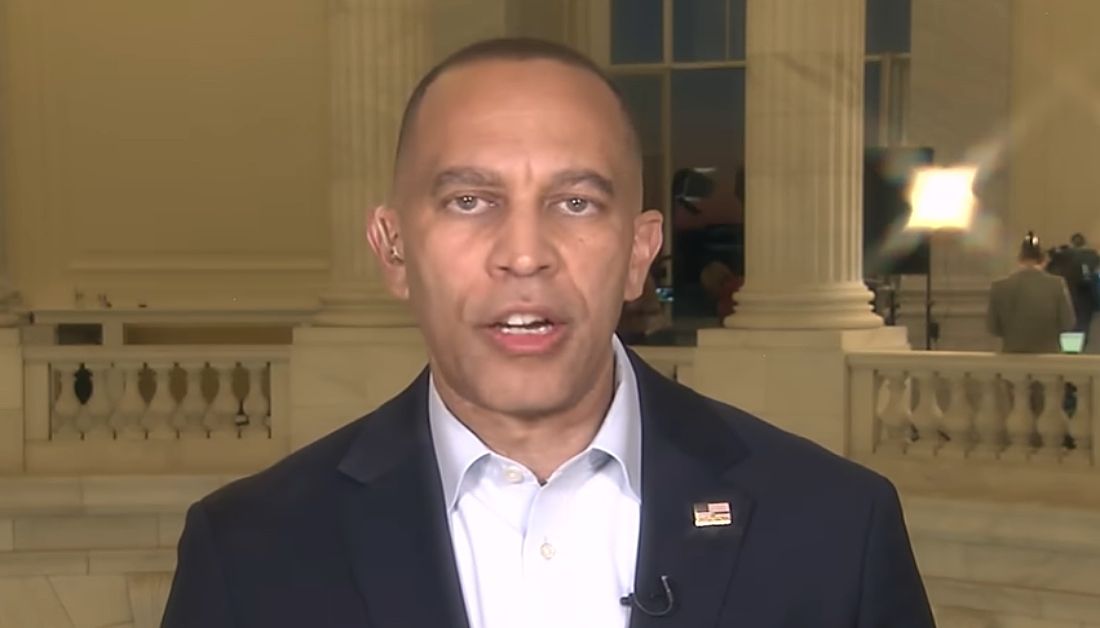
- House Democratic leader Hakeem Jeffries says he supports bringing previously deported DACA recipients back to the United States and providing “remedial assistance” to people he believes were treated unfairly under Trump’s immigration crackdown.
- Jeffries has not explained whether that assistance means taxpayer-funded compensation, legal representation, immigration-status restoration or other benefits. His remarks could have consequences for deportation decisions, federal spending and immigration enforcement if translated into legislation.
- The White House blasted the proposal, while Democratic strategist Julian Epstein warned that Democrats risk abandoning their affordability message for another immigration fight. The controversy comes as Democrats prepare to control Congress in January.
LAY IT ON ME (I’ve got time)
Hakeem Jeffries wants to bring deported Dreamers back to America. But what he said should happen afterward may be the considerably bigger story.
The incoming Democratic leadership isn’t simply talking about reversing certain deportations. Jeffries is also calling for something he describes as “remedial assistance” for people treated unfairly by the Trump administration.
And that phrase opens the door to a whole collection of questions Congress hasn’t answered, beginning with one that taxpayers might find particularly interesting.
Does Washington intend to compensate people who were deported?
During a Tuesday interview with PBS NewsHour, Jeffries was asked about reports that dozens of DACA recipients had been deported during Trump’s immigration crackdown.
Would he support bringing them back into the country? “Certainly,” Jeffries replied.
But he didn’t stop there. He said people who were treated unfairly should receive assistance intended to undo the harm they suffered. The reference wasn’t limited to DACA recipients. Jeffries also mentioned American citizens and people who had been lawfully present in the country.
That distinction matters because a policy covering everyone allegedly harmed by immigration enforcement could become substantially broader than an effort to bring back a few dozen deported Dreamers.
And once politicians begin discussing compensation, restoration of benefits and reversing previous government actions, the price tag can become considerably more complicated than the original proposal.
Jeffries did not specifically promise monetary payments. Nor did he announce a bill defining what remedial assistance would include. But the implications deserve serious examination before Congress begins writing checks, reopening cases or promising benefits.
🚨 IT’S OFFICIAL: Incoming House Speaker Hakeem Jeffries declares THOUSANDS of DACA migrants should be part of an immigration deal and give them “remedial assistance” if impacted by ICE
Translation: HE WANTS TO MAKE THEM VOTERS
“ANYONE…whether they’re DACA, who’s been treated unfairly…we need to provide remedial assistance to them and undo the damage.”
Remember that EVERY TIME Dems want any form of amnesty, it’s to make them voters, and use those voters to open the floodgate, then get citizenship to millions more
KEEP DEPORTING 🇺🇸🇺🇸
— Eric Daugherty (@EricLDaugh) November 11, 2026
Start with the legal status of the people involved. DACA, the Deferred Action for Childhood Arrivals program, protects certain immigrants brought to the United States as children from deportation for renewable periods, provided they meet eligibility requirements.
It does not automatically confer citizenship or lawful permanent residence. And DACA recipients can lose their protections under certain circumstances.
That means an effort to bring deported recipients back would require Congress or immigration authorities to determine which individuals were removed improperly, whose protections had expired or been terminated, and what legal authority would permit their return.
Those aren’t minor administrative details. If the government removes someone in violation of a valid protection or a court order, correcting that action raises one set of questions. But if an individual was legally deported after losing eligibility or violating applicable requirements, reversing that removal involves a very different decision.
Jeffries has not explained where he intends to draw that line.
The next question is even more consequential. Would returning deportees restore the protections they previously held, or would Congress create a new legal status for them?
A return authorization alone would not necessarily provide permanent residence, work authorization, or eventual citizenship. Those issues would have to be addressed separately.
And if lawmakers establish a special process for reversing deportations, immigration attorneys and advocacy organizations will undoubtedly want to know whether it applies only to DACA recipients or to other people removed during Trump’s enforcement campaign.
Jeffries’ broad language leaves that question unanswered. Then comes the matter of compensation. What exactly qualifies as harm requiring government assistance?
Lost wages? Relocation expenses? Legal bills? Separation from family members? The cost of restarting a business or reclaiming property after deportation?
Those are possible categories Congress would have to consider if it chose to establish a financial compensation program. But none has been specifically promised by Jeffries, and there is no announced payment formula, eligibility standard, or estimated cost.
That’s precisely why his proposal deserves more scrutiny before anyone describes it as a fully formed policy.
Because the phrase “remedial assistance” may sound reassuring in a television interview, but it doesn’t tell the public who qualifies, who makes the decisions, or where the money comes from.
And Congress has a remarkable talent for discovering that the details are where things get expensive.
There’s also the enforcement question. Trump’s immigration crackdown has produced record numbers of arrests and deportations, with the administration arguing that tougher enforcement is necessary to restore the credibility of immigration law.
On Thursday, ICE reported more than 483,000 deportations during the fiscal year ending September 30, the highest annual figure in the agency’s history.
Democrats contend the administration has swept up people who pose no public-safety threat and has sometimes used excessively aggressive tactics.
Those concerns can be examined through the courts, congressional oversight, and existing legal processes. But Jeffries is proposing a political response that could eventually reverse some removals and provide additional assistance to affected individuals.
For immigration officials, that raises an important practical question: Would Congress be requiring a review of specific unlawful deportations, or creating a broader opportunity to reconsider previously completed enforcement actions?
Those are two substantially different approaches. The implications extend to future administrations, too.
If Congress creates a system for compensating people based on a later political determination that a previous administration treated them unfairly, lawmakers will need standards that survive changes in party control. Otherwise, immigration enforcement could become a revolving door of policy reversals, with each new Congress revisiting decisions made by the last.
The political reaction arrived quickly. White House spokeswoman Lauren Bis criticized Jeffries and other Democrats, accusing them of putting the interests of immigrants without legal status ahead of American citizens.
But one of the more interesting criticisms came from a Democrat. Former Democratic strategist Julian Epstein warned that his party was returning to what he called an “extremist open border trap.”
Epstein argued that Democrats had campaigned on economic affordability, only for their incoming leadership to begin discussing assistance for people affected by immigration enforcement.
His concern centered on political priorities. Americans struggling with housing costs, energy bills, and medical expenses may reasonably ask why Congress is discussing potential compensation related to deportations before explaining how its economic promises will be delivered.
And Jeffries has given Republicans plenty of material for that argument.
During the same PBS interview, he promised that Democrats would not fund what he described as Trump’s mass-deportation operation.
He also urged Congress to advance the American Dream and Promise Act, legislation that would create pathways to permanent legal status for eligible Dreamers and certain other immigrants with temporary protections.
That bill is a separate proposal from the unspecified remedial assistance Jeffries discussed. It would require congressional approval, and President Trump has recently insisted that he will not accept an immigration deal involving amnesty.
Secretary of Homeland Security Markwayne Mullin has expressed willingness to discuss immigration legislation while insisting that enforcement policies remain in place. Trump has also suggested that Congress could find areas of agreement, even as his newly appointed chief of staff, Stephen Miller, remains closely associated with the administration’s deportation strategy.
That makes Jeffries’ proposal a potential flashpoint just as Democrats prepare to take control of the House and Senate. Democrats could hold hearings, propose legislation, examine individual deportation cases, and attempt to influence immigration policy through spending bills.
But they cannot simply order the executive branch to readmit every deported individual or create a new compensation program without the required legal authority and funding. And Trump would retain the power to veto legislation.
For now, Jeffries has stated a broad political objective rather than supplied a detailed legal plan.
The underlying questions remain substantial. Which deported individuals would qualify for return? Who would determine whether they were treated unjustly? Would their immigration protections be restored? Could they receive financial compensation? Would a successful claim allow family members to return as well?
And perhaps most important for the American public: Would such a program correct documented government errors, or would it become a broader effort to undo immigration enforcement decisions that the incoming congressional majority simply opposes?
Those answers will determine whether Jeffries’ proposal becomes a limited remedy for specific cases or something with far-reaching implications for immigration law, federal spending and future enforcement.
The Democrats are preparing to take control of Congress after campaigning heavily on making life more affordable. Jeffries has now introduced an immigration proposal that may eventually require its own appropriations, eligibility rules and administrative machinery.
DBS WIRE SOURCES
- Fox News — Top House Democrat sparks backlash with plan for deported Dreamers
- PBS NewsHour — November 10 interview with Hakeem Jeffries, including his full remarks
- Office of Hakeem Jeffries — Official transcript of his PBS interview
- Fox News — Democratic strategist criticizes Jeffries’ proposed remedial assistance
- Breitbart — Jeffries backs bringing deported DACA recipients back
- Reuters — Democrats prepare immigration proposals while Trump retains veto power
- Associated Press — Trump rejects amnesty while discussing immigration compromise