Congress churns out thousands of bills, but what’s really in them, and how could they affect you? DBS BILL BRIEF breaks down two bills a day IN PLAIN ENGLISH.
President Trump spent much of his political career promising to build the wall, secure the border and give immigration enforcement the resources to do its job.
Now a House Democrat has introduced legislation that would take back major portions of the extra funding Congress approved to make those promises happen.
And we’re not just talking about trimming the office coffee budget at Immigration and Customs Enforcement.
The proposal targets money for border barriers, detention facilities, enforcement personnel, surveillance technology and other border-security operations.
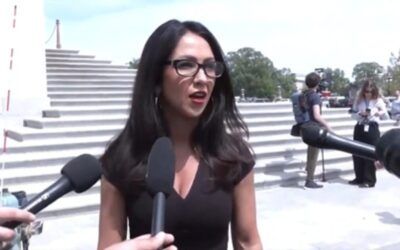
Rep. Lauren Underwood of Illinois introduced H.R. 10974, the DHS Funding Accountability Act, on November 10, 2026.
Its target is the money allocated to immigration and border enforcement in Trump’s One Big Beautiful Bill Act, which became law on July 4, 2025.
That legislation provided tens of billions of dollars in additional resources for border security and immigration enforcement, with much of the funding available over several fiscal years.
Underwood wants Congress to cancel the remaining uncommitted funding in eight specified provisions of that law.
And the bill accomplishes that in remarkably few words.
IN PLAIN ENGLISH
When Congress approves federal spending, the money doesn’t always leave the Treasury immediately.
Some funding is obligated through contracts, grants and other legally binding commitments. Other funds remain available for future commitments.
Underwood’s bill focuses on those remaining unobligated balances.
It would rescind the unobligated money under eight specified provisions of Public Law 119-21 and repeal those provisions.
Translation: Cancel the remaining funding authority and eliminate the statutory provisions that provided it.
So what would be affected?
Start with the border wall.
Section 90001 of the 2025 law provided approximately $46.5 billion for border infrastructure, including barriers, roads, detection technology and related construction.
That’s one of the funding provisions Underwood wants to repeal.
Then there’s immigration detention.
Section 90003 provided $45 billion to expand detention capacity for people held under federal immigration authority, including detention facilities for adults and families.
That provision is also on the chopping block.
The bill targets additional funding for Customs and Border Protection personnel, facilities and vehicles, along with screening equipment, surveillance technology and other border-security operations.
It also reaches certain funding intended to support state and local border-security activities.
In other words, this is a proposal to reverse a substantial portion of Trump’s expanded border-enforcement spending.
And there’s an interesting political irony here.
Democrats have criticized the administration’s immigration operations, but this legislation goes beyond demanding new oversight, better detention conditions or changes to enforcement procedures.
It would actually cancel designated funding streams before the remaining money could be committed.
HERE’S THE CATCH
The most important word in this bill may be one that rarely appears in a campaign speech: “unobligated.”
Underwood isn’t proposing to confiscate every dollar that ICE or Border Patrol has already spent.
The bill targets funding that has not yet been legally committed under the listed provisions.
That distinction is enormous.
If the government has already entered into a binding construction contract or otherwise obligated funds, the rescission language does not automatically undo that commitment.
And the bill doesn’t provide an updated accounting of exactly how much money would remain available for cancellation on the day the legislation became law.
So anyone claiming that the proposal would instantly eliminate a particular dollar amount from current operations would need to examine the latest federal obligation records first.
Here’s another important distinction.
The bill would not abolish ICE or Customs and Border Protection.
It would not repeal every federal immigration law or eliminate the agencies’ ordinary annual appropriations.
Instead, it targets specified additional funding provided through the 2025 reconciliation law.
And it doesn’t repeal every Homeland Security provision in that law.
For example, Section 90006, involving presidential residence protection, is not among the sections Underwood’s legislation identifies for repeal.
Neither is all of Section 90005. The proposal specifically targets subsection (b), involving a state border-security funding program.
Apparently, even a Washington spending rollback requires knowing exactly which subsections to cross out.
THE BIGGER FIGHT
Supporters of reducing immigration-enforcement funding argue that Congress should impose stronger accountability on federal agencies, especially amid controversies involving arrests, detention conditions and deportation operations.
Underwood’s proposal would use congressional control over spending to restrict the resources available for certain enforcement activities.
Opponents of the rollback can point to a different set of concerns.
Border infrastructure takes years to build. Immigration enforcement requires personnel, detention capacity, equipment and logistical support. Canceling funding could affect future contracts, staffing expansion and infrastructure plans.
And while Congress can change its spending priorities, rescinding available funds does not make the underlying border-security responsibilities disappear.
There is also the question of what happens to projects already underway when future phases lose their anticipated funding.
That could leave the government deciding whether to delay, reduce or restructure work that had been planned under the original law.
The proposal itself doesn’t provide a detailed project-by-project answer.
That’s why the actual amount of unobligated funding matters so much.
Congress approved the money in 2025. The administration has been making commitments under that authority. Now lawmakers are being asked to consider canceling what remains.
Washington giveth, Washington taketh away. And somewhere in between, contractors are trying to figure out whether they should order more concrete.
LEGISLATIVE HISTORY AND STATUS
H.R. 10974, the DHS Funding Accountability Act, was introduced November 10, 2026, by Rep. Lauren Underwood (D-IL).
It was referred that day to the House Judiciary Committee and additionally to the Ways and Means and Homeland Security committees.
The current official bill text is the introduced House version, designated IH.
As of the latest legislative records reviewed, the bill has not been reported from committee, passed either chamber or been signed into law.
No House floor vote has been verified.
The measure would repeal eight specified funding provisions of Public Law 119-21, the One Big Beautiful Bill Act, enacted July 4, 2025.
That earlier law remains in effect. The funding rescissions proposed in H.R. 10974 have not taken effect.
The congressional calendar also creates a deadline. The 119th Congress ends January 3, 2027. Unless this bill becomes law before then, it would generally have to be introduced again in the next Congress.
That means Democrats may have another opportunity to pursue the issue when the newly elected Congress convenes in January, but this particular proposal would not automatically carry over.
For now, the legislation puts a very concrete question before Congress: Should Washington preserve the additional border-security money approved in 2025, or cancel the funds that have not yet been committed?
Because behind all the immigration speeches, arguments and television appearances, enforcement policy eventually comes down to something Congress controls.
The money.
DBS BILL BRIEF SOURCES
- Congress.gov — H.R. 10974 legislative history and status
- GovInfo — Official introduced text of the DHS Funding Accountability Act
- GovInfo — Public Law 119-21, the One Big Beautiful Bill Act
- Congressional Research Service — Border security and immigration funding under the 2025 reconciliation law
Behind the Brief: We use modern research tools to help unpack Washington’s fine print, relying on official legislative records for the facts.