THE DAILY BS: HOW MUCH CAN YOU HANDLE?
SPARE ME THE BS (I’ve got things to do)
- Cybersecurity expert Dr. Ram Dantu warns that the recent wave of outages involving air traffic control, banks, Microsoft and sensitive government networks could expose vulnerabilities that foreign adversaries might eventually exploit.
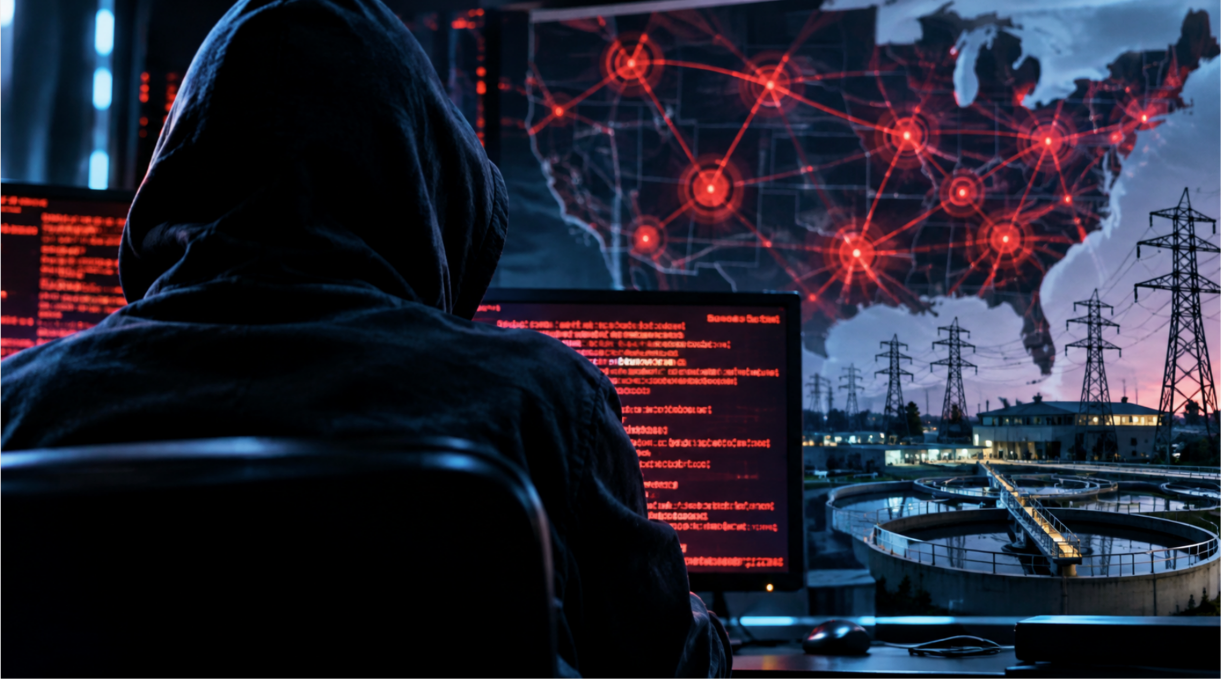
- Dantu says malicious software can remain hidden inside computer networks before being activated remotely. He is especially concerned about America’s electricity, water, energy and telecommunications infrastructure.
- Secretary of State Marco Rubio and Director of National Intelligence Jay Clayton say investigators have found no evidence of a coordinated cyberattack. The FAA has halted installation of new routers after an equipment upgrade contributed to Friday’s nationwide aviation shutdown.
LAY IT ON ME (I’ve got time)
America’s airplanes were grounded. Major banks couldn’t process transactions normally. Microsoft’s services malfunctioned, and even the National Security Agency had trouble keeping its classified communications network operating.
Now a cybersecurity expert has a warning that ought to get Washington’s attention: America’s enemies may be learning something valuable from this parade of technological disasters. They’re getting a pretty good look at our weaknesses.
Dr. Ram Dantu, founding director of the University of North Texas’ Center for Cyber and AI Security and a former Cisco director, told Fox Business that the string of outages should raise serious questions about the security of America’s essential infrastructure. His concern isn’t simply whether foreign hackers caused the disruptions, but what adversaries might learn by watching critical American systems fail, even when the apparent cause is an ordinary technical malfunction.
Apparently, you don’t necessarily need sophisticated foreign hackers to demonstrate how vulnerable America’s infrastructure can be. Sometimes a malfunctioning router or a badly timed software upgrade will do the demonstration for you, and the whole world gets to watch.
Dantu warned that malicious software can remain dormant within computer networks, potentially allowing hostile actors to conceal their presence before activating an attack at a later time. He also questioned whether investigators should be so quick to dismiss cybersecurity concerns simply because an immediate technical explanation appears available.
“Nobody can guarantee this is not a cyberattack,” he cautioned.
That isn’t evidence that these outages were attacks, and Dantu acknowledged that ordinary network congestion, software failures and equipment problems could explain them. But he wants investigators looking beyond the immediate malfunction to determine whether the failures expose larger vulnerabilities that someone could deliberately exploit.
And he isn’t talking about your laptop freezing halfway through an email. Dantu specifically identified electric grids, water systems, oil and natural gas infrastructure, telecommunications networks and financial institutions as areas where a successful cyberattack could have enormous consequences.
An air traffic control failure can bring flights across the country to a standstill. A banking disruption can prevent customers from completing transactions, while problems involving electrical and water infrastructure could interfere with services millions of Americans depend upon every day.
Those are not inconveniences that can always be resolved by unplugging the router and waiting thirty seconds.
Friday’s nationwide aviation shutdown provided an especially uncomfortable example. The problem began after telecommunications equipment associated with a network upgrade malfunctioned at an FAA facility in Arkansas, with officials reporting that a newly installed router generated an extraordinary flood of connection attempts.
That overwhelmed parts of the agency’s aging communications system, affecting communications and radar feeds at 17 of the country’s 22 regional air traffic control centers. Thousands of flights were canceled, and a problem associated with equipment at one relatively remote facility helped disrupt commercial aviation across the United States.
That certainly raises questions about how much redundancy exists within the system and why backup capabilities couldn’t contain the failure.
On Tuesday, the FAA confirmed that it was suspending further installation of the new Juniper routers while investigators examined what went wrong. The agency had been pursuing a much larger equipment replacement program, with thousands of routers scheduled for installation.
Investigators are examining whether the problem resulted from faulty equipment, installation procedures or configuration errors. The manufacturer has said its equipment was functioning as configured, leaving officials to determine where the process broke down.
Transportation Secretary Sean Duffy has already been pressing Congress for billions of dollars to modernize the aging system. As Bo recently discussed on Rush Hour, there’s another remarkable complication: The FAA doesn’t even own all the telecommunications infrastructure on which its operations depend.
Washington has spent decades debating infrastructure, modernization and government spending. Yet the country is discovering just how much national activity depends on aging equipment and complicated networks that can be extraordinarily difficult to repair or replace.
Then came Monday’s banking disruption.
JPMorgan Chase experienced a software problem that interfered with transactions and affected customers at other financial institutions. Thousands reported difficulty accessing banking services, including problems involving payments through Zelle.
Chase said the disruption originated with a software bug in an on-premises hardware system and was not cyber-related. That explanation matters, because a genuine system failure shouldn’t be transformed into an imaginary foreign attack simply because several incidents happened close together.
But there’s another lesson in the Chase problem. When a malfunction at one enormous financial institution interferes with transactions involving other banks, Americans get a glimpse of how interconnected their financial services have become.
A defect in one place can create problems somewhere else, and the financial world doesn’t always offer a convenient way to isolate the damage.
Microsoft also experienced a major service outage last week, affecting Outlook, Teams and other services. The company attributed the disruption to a technical problem associated with infrastructure changes rather than malicious activity.
On Tuesday, reports emerged that NSA Net, the National Security Agency’s classified internal communications network, had experienced an outage. The NSA said the problem involved scheduled routine maintenance and that its mission-critical national security capabilities remained operational.
That’s reassuring, certainly. But a string of technological failures involving aviation, banking, software and intelligence communications is bound to attract attention from people whose job is to examine national vulnerabilities.
Dantu is particularly concerned that foreign adversaries could use such incidents to identify weaknesses, observe recovery procedures and plan future operations. He also questioned the timing of some major software and equipment upgrades, observing that particularly sensitive infrastructure work is often scheduled during periods when disruptions would have less impact.
That raises a worthwhile question for the agencies and contractors responsible for these systems: Who approved the changes, what testing was performed and why weren’t the potential consequences contained?
Secretary of State Marco Rubio offered a firm response Tuesday to suggestions that the disruptions were connected.
“We have zero evidence whatsoever,” Rubio told reporters when asked about links among the outages.
He emphasized that investigators had found no reason to believe the incidents were connected to hackers, criminal organizations, foreign governments or other malicious actors. Director of National Intelligence Jay Clayton delivered a similar assessment, pointing toward technical maintenance, security patches and system upgrades rather than evidence of coordinated sabotage.
The available evidence supports treating the incidents as separate events with different apparent causes. But there’s a difference between asking whether someone attacked America’s systems this week and asking whether those systems are sufficiently protected against an attack tomorrow.
That’s the larger issue Dantu is raising.
For decades, Washington has spent extraordinary sums developing advanced military capabilities, sophisticated intelligence operations and some of the world’s most powerful technology. Meanwhile, portions of the infrastructure supporting ordinary American life still depend on old equipment, complex contractor relationships and networks whose failures can cascade far beyond the original problem.
Congressional committees are now examining the FAA’s equipment rollout, including questions about testing, backup protections and the decision-making that preceded Friday’s ground stop. Federal cybersecurity officials are also reviewing the broader concerns surrounding the recent outages.
The government says there is no evidence of a coordinated attack, while Dantu wants to know whether these failures are revealing vulnerabilities that a determined adversary could eventually use. As investigators review the FAA router installation, one particularly important question remains: Why was a single equipment problem able to overwhelm so much of the national air traffic control network?
DBS WIRE SOURCES
- Fox Business — Cybersecurity expert warns about infrastructure vulnerabilities amid widespread outages
- Fox Business — Former NSA official discusses classified network disruption
- Axios — FAA pauses router installations after nationwide aviation shutdown
- Associated Press — JPMorgan Chase technical issue disrupts banking services
- CNN — FAA halts router rollout while investigating nationwide ground stop
- The Daily BS — NSA’s classified communications system crashes
- The Daily BS — Banks, airlines and Microsoft go haywire
- The Daily BS — The FAA doesn’t own the network it depends on