THE DAILY BS: HOW MUCH CAN YOU HANDLE?
SPARE ME THE BS (I’ve got things to do)
- Mississippi Senator-elect Scott Colom asked Nike to reward his state’s high school valedictorians with custom Air Force 1 sneakers. Nike surprised him by promising to expand the offer to top students nationwide.
- The Democrat, who defeated Republican Sen. Cindy Hyde-Smith in a historic Mississippi election, said the sneakers could motivate students to work harder in school. He has since suggested a design honoring Hiram Revels, the nation’s first Black U.S. senator.
- Nike says the program will cover the 2026–2027 school year, although the company has not yet announced the shoe model, eligibility requirements or distribution details.
LAY IT ON ME (I’ve got time)
Here’s something you don’t see every day in Washington: A newly elected Democrat asks a major corporation for something free, and instead of sending taxpayers the bill, the company volunteers to make the deal even bigger.
And this time, the beneficiaries aren’t politicians, lobbyists or government contractors. They’re high school students who have worked their way to the top of their graduating classes.
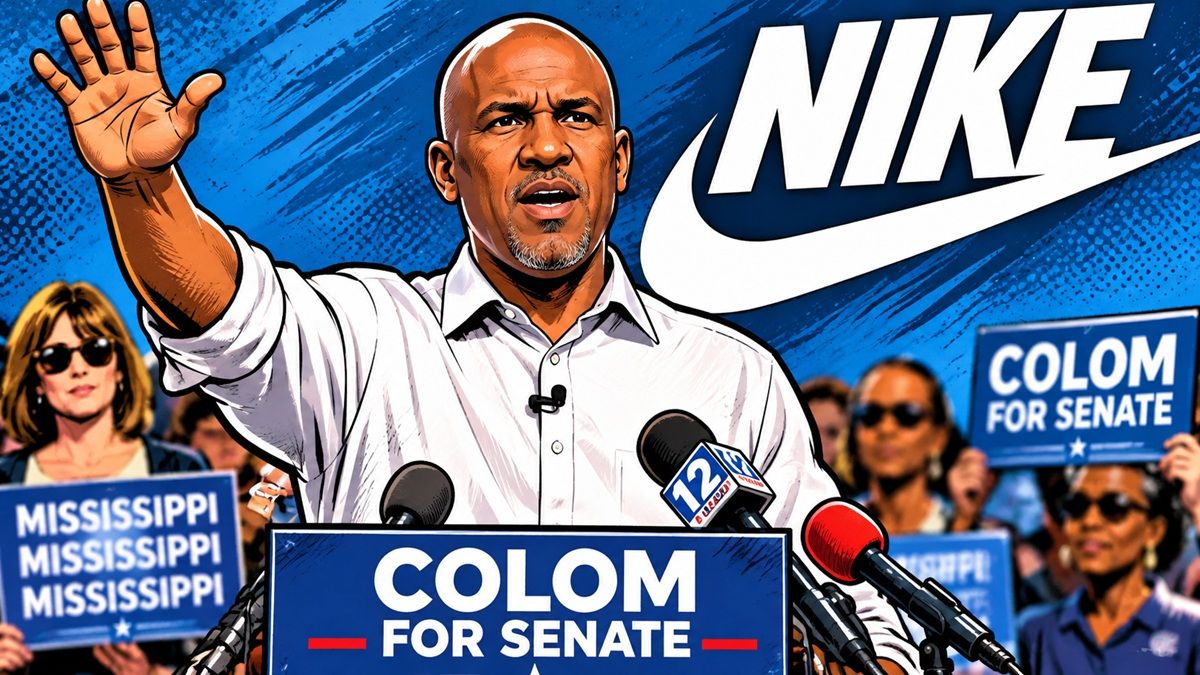
Mississippi Senator-elect Scott Colom, fresh off his stunning victory over Republican incumbent Cindy Hyde-Smith, asked Nike to reward every high school valedictorian in his state with a custom pair of Air Force 1 sneakers. Nike responded with an offer Colom apparently hadn’t imagined: Why stop at Mississippi when the company could reward valedictorians across America?
Now that’s a pretty good way to turn a social media post into a national news story, particularly when you haven’t even been sworn into the Senate yet.
Colom made his original pitch Monday, November 16, suggesting that Nike could help celebrate a historic political moment while encouraging students to concentrate on their schoolwork. The senator-elect happens to be an Air Force 1 enthusiast, and he thought a special edition of his favorite sneakers might give Mississippi teenagers another reason to put some effort into their studies.
His proposal was straightforward: Reward the students who finish first academically, and perhaps encourage a few others to work harder along the way. Colom even recruited a little help from inside Nike’s orbit, tagging Joe Holder, a Nike master trainer, and asking him to help arrange a conversation with the company.
Holder answered that he would see what he could do. Then Nike stepped in.
“The athlete mindset makes things possible, including this idea,” the company’s official store account announced on X.
Nike told Colom it would expand the offer to high school valedictorians throughout the United States for the 2026–2027 academic year, promising additional details. That’s a rather impressive response to a politician who had originally asked for sneakers for students in just one state.
And there’s something refreshingly different about the premise.
In a political environment where enormous arguments revolve around who deserves government assistance, Colom proposed rewarding academic achievement through a private company’s voluntary participation. Nike saw an opportunity to generate goodwill, celebrate students and promote its brand.
The company gets publicity, the students stand to receive free shoes, and Colom gets credit for putting the idea into motion.
No congressional appropriation required.
Of course, Rush Limbaugh would probably have had a few observations about a politician discovering the promotional possibilities of giving away free merchandise. But he’d also have recognized the distinction between a company voluntarily opening its wallet and politicians opening somebody else’s.
That’s what makes this story interesting.
Colom, a Democrat, has just won one of the year’s most remarkable Senate races. He defeated Hyde-Smith by approximately 8,000 votes, according to the latest state figures, becoming the first Black candidate elected by Mississippi voters to the U.S. Senate since Reconstruction.
His victory is historic in another respect. Mississippi had not elected a Democrat to the Senate since 1982, and the party’s breakthrough contributed to its unexpectedly large congressional gains.
Colom will take office in January, but he is already attracting national attention. Instead of beginning with a confrontation over taxes or government spending, he’s talking about sneakers for students who earn the highest grades.
After Nike’s announcement, Colom responded enthusiastically.
“I’m so proud of @Nike for stepping up to motivate students across the country in this historic moment,” he wrote.
He praised the company’s willingness to act and suggested that the sneaker design honor Hiram Revels. Now there’s a historical name worth knowing.
Revels became the first Black member of the United States Senate when Mississippi’s legislature elected him in 1870. A Republican, he served during Reconstruction and occupied a seat previously held by Jefferson Davis, who later became president of the Confederacy.
That’s quite a chapter of American history to incorporate into a pair of sneakers.
Colom’s suggestion also creates an intriguing intersection of politics, education, corporate branding and historical recognition. The newly elected Democrat wants to honor a pioneering Black Republican senator, and Nike has agreed in principle to reward academically successful students nationwide.
The company hasn’t committed to a particular commemorative design, however, so whether Revels ultimately appears on the shoes remains to be seen.
There are still important practical details to settle.
Nike has not identified which sneaker model it plans to provide. Colom requested custom Air Force 1s, but the company’s nationwide announcement did not explicitly promise that every recipient would receive that particular shoe.
The company also hasn’t explained how schools will verify valedictorian status, how students will apply or when the sneakers will be distributed. Those questions matter when you’re talking about a nationwide program covering thousands of high schools.
Still, the potential is substantial.
An academic recognition program that began as one senator-elect’s social media suggestion could become a memorable graduation perk for students from Mississippi to Montana. And Nike has a perfectly sensible commercial reason to be interested.
Giving away sneakers to exceptional students is likely to generate substantial publicity and goodwill. The company could introduce itself to thousands of young consumers who may remember the gesture long after graduation.
That doesn’t diminish the benefit to students. It simply illustrates how private enterprise can find a business opportunity in doing something people appreciate.
There’s a lesson there that Washington occasionally overlooks.
Not every worthwhile idea needs to become a federal program. Sometimes a politician can make a suggestion, a private company can decide it likes the idea, and something useful can happen without a congressional committee meeting or a new government agency.
Colom’s political opponents may disagree with him on just about everything else. They can still recognize that encouraging academic achievement is a worthwhile goal.
His supporters also have a tangible early example of how their newly elected senator is using his public platform. For now, though, the company has made a public promise rather than delivered the shoes.
Students, parents and schools will have to see whether Nike follows through with a workable nationwide program. But the offer has already turned a Mississippi senator-elect’s small request into a national conversation about rewarding students who excel in the classroom.
There’s an amusing irony in the timing, too.
DBS WIRE SOURCES
- Mediaite — Nike goes one better after Scott Colom’s free sneaker pitch
- Nike — Official nationwide valedictorian offer on X
- Scott Colom — Official X account and comments
- Mississippi Clarion Ledger — Scott Colom asks Nike to give free shoes to graduates
- Hindustan Times — Nike responds to senator-elect’s proposal
- Newsweek