THE DAILY BS: HOW MUCH CAN YOU HANDLE?
SPARE ME THE BS (I’ve got things to do)
- New York City Mayor Zohran Mamdani challenged New York Times journalist Andrew Ross Sorkin after being questioned about 57,000 registered vacant rent-stabilized apartments, including an estimated 26,000 off the market.
- Mamdani disputed the significance of those figures, saying only about 6,000 apartments had remained vacant for five years and rejecting landlords’ arguments that rent restrictions prevent necessary repairs.
- Days after the interview, the mayor revived the controversy on X, asking, ‘Did a landlord write this question?’ and declaring the claim about vacant apartments ‘dangerous.’
LAY IT ON ME (I’ve got time)
New York City Mayor Zohran Mamdani has promised to solve the city’s housing affordability crisis. But when a journalist asked about tens of thousands of empty rent-stabilized apartments, the democratic socialist had a question of his own.
“Andrew, did a landlord write that question?”
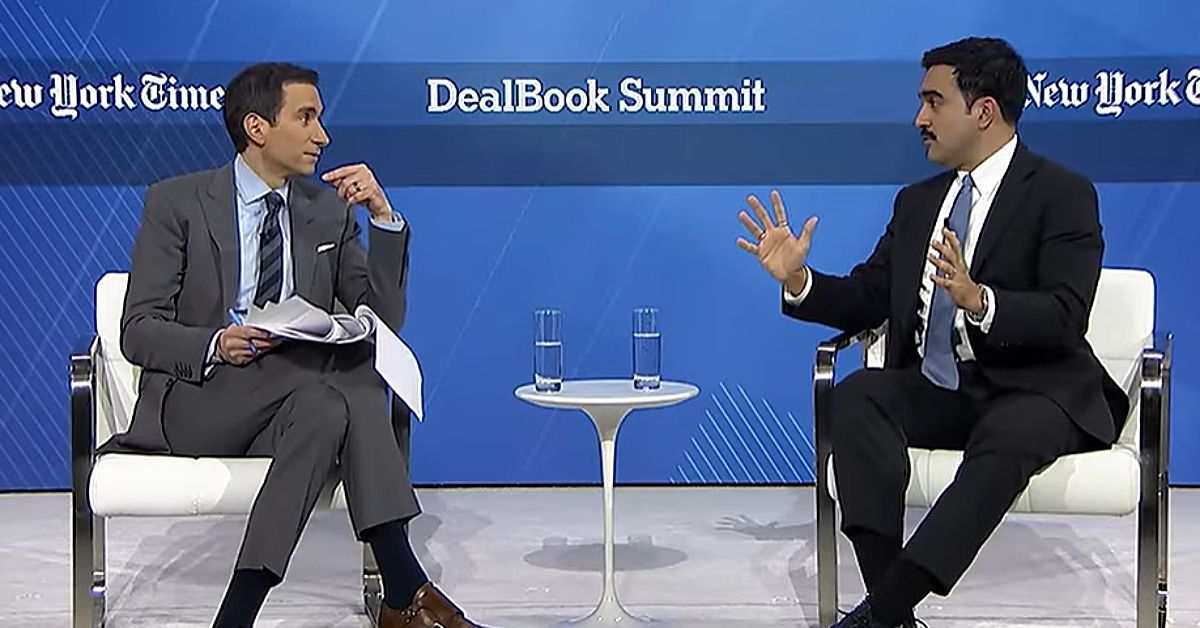
The exchange came during Mamdani’s November 18 appearance at the New York Times DealBook Summit, where journalist Andrew Ross Sorkin pressed the mayor about housing shortages, rent regulations and the possibility that thousands of existing apartments could be returned to the rental market.
Rather than another discussion about billionaires, this was a question about empty apartments in a city where finding an affordable place to live can feel like winning the lottery. And Sorkin brought numbers.
“There are apparently 57,000 rent-stabilized apartments in the city right now that are registered as empty,” he told Mamdani, adding that at least 26,000 were reportedly off the market.
Sorkin suggested that many could potentially be made available more quickly if landlords were permitted to recover the costs of renovating them through higher rents.
That’s when Mamdani delivered his landlord question.
Did a landlord write this question?
There’s a rumor that a huge number of rent-stabilized apartments are vacant because landlords can’t raise the rent.
That’s not true. And it’s dangerous. https://t.co/ehFEnRuqer
— Mayor Zohran Kwame Mamdani (@NYCMayor) November 22, 2026
Sorkin acknowledged speaking with landlords about the issue, explaining that the vacant apartments represented housing that might be available without waiting for entirely new buildings to be constructed. The mayor wasn’t persuaded.
“I want to go through those numbers,” Mamdani replied.
Sorkin conceded that the 57,000 figure was disputed and suggested using 26,000 as a more conservative estimate. But Mamdani offered a different measurement altogether.
“What the numbers show is that only about 6,000 units have been vacant for five years,” he said.
The mayor argued that some supposedly vacant apartments were actually newly constructed rent-stabilized units preparing to accept tenants, rather than old apartments deliberately kept off the market. He also questioned the economics of landlords’ renovation proposals.
According to Mamdani, property owners sometimes claim that restoring an empty apartment costs between $50,000 and $100,000. They then argue that the existing regulated rent cannot support that expense.
The mayor illustrated the problem with an example: an apartment renting for $1,600 that an owner wants to increase to $3,500. He warned that allowing such increases could encourage landlords to push existing tenants out of their buildings.
There is a legitimate policy disagreement here. Landlords argue that rent restrictions can make expensive repairs financially impractical, while tenant advocates contend that allowing large rent increases would threaten affordability and encourage displacement.
But the figures under discussion aren’t interchangeable.
The 57,000 number came from landlord registration filings obtained through a public-records request and reported in July. The data indicated that approximately 5.6% of New York City’s roughly one million rent-stabilized apartments were registered as vacant.
It is not a rumor, it is true according to the State of New York-https://t.co/FILP6RMobl
— Usually Right (@normouspenis) November 22, 2026
That doesn’t establish that every one of those apartments was intentionally withheld from tenants because of rent regulations. But Mamdani’s figure of 6,000 apartments vacant for at least five years doesn’t establish that all the other vacant units were available to rent, either.
The interview had already produced a revealing exchange when the mayor decided to revive it on Sunday.
“Did a landlord write this question?” Mamdani posted on X, sharing the controversy with his followers. “There’s a rumor that a huge number of rent-stabilized apartments are vacant because landlords can’t raise the rent.”
“That’s not true. And it’s dangerous.”
The reaction was immediate.
One commenter challenged the mayor to present reliable statistics demonstrating that the claims were false. Another dismissed the issue as basic economics, arguing that owners facing high renovation costs need some way to recover their investments. Mamdani’s response was seen as an attack on an interviewer who had dared to challenge his housing policies.
What remains unresolved is how many of New York’s empty regulated apartments could realistically return to the market, what repairs would cost, and whether existing rent rules make those repairs uneconomical.
And one additional statistic puts the debate in perspective. According to figures published in the city’s July 2026 housing report, New York’s overall rental vacancy rate was just 1.41% in 2025.
Yet the landlord registration data separately identified approximately 57,000 vacant rent-stabilized units — a housing category governed by different reporting methods and definitions.
DBS WIRE SOURCES
- Twitchy — Mamdani criticizes interviewer question after housing discussion
- NYC Mayor’s Office — Complete official transcript of Mamdani’s November 18 DealBook interview
- New York Times DealBook Summit — Interview transcript with video timestamps
- Mayor Mamdani — Original November 22 X post
- The Real Deal — Vacant rent-stabilized apartment rate climbs in New York
- New York City — July 2026 City Record, rental housing and vacancy figures