- The 1983 attacks in Lebanon, including the U.S. Embassy and barracks bombings, are etched in American memory
- Iran’s role in these attacks was confirmed by an interview with Sayyed Issa Tabatabai, a representative of Iran’s Supreme Leader
- The interview also revealed Iran’s sponsorship of Hezbollah
- Questions arise about Iran’s response, U.S.-Iran relations, the nuclear deal, and potential legal actions
- President Biden must seek justice for the 1983 Lebanon attack victims, and his approach to Iran will be closely scrutinized by the American public as the election approaches

The horrific attacks on U.S. defense and diplomatic personnel stationed in Lebanon in 1983 remain etched in Americans’ memory. Images of the bomb-wrecked American embassy and dozens of flag-draped coffins being brought home were some of the most awful moments of the decade that the country had to witness.
In the attack on the U.S. Embassy in Beirut on April 18, 63 people, including 17 Americans, died. Just months later, suicide bombers struck again. On October 23, 1983, two suicide bombers drove their explosive-laden trucks into the barracks of the American and French service members of the Multinational Force in Lebanon (MNF), a military peacekeeping operation during the Lebanese Civil War. The attack killed 241 American military personnel and 58 French troops.
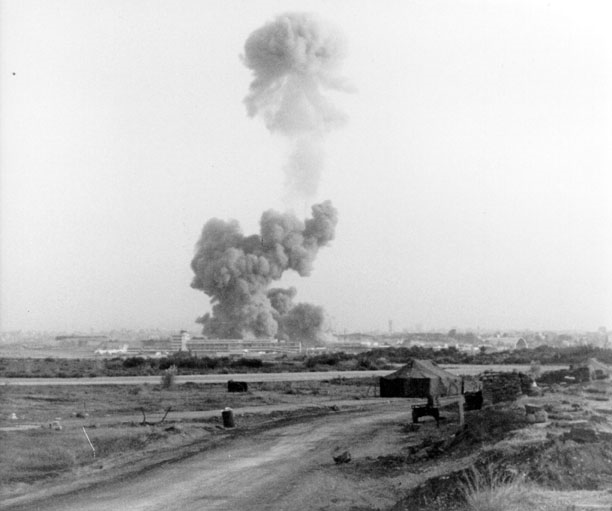
The American administration, under President Ronald Regan, accused the Iranian regime of orchestrating the gruesome attacks. The hard-line Islamic government vehemently denied the allegations and has continued to do so. Until now.
The Middle East Media Research Institute (MEMRI) has unearthed and translated an interview by Sayyed Issa Tabatabai, a representative of the Iranian Supreme Leader Ali Khamenei in Lebanon, to the Islamic Republic News Agency (IRNA). In his conversation with the state-controlled official news media, the diplomat says, “I quickly went to Lebanon and provided what was needed in order to [carry out] martyrdom operations in the place where the Americans and Israelis were.”
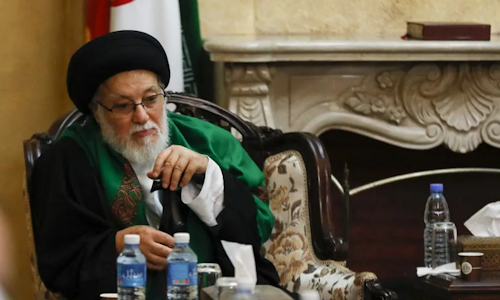
But the portion where he acknowledged that the fatwa or order to carry out such attacks was given by the then-Iranian leader Ayatollah Ruhollah Khomeini was removed from the IRNA website shortly after it was published.
While the exact date of the interview is yet to be ascertained, the information revealed in the interaction confirms the accusations made by the American administration. Not only is the Iranian regime behind the attacks that took place forty years ago, but they are also the sponsors backing Hezbollah, a terrorist organization.
Tabatabai says in the interview:
The efforts to establish [Hezbollah] started in [Lebanon’s] Baalbek area, where members of [Iran’s] Islamic Revolutionary Guards Corps arrived. I had no part in establishing the [political] party [Hezbollah], but God made it possible for me to continue the military activity with the group that had cooperated with us prior to the [Islamic] Revolution’s victory.
Tabatabai’s words are as good as official proof. The IRNA’s actions, of first publishing and later deleting the interview, expose Tehran’s ploys. The revelation and its timing pose a few questions. For instance, why did an Iranian diplomat confess to such involvement despite the Iranian administration’s vehement denial for four decades? How will the Iranian regime respond to the interview? Will it prompt the clerical regime to own up to its horrendous actions? Who will be punished or made the scapegoat for such admissions coming to light?
But there are more pressing questions. How will the bombshell acknowledgment, akin to proof of involvement, affect U.S.-Iran relations? Will they continue to court Tehran with sops to revive the dead nuclear deal? Will the American administration take a more hard-line stance against the oppressive Middle Eastern country now? Will Washington pursue legal recourse and take Iran to The Hague? Will Tehran apologize or be forced to compensate those who lost their loved ones in the attacks?
With a representative of Iran’s top leader admitting to the country’s infamous role in killing hundreds of Americans, President Biden cannot afford to sit on his hands with an election looming ahead. America will judge the President on how he seeks justice for those murdered in Lebanon in 1983.
Related:
TIPP Takes
Geopolitics And Geoeconomics
1. Putin ‘Wrong’ If He Thinks He Can Outlast West On Ukraine: White House – AFP
The White House on Monday rejected claims by the Kremlin that Western fatigue on aid for Ukraine would grow after a deal to avoid a U.S. government shutdown left out funds for Kyiv.
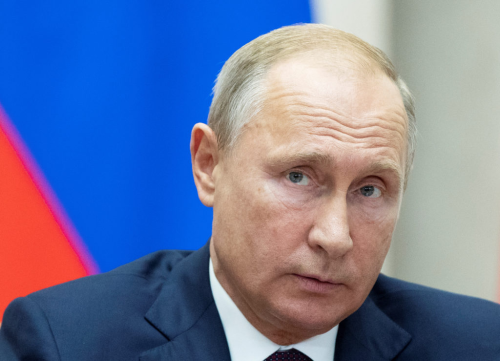
“If Putin thinks he can outlast us, he’s wrong,” Press Secretary Karine Jean-Pierre said.
2. Russian Ruble Weakens Past 100 To The Dollar – Reuters
The ruble weakened past 100 to the dollar before recovering slightly on October 3, weighed down by foreign-currency outflows and the country’s shrinking current-account surplus.
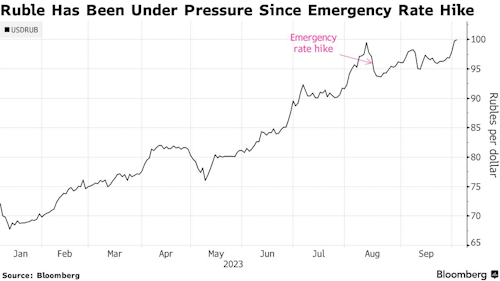
The ruble’s last tumble into triple digits in August led the Bank of Russia to make an emergency 350-basis-point rate hike to 12 percent, and authorities discussed reintroducing controls to bolster the currency.
3. Turkey Considering Supplying Bayraktar Akinci Drones To Ukraine: Turkish Defense Firm – Al Arabiya
“Ukrainian military personnel are well aware of what we manufacture and invest in. Therefore, our plan is to produce all the systems we have here in Ukraine,” the general director of the defense manufacturing firm Baykar said.
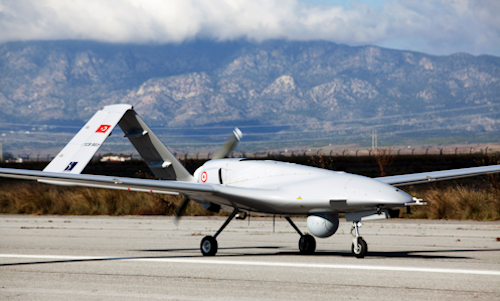
Russian Presidential Spokesman Dmitry Peskov said in August that should a manufacturing plant of Turkish combat drones open in Ukraine, it will be subject to “immediate demilitarization.”
4. Mexico President Slams U.S. Military Support For Ukraine – Reuters
Mexican President Andres Manuel Lopez Obrador panned U.S. military aid to Ukraine, suggesting it was “irrational,” and criticized the war effort.
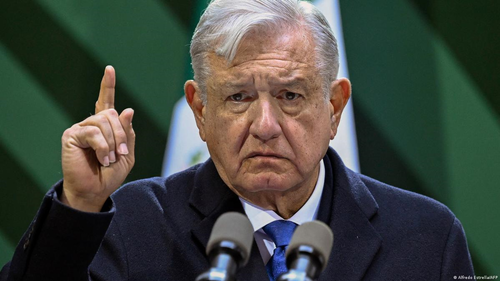
He urged Washington to devote more resources to helping Latin American countries. Lopez Obrador has long called on the United States to devote more funds to helping economic development in Central America and the Caribbean to ease migratory pressures.
5. Ukraine Intel Directorate Confirms Drone Attack On Russian Missile-Producing Factory – Al Arabiya
Ukrainian attack drones struck a Russian aircraft factory where Kh-59 missiles were produced, Ukraine’s Main Intelligence Directorate (GUR) confirmed on Monday.
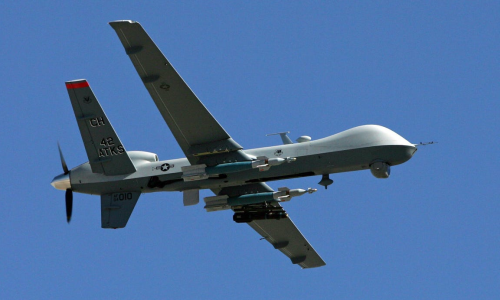
According to the Ukrainian military intelligence agency, the Kh-59 is one of the missiles the Russian Aerospace Forces most often use against military and civilian targets in Ukraine.
6. On National Day, Xi Calls For Unity And Protesters March Overseas – RFA
China marked National Day over the weekend with goose-stepping soldiers, calls for national unity, and an army-produced anime film depicting ‘unification’ with the democratic island of Taiwan.
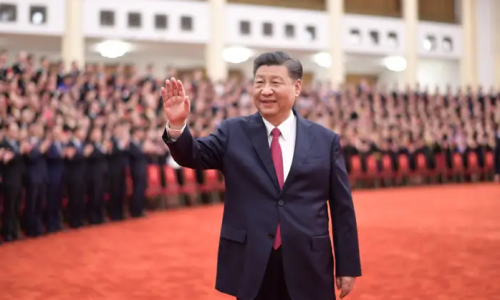
Meanwhile, protesters against Communist Party rule took to the streets of cities worldwide. Some protesters tore up a Chinese national flag in London, letting it get run over by passing traffic.
“Our future is bright, but the road ahead will not be smooth,” President Xi Jinping told hundreds of guests at a dinner reception ahead of Sunday’s anniversary.
7. China Says Open To International Collaborations On Lunar Mission – Reuters
China, which aims to become a major space power by 2030, has opened up a key lunar mission to international cooperation as mission deadlines loom for setting up a permanent habitat on the moon’s south pole.
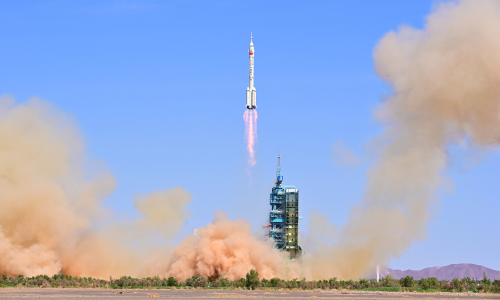
China welcomes countries and international organizations on its uncrewed Chang’e-8 mission and to jointly carry out “mission-level” projects, the China National Space Administration (CNSA) said at the 74th International Astronautical Congress in Baku, Azerbaijan.
China aims to land astronauts on the moon by 2030.
8. China Keeps Sri Lanka In Debt Grip, Stalling IMF Relief – Nikkei Asia
Sri Lanka’s failure to secure a concrete debt relief framework from China, its largest bilateral lender, is blocking access to desperately needed cash under a $3 billion bailout from the International Monetary Fund.
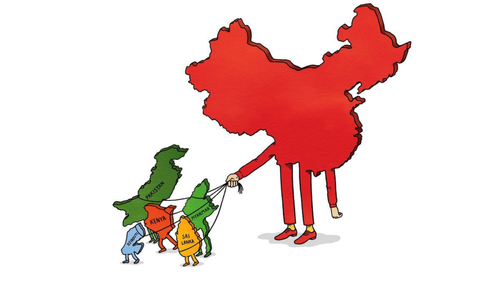
The IMF, which has insisted on “financing assurances” from bilateral lenders as a key pillar, gave Sri Lanka a failing grade in the first review of the bailout, denying it a second tranche of $330 million in aid. Sources said China’s foot-dragging on Sri Lanka’s debt was an issue.
9. TSMC’s $8bn Japan Chip Project Steams Ahead As U.S. Site Hits Snags – Nikkei Asia
Taiwan Semiconductor Manufacturing Co. will begin installing equipment at its new chip plant in Japan this month. This is a sign that the project is proceeding more rapidly than the company’s cutting-edge facility in the U.S.

10. U.S. Welcomes Serbia’s Announced Withdrawal Of Troops From Kosovo Border – RFE/RL
The United States welcomed an announcement by the commander of the Serbian Army that some troops have been withdrawn from the border with Kosovo.
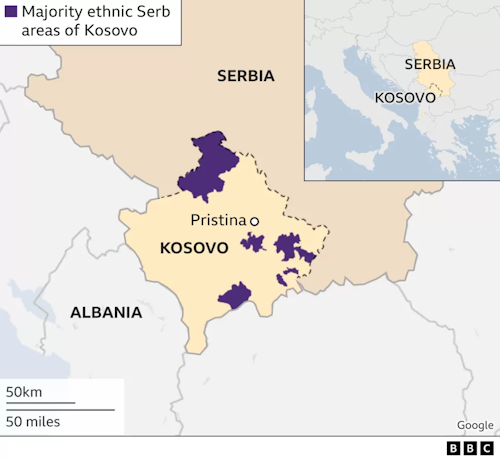
But a State Department spokesman said that Washington is still concerned about tensions in northern Kosovo.
White House National Security Council spokesman John Kirby on September 29 called on Serbia to pull back what it said was a large military deployment at the border, calling it a “very destabilizing development.”
11. Tunisia Rejects EU Financial Aid, Casting Doubt On An Immigration Deal – Reuters
Tunisian President Kais Saied rejected financial support announced by the European Union in September, saying the amount is small and goes against a deal signed three months ago.
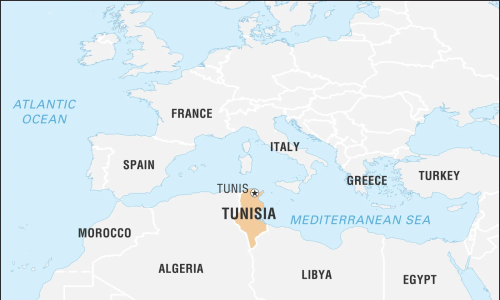
Saied’s move could undermine the “strategic partnership” from July that includes measures on combating human traffickers and tightening borders, which came during a sharp increase in boats heading to Europe from the North African nation.
12. Oil Industry ‘Central’ To Climate Crisis Solutions: COP28 President – AFP
“For too long, this industry has been viewed as part of the problem, that it’s not doing enough and in some cases even blocking progress,” said Sultan Al Jaber, the president-designate of the COP28 talks.
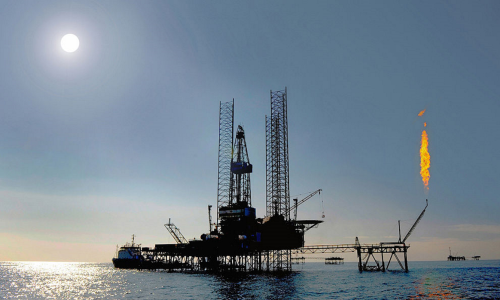
“This is your opportunity to show the world that you are central to the solution,” he told the Abu Dhabi International Petroleum Exhibition Conference. “It is time to silence the skeptics by applying scale, capital, and technology to deliver outcomes.”
13. Niger Accepts Algeria’s Proposal To Mediate In Political Affairs – WION
Algeria said that the coup-hit Niger had accepted its proposal to mediate its political crisis. The Niger junta was yet to respond to the development.
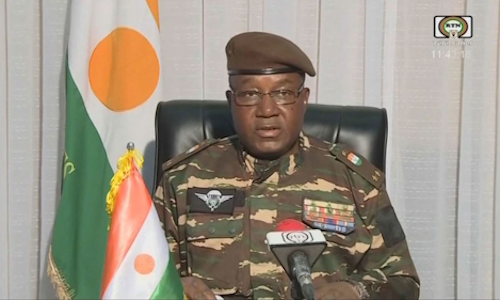
The mediation would “pave the way” towards a “peaceful” resolution of the crisis, it added, saying such an outcome is in the interest “of the entire region,” Algeira’s foreign ministry said in a statement.
Algeria has proposed a six-month transition period in the country led by civilians.
14. UN Approves Sending Foreign Forces To Stabilize Haiti – AFP
The United Nations Security Council approved a Kenyan-led mission to bring stability to Haiti a year after leaders in the violence-ravaged Caribbean nation first pleaded for help.
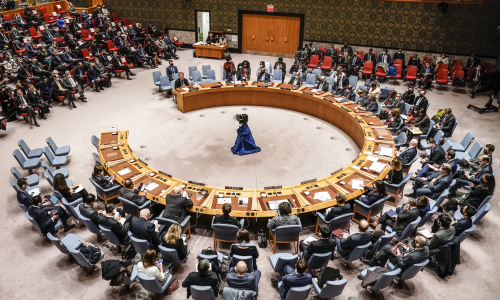
The Western Hemisphere’s poorest nation has been in freefall, with armed gangs taking over parts of the country and unleashing brutal violence, and the economy and public health system also in tatters.
15. Pope Francis Open To Blessings For Same-Sex Couples, Not Women Priests – UPI
While none of the pope’s responses to critical questions were absolute, he did express an openness to blessing some same-sex unions as long as it is done without the sacrament of marriage.
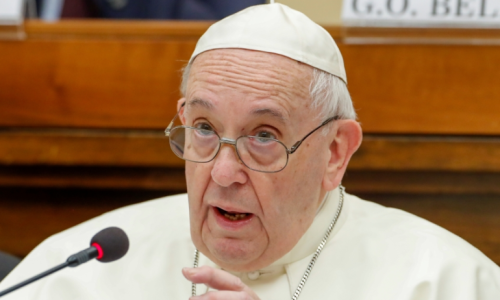
The pope also answered questions about the possibility of women priests in the Catholic Church, replying “no” while “definitively” affirming St. Pope John Paul II’s ban in 1994 of “the impossibility of conferring priestly ordination to women.”
Francis said John Paul “was in no way denigrating women and conferring supreme power on men,” as he offered the possibility of further study.
Please email [email protected]
Republished with permission from TIPP Insights