As the Ukraine war enters its third year, the Biden administration unveiled its most extensive sanctions package to date, this time to punish Putin for the death of opposition leader Aleksei A. Navalny.
President Biden announced the move.
Today, I am announcing more than 500 new sanctions against Russia for its ongoing war of conquest on Ukraine and for the death of Aleksey Navalny, who was a courageous anti-corruption activist and Putin’s fiercest opposition leader. These sanctions will target individuals connected to Navalny’s imprisonment as well as Russia’s financial sector, defense industrial base, procurement networks, and sanctions evaders across multiple continents. They will ensure Putin pays an even steeper price for his aggression abroad and repression at home.
The Biden administration has been pursuing the most stringent sanctions regime against any country in American history – over 2,500 sanctions against Russia in just two years – all for Moscow’s merciless and illegal invasion of Ukraine. But for Biden to dramatically intensify American sanctions to punish Putin for the death of an opposition leader demonstrates to leading powers of the Global South that America’s concerns about Navalny’s well-being were significantly broader than him just being Russia’s best chance for a democratic future. In 2020, Russia had gone so far as to claim that the CIA was working with Navalny. All of a sudden, this claim did not feel far-fetched, given how the New York Times says that for over a decade, the United States has nurtured a secret intelligence partnership with Ukraine to fight Putin.
Authoritarian countries like China, Saudi Arabia, and various Middle Eastern nations are perennially concerned about opposition leaders in their own countries who receive Western support, so many may be sympathetic to Putin’s actions, especially if Navalny was a spy. Even a vibrant democracy like India has pushed back on allegations about its treatment of Khalistan leaders abroad (who envision a Sikh region that can secede from India), maintaining that as a sovereign nation, India has the right to pursue all actions necessary to protect its homeland.
Global South capitals also find the actions of Biden and his allies deeply hypocritical. As we noted in a recent editorial, the Left’s lawfare treatment of former President Trump is not that different from Russia’s treatment of Navalny, although Trump has not yet been physically harmed by the ongoing lawfare.
Judge Ergoran has fined Trump $355 million, which, along with interest payments, amounts to $450 million, a sum close to Trump’s cash assets. The idea is to cripple Trump’s wealth. Ergoran has further tightened the noose on Trump by forbidding his children from running the business. The prosecutor, Letitia James, told ABC News that she would seize Trump’s assets if Trump didn’t put up a bond before the 30-day deadline. Two weeks after Trump is expected to win enough delegates to win the nomination on Super Tuesday, he is scheduled to be tried in a criminal court of law in New York in a different case. This targeted lawfare is against the former President of the United States and a person leading in the polls in a general election matchup against the sitting President, not any opposition leader. If Biden wants to punish Putin for his attacks on an opposition leader, how come Biden himself is weaponizing his DOJ to attack his rival?
Biden’s sanctions decision was bizarre in that it would further drive Russia into the waiting embrace of the Global South, India, and China, widening the abyss with the United States. These countries have helped Russia bypass Western sanctions for the last two years by actively engaging with the beleaguered nation, consuming Russia’s exports, and selling Russia crucial items that it wants. In the face of the latest sanctions, they will be even more ready to support Russia, weakening the sanctions’ impact.
Besides, we have repeatedly noted that Western sanctions have failed to contain Russia and resulted in unintended consequences. In April 2023, we opined that America’s sanctions are driving countries away from the dollar. The following month, we noted Western sanctions are biting the West more than Russia.
In “Why Sanctions Haven’t Hobbled Russia,” the New York Times took a detailed, old-style-journalism look at two years of Western sanctions on the country and concluded accurately that Moscow’s continued strength is a humbling result for the U.S. and its allies. “Its economy is growing steadily. Russia can’t buy much from the West but has found new providers for drones, surveillance gear, computer chips, and other gear. Its oil and gas sales are still strong, despite attempts to stop them. Russian officials say they have plenty of money to pay for their war.”
The latest Biden announcement amounted to Albert Einstein’s classic definition of insanity:
Insanity is doing the same thing over and over and expecting different results.
Wally Adeyemo, the deputy Treasury secretary, whose primary role in the Biden administration has been to be Janet Yellen’s sidekick and travel the world to sell sanctions, was his usual self, full of hubris, anticipating that the latest sanctions set would “throw sand in the gears” of Russia’s military. This was the same official who championed Yellen’s price cap on Russian oil as a means to curtail Russian revenues and strangle Russian military investments. The Times reported in a different story that Russian oil export income is higher than before the invasion – so much for the effect of the price cap.
In our 2-year report card on the second anniversary of Russia’s thoughtless and illegal invasion of Ukraine, we gave a failing or near-failing grade to nearly every dimension of the West’s conduct of the war.
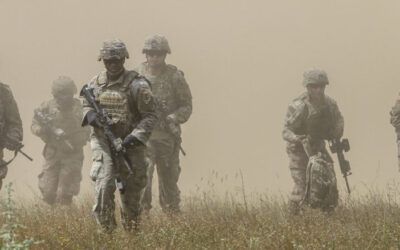
American and European taxpayers have sent $200 billion in weapons and logistical support to help Ukraine – yet Ukraine has lost nearly 13% more territory than it had when Russia first invaded. Meanwhile, Russia continues to grind on, taking more territory, as Ukraine finally withdrew from the strategically crucial frontline city of Avdiivka. Kyiv is running out of soldiers; the average age of fighters is now above 42. The hard truth is that Russia is prevailing, and Ukraine and the West are losing.
Biden officials are aware that nearly every action of theirs regarding Ukraine, going back to November 2021 before even a single shot was fired, has been a disaster. But the administration is too proud and arrogant to either admit fault or course-correct. If anything, they keep doubling down and doing the same things repeatedly and more intensely.
Einstein would be turning in his grave.
TIPP Takes
Geopolitics, Geoeconomics, And More
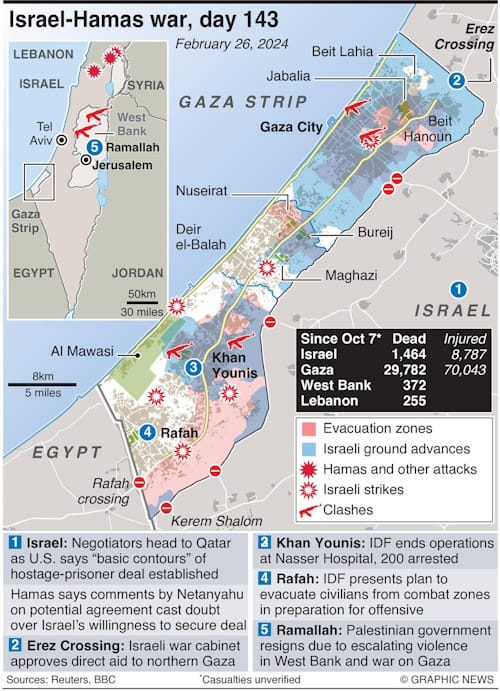
1. Israel Proposes Plan To Forcibly Push Palestinians Out Of Gaza – Al Arabiya
Israel’s military proposed a plan for evacuating civilians from the Gaza Strip, Prime Minister Benjamin Netanyahu’s office announced after he said a ground invasion of the Palestinian territory’s southern city Rafah was necessary for “total victory.”
2. U.S. Says Paris Talks Came To ‘Understanding’ On Hostages, Possible Gaza Ceasefire – AFP
“Representatives of Israel, the United States, Egypt, and Qatar met in Paris and came to an understanding among the four of them about what the basic contours of a hostage deal for a temporary ceasefire would look like,” White House National Security Advisor Jake Sullivan told CNN.
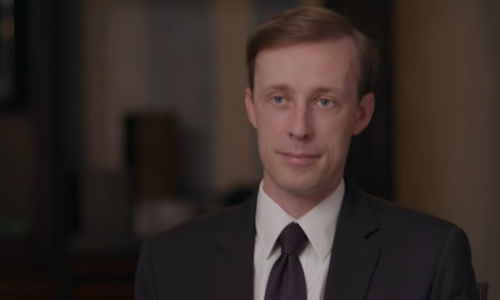
It is still under negotiation in terms of hammering out the details of it. There will have to be indirect discussions by Qatar and Egypt with Hamas because ultimately they will have to agree to release the hostages.
3. Jordan’s King Warns Of Wider Regional War If Israel Continues Gaza War During Ramadan – AFP
King Abdullah II’s warning came during his meeting with Palestinian President Mahmoud Abbas.
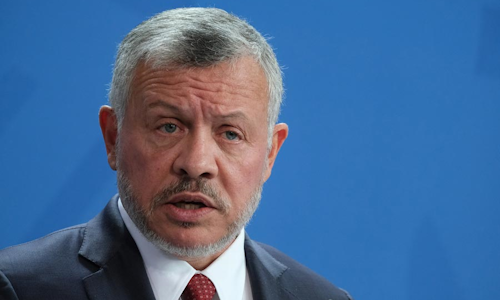
Israel has warned that if Iran-backed Hamas militants do not free the remaining hostages held in Gaza by the start of Ramadan, it will keep fighting during the holy month, including in Rafah, where around 1.4 million Gazans have sought refuge.
Ramadan is to begin on March 10 or 11, depending on the lunar calendar.
4. Zelenskyy Says 31,000 Ukrainian Soldiers Killed In War With Russia – Al Jazeera
Speaking at the “Ukraine. Year 2024” forum in Kyiv, Ukraine’s President Volodymyr Zelenskyy said that “each of these losses is a great sacrifice” for Ukraine.
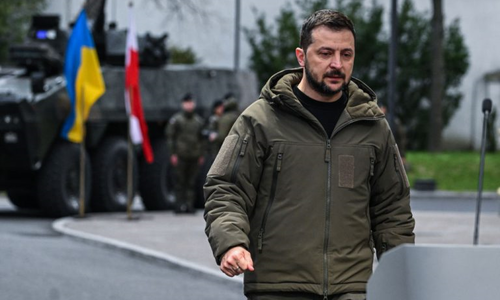
Zelenskyy’s comments are the first time that Kyiv has confirmed the number of its losses since the Russian invasion began. Russia has also provided few official casualty figures. Independent Russian news outlet Mediazona said that about 75,000 Russian men died in 2022 and 2023 fighting in the war.
5. Russia Preparing For New Offensive In Ukraine In May, Says Zelensky – Reuters
Russian forces are preparing for a new offensive against Ukrainian defenders in late May or summer, but President Volodymyr Zelensky said Kyiv has a clear battlefield plan of its own.
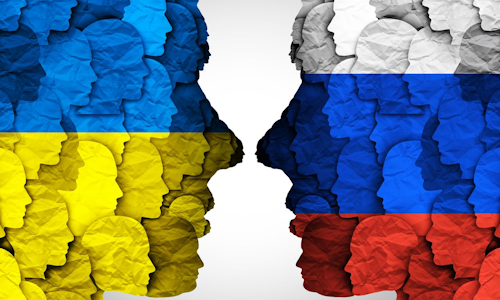
The Ukrainian leader said at a news conference it was vital for Kyiv and its Western allies to remain united, predicting two difficult months followed by a fresh Russian assault.
6. Ukraine’s Counteroffensive Plans Were Leaked To Russia, Says Zelensky – AFP
“Our counteroffensive action plans were on the Kremlin’s table before the counteroffensive actions began,” Zelensky said at a press conference in Kyiv. Zelensky did not provide any other details on the leak.
He said that Kyiv was preparing “several” versions of its battlefield strategy for 2024 to help avoid a repeat.
Ukraine’s counteroffensive in 2023, powered by billions of dollars in Western arms, largely fell flat, failing to break through multiple lines of Russian defenses and fortifications.
7. Russian Presidential Election: Early Voting Begins In Occupied Ukrainian Region Of Zaporizhzhia – WION
Early voting in Russia’s presidential election began in the Russian-occupied Ukrainian region of Zaporizhzhia, reported state news agency TASS, citing a Moscow-appointed local election official.
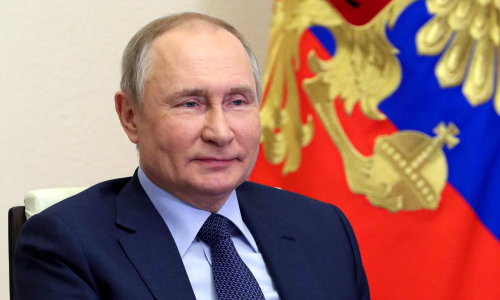
Meanwhile, the leaders of the Group of Seven (G7) nations said that they would “never recognize” the elections held in the occupied Ukrainian regions.
The election will see Russian President Vladimir Putin running virtually unopposed for his fifth term, keeping him in power until 2030.
8. Deputy Prime Minister Says 160 Tons Of Ukrainian Grain Destroyed In Poland – Reuters
Around 160 tons of Ukrainian grain was destroyed at a Polish railway station amid large-scale protests in what Ukrainian Deputy Prime Minister Oleksandr Kubrakov called an act of “impunity and irresponsibility.”
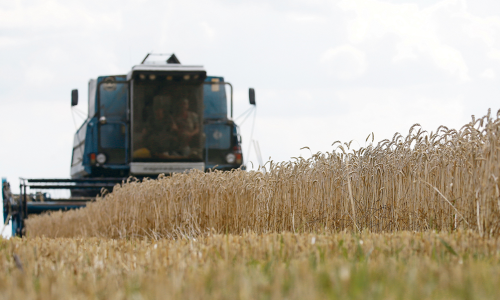
Polish farmers protesting against what they say is unfair competition from Ukraine and EU environment regulations have blocked border crossings with Ukraine. EU agriculture ministers are meeting in Brussels to discuss proposals to change some regulations at the heart of recent discontent.
9. Body Of Russian Dissident Alexei Navalny Released To Family – UPI
Kira Yarmysh, the Navalny family’s chief spokesperson, said in a post on X that his body was “handed over to his mother. Many thanks to all those who demanded this with us.”
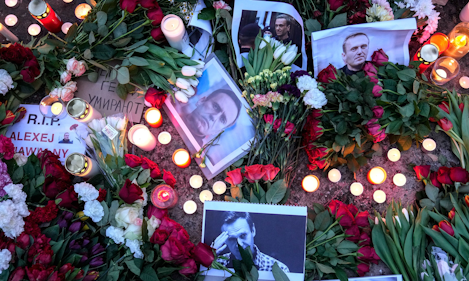
She added, “The funeral is still pending. We do not know if the authorities will interfere to carry it out as the family wants and as Alexey deserves.” More than 82,000 Russians signed a petition asking Russian officials to return Navalny’s body to his family, The Guardian reported.
10. Why The New Security Law Is A ‘Sword Of Damocles’ Over Hong Kong – RFA
The Hong Kong government has launched a public consultation on a rewritten draft of its planned Safeguarding National Security Ordinance, which will criminalize “treason,” “insurrection, “and external interference,” among other national security offenses.
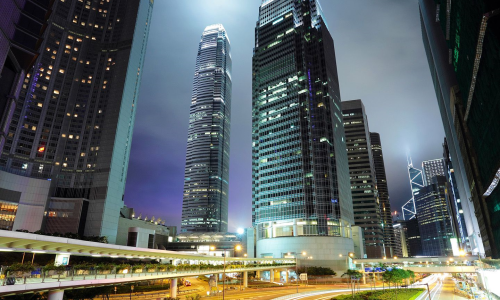
Why has the Article 23 legislation been described as the “sword of Damocles” over Hong Kongers’ heads?
Essentially, this law is the culmination of a long-running attempt to graft the ideology, political ideas, and behavioral patterns of the Chinese Communist Party’s totalitarian system onto a pro-Western capitalist society that respects universal values.
11. Feleti Teo Named New Tuvalu PM, Taiwan Ties Hang In Balance – AFP
Lawmakers in Tuvalu have selected former attorney general Feleti Teo as the Pacific island nation’s new prime minister, weeks after an election that has put ties with Taiwan in focus.
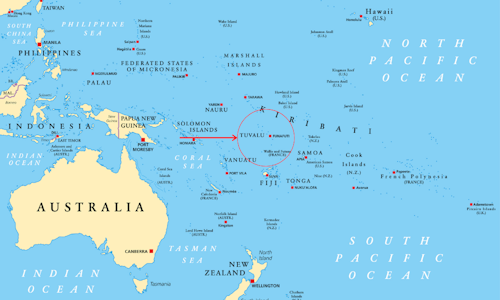
Pacific observers will be looking to see whether Teo calls for a policy rethink. Teo’s elevation to prime minister comes after his predecessor, Kausea Natano, who had backed long-standing relations with Taipei, lost his seat in general elections. Tuvalu is one of just 12 states that still formally recognize Taiwan.
12. South Korea Investigating Company On U.S. Sanctions List Over Russia Connection – Yonhap
Daesung International Trading, a company located in South Korea’s city of Gimhae, was one of 93 entities added to an “entity list” for export restrictions by the Bureau of Industry and Security under the U.S. Commerce Department.
South Korea’s trade ministry and customs agency are investigating the company’s alleged law violations, such as the Foreign Trade Act.
13. ECOWAS Lifts Sanctions On Niger Amid Tensions In West Africa Bloc – Al Jazeera
The West African regional bloc is lifting most sanctions imposed on Niger over last year’s coup in a new push for dialogue following a series of political crises that have rocked the region in recent months.
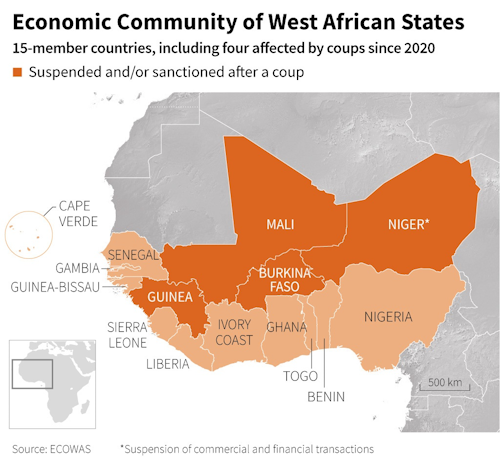
The lifting of the sanctions is “on purely humanitarian grounds” to ease the suffering caused, Economic Community of West African States (ECOWAS) Commission president Omar Alieu Touray said after the bloc’s summit in Abuja.
14. Jair Bolsonaro: Brazil’s Former President Denies Coup Allegations – BBC
Former Brazilian President Jair Bolsonaro has claimed he has been a victim of political persecution since leaving office just over a year ago. He told tens of thousands of supporters in São Paulo that coup allegations against him were a “lie.”
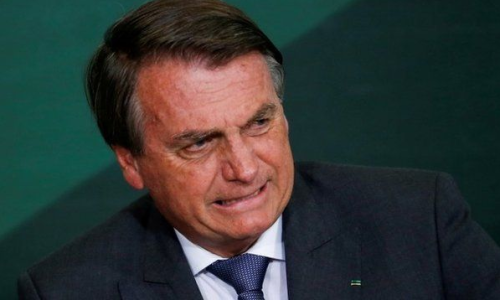
He also called for an amnesty for hundreds of his supporters convicted for attacks on public buildings. Police are investigating whether Mr. Bolsonaro incited a failed coup after losing the 2022 election.
15. Mexico City Water Crisis Nearing ‘Day Zero’ – UPI
Mexico City, one of the world’s largest and most densely populated cities, could be on the verge of running out of water, and prolonged drought and above-average temperatures are hastening the problem, Mexican authorities have said.
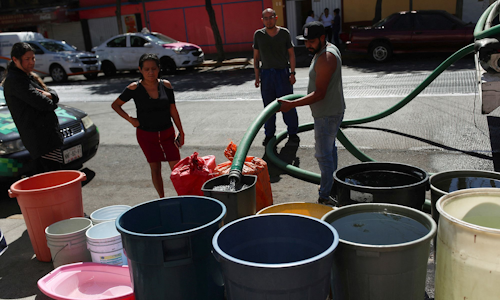
Recently, some Mexico City residents have protested in the streets to raise awareness of the shortages where, according to local authorities, water levels are at their lowest levels in recorded history.
16. Air Pollution May Raise Risk For Alzheimer’s Disease – UPI Health
People exposed to high levels of traffic-related air pollution are more likely to have more amyloid plaques in their brain, a condition associated with Alzheimer’s disease, a new study finds.
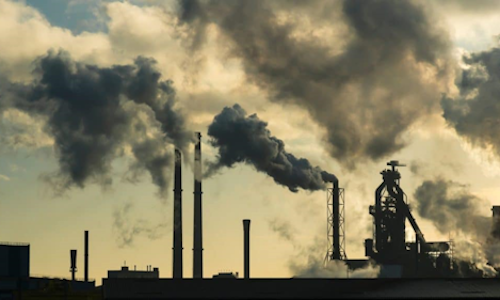
Seniors were nearly twice as likely to have more amyloid plaques if, in the year before their death, they lived in places with high concentrations of particle pollution caused by traffic, results show.
However, the findings did not prove that air pollution causes Alzheimer’s, only that there is an association.
Republished with permission from TIPP Insights