- President Biden’s plans to raise taxes and increase spending on social programs will exacerbate Americans’ economic challenges
- The Federal Reserve’s interest rate hikes affect government debt servicing, with annual interest payments exceeding $1 trillion
- Biden’s unchecked spending leads to growing federal debt, prompting concerns about the sustainability of the current fiscal path
- Rising inflation and interest rates are squeezing household budgets, resulting in higher delinquencies and increased financial stress
- RELATED: The Misery Index Shows Bidenomics is Failing
- RELATED: Would-Be Homeowners Need 80% More Income to Buy Than 4 Years Ago, Study Finds
- RELATED: Bidenflation Hits 18.0%, Hurting Americans
- RELATED: Blame Washington, Not Grocery Stores, for Food Price Hikes
- RELATED: Government Gets Fatter As Americans Rack Up Record Credit Card Debt
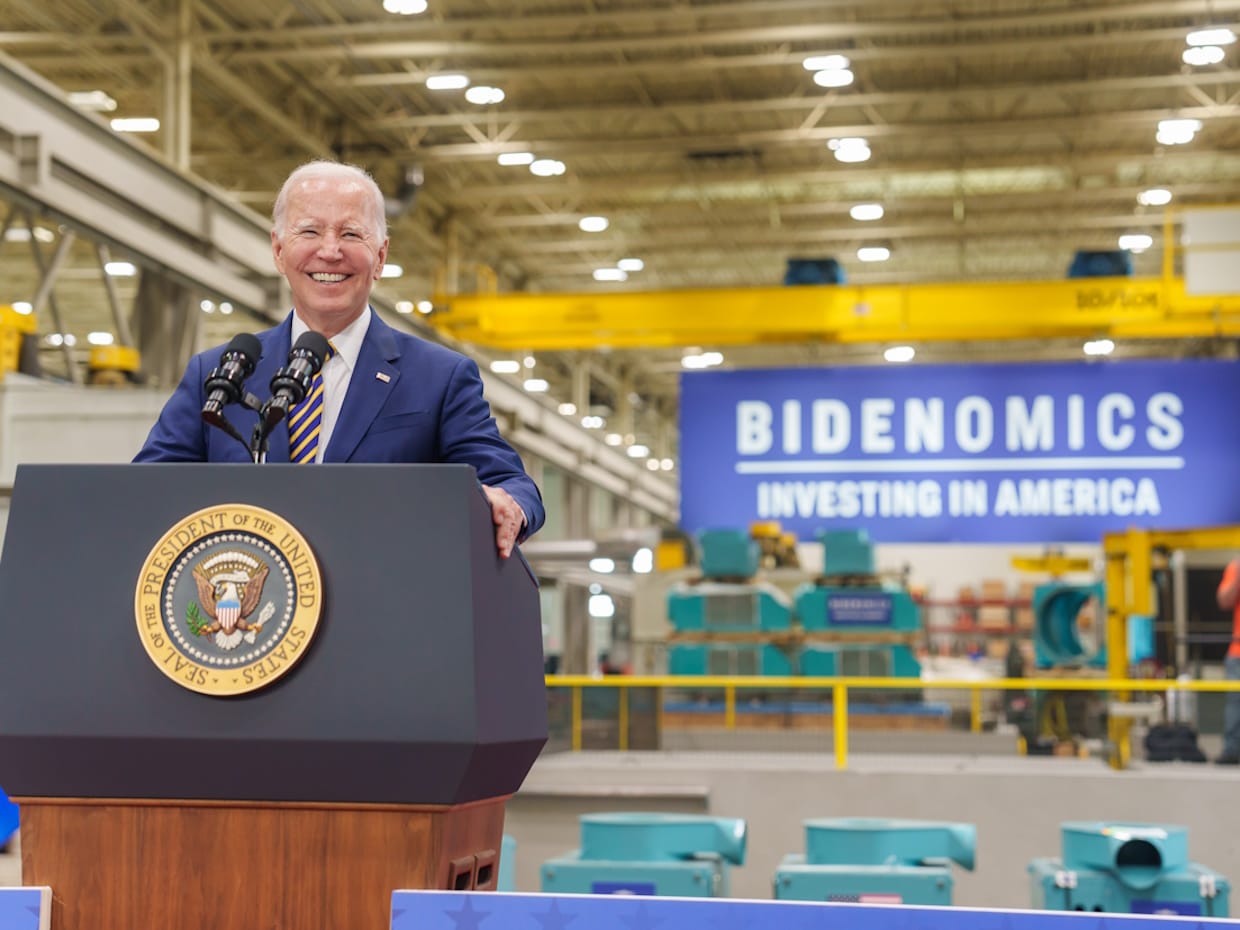
As President Biden unveiled a budget that raises the tax rate on anyone making over $400,000 to 28% from the current 21%, while he continues to spend more for social programs (a national program of paid leave for workers, expanded child tax credit and new tax credits for some home buyers), voters are reminded of how disastrous his economic stewardship has been.
The Left’s only mantra is to tax more and spend more. At the State of the Union, Biden employed the clever word Democrats have been using for decades to avoid the dreaded “spend” word: Invest. He said:
A fair tax code is how we invest in things that make this country great: health care, education, defense, and so much more.
The President seems unfazed three years after he took office and pushed through trillions of dollars in spending. Running an administration that refused even to consider that inflation was rising – remember Janet Yellen’s insistence that inflation was “transitory” – the stubborn Biden has learned nothing and is driving America to the precipice.
On May 5, 2022, the Federal Reserve announced the first of its many interest rate hikes – a dramatic 50 basis point increase in its Funds Rate to bring it into a target range of 0.75% to 1.00%. The Fed also began tightening its balance sheet, stopping its quantitative easing policy altogether, and asking borrowers to return cash to the Fed when their securities matured.
The Federal Open Market Committee (FOMC) met four times in the next six months – in June, July, September, and November. Each time, the Fed announced a 75 basis point increase, unprecedented in modern times. On November 3, the Fed Funds target rate reached 4%. It meant that the Fed had substantially increased the cost of borrowing for the federal government to service its ever-increasing debt. In December and February, the Fed again increased rates. Today, the Funds rate stands at 5.33%. And Chairman Powell has not ruled out additional hikes.
Meanwhile, federal debt has climbed to over $34.5 trillion, and all Biden can think about is promoting the same old tax and spending policies. Fed actions directly impact the federal government because it has to pay the same interest rates to service its debt as everyone else. Besides, as the Fed has steadily shrunk its balance sheet, selling off whatever Treasury securities it had bought up during quantitative easing, there’s a glut of Treasury bonds in the market. Such an oversupply means that the United States Treasury has to bribe investors by promising more returns as the government attempts to fund its priorities.
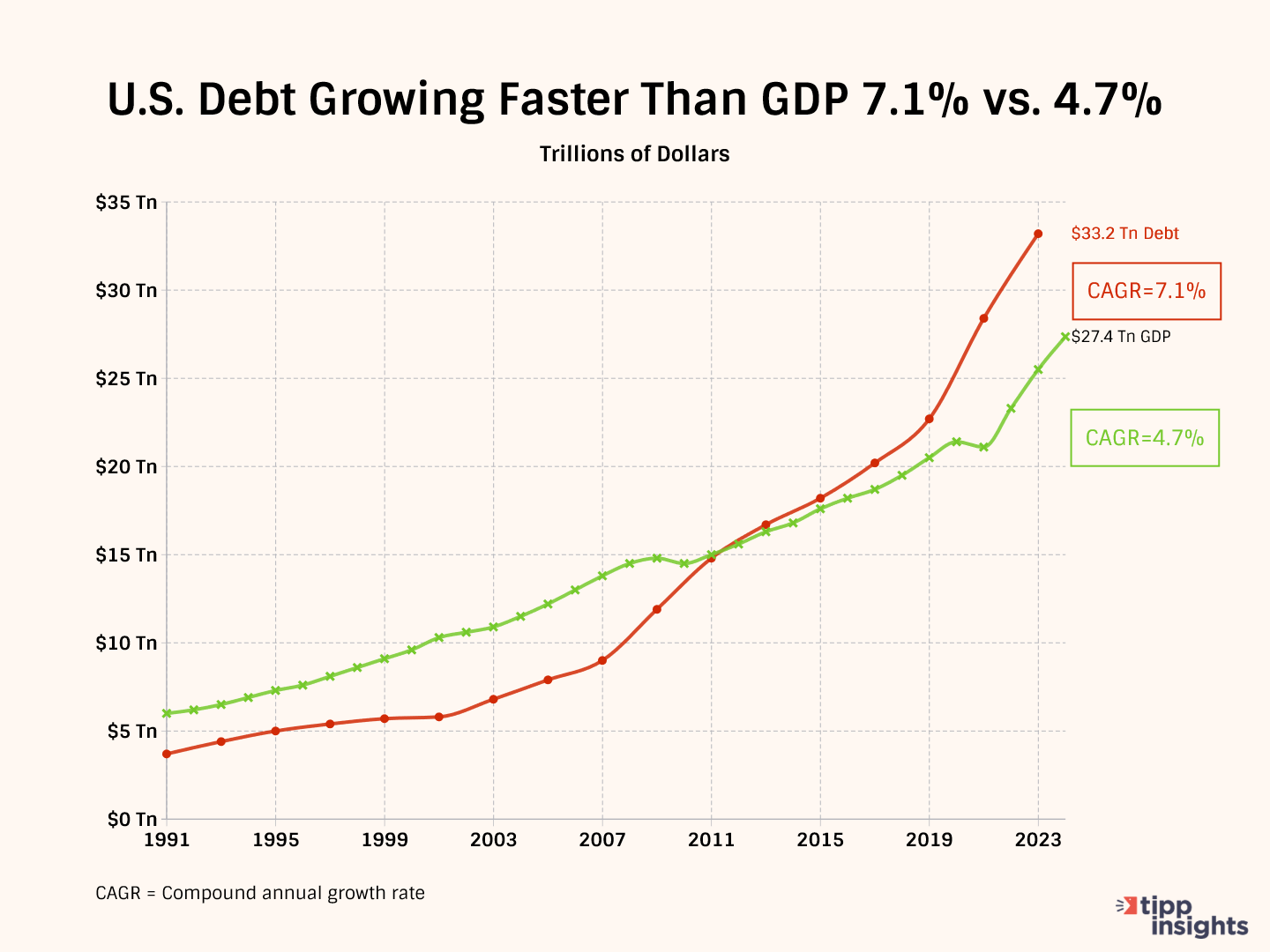
The federal debt is so large that the government spends over $1 trillion a year just to service it. This is a budget line item greater than what America spends on defense. To satisfy deficit hawks, Biden claims that his budget will pay down $3 trillion in debt over the next ten years, which most respected economists say is too ambitious. Even if we were to take it at face value, the total debt would have climbed to over $54 trillion by then. So, is Biden ok with America having a 51 trillion dollar debt burden ten years from now? What would the debt servicing costs be, then?
Biden’s reckless handling of the economy has placed Americans in deep financial distress. Bidenflation, our measure of how much prices have risen since he took office, is above 18%.
Experian says that “the average monthly payment for a new vehicle increased $25 year-over-year, reaching $726. The average interest rate for a new vehicle was 7.03% in Q3 2023, up from 5.26%. The average interest rate for a used vehicle was 11.35%, up from 9.38% last year.” These loans were for a five-year term. The price of cars has increased so much that most Americans cannot finance their purchase in just five years. So, they extend the loan term to six or even seven years. Finance companies then increase the interest rate to nearly 9%.
“Credit card and auto loan transitions into delinquency are still rising above pre-pandemic levels,” said Wilbert van der Klaauw, economic research advisor at the New York Fed. “This signals increased financial stress, especially among younger and lower-income households.”
When so many Americans are feeling impoverished and with America inundated by over 8 million illegal aliens, it is extraordinarily irresponsible for Biden to continue to push for nearly $95 billion in aid to Ukraine, Israel, and Taiwan.
Let us fix our own house first before helping others with money that we do not have.
TIPP Takes
Geopolitics, Geoeconomics, And More
1. Hamas Issues Ceasefire Proposal Detailing Exchange Of Hostages, Prisoners – Reuters
The Gaza ceasefire proposal presented to mediators and the U.S. includes the release of Israeli hostages in exchange for freedom for Palestinian prisoners, 100 of whom are serving life sentences.

Israeli Prime Minister Benjamin Netanyahu’s office said on Thursday a new Gaza truce proposal presented by Hamas to mediators was still based on “unrealistic demands.”
2. Israeli Forces Kill Dozens Of Palestinians Waiting In Line To Receive Aid In Gaza – Reuters
At least 29 Palestinians were killed while awaiting aid in two separate Israeli attacks in the Gaza Strip on Thursday, Gaza’s health ministry said.

According to Gaza’s health ministry, the first incident was an airstrike on an aid distribution center in Al-Nuseirat camp, while the second was Israeli gunfire at a crowd awaiting aid trucks at a northern Gaza roundabout, Gaza’s health ministry said.
On Feb. 29, Palestinian health authorities said Israeli forces shot dead more than 100 Palestinians as they waited for an aid delivery near Gaza City.
3. Israeli Army Denies Opening Fire On Gazans Waiting For Aid – AFP
The Israeli army said it had not opened fire on a crowd waiting for humanitarian aid in the northern Gaza Strip.

“Press reports that Israeli forces attacked dozens of Gazans at an aid distribution point are erroneous,” the Israeli military said in a brief statement, adding that it was “analyzing the incident seriously.”
4. Palestinian President Appoints Mohammad Mustafa As New Prime Minister – Reuters
Palestinian President Mahmoud Abbas named Mohammad Mustafa as prime minister of the Palestinian Authority (PA), the state-run Palestinian news agency WAFA said.

Mustafa’s appointment comes after mounting pressure to reform the governing body of the occupied Palestinian territories and improve its governance in the occupied West Bank, where they are based.
Mustafa replaces former Prime Minister Mohammed Shttayah, who resigned in February along with his government.
5. Russia’s Presidential Candidates – tippinsights
There are three registered candidates besides Putin: the nationalist conservative Leonid Slutsky, the Communist Party candidate Nikolai Kharitonov, and the businessman Vladislav Davankov. They all support Putin’s invasion of Ukraine.

Presidential hopeful Boris Nadezhdin, a prominent critic of the war in Ukraine, was banned by the Central Election Commission (CEC), which refused to register him as a candidate in February.
6. Ukraine Increases Use Of “Kamikaze” Drones – tippinsights
Kyiv is stepping up attacks against Russian warships with the use of domestically produced sea drones, which have crippled Moscow’s naval capability in the Black Sea.

In the latest reported strike, Ukrainian naval drones attacked the Sergei Kotov patrol ship near the Kerch Strait, according to Ukraine’s military intelligence agency.
7. Putin’s Cosmic Plan: Russian President Wants To Install Nuclear Power Unit In Space – WION
Vladimir Putin told his officials that space projects, including the construction of a nuclear power unit in space, must be a priority and should receive proper financing.

This comes as last month CNN quoting sources, reported that Moscow was trying to develop a nuclear space weapon with the capability to cripple a huge number of commercial and government satellites.
8. Trump’s Ukraine Envoy Says Russian Nuclear War ‘Realistic’ – Al Arabiya
Former U.S. Ambassador to NATO Kurt Volker told Al Arabiya English’s Riz Khan Show that President Putin’s threats should be taken seriously.

President Vladimir Putin has repeated his threat of nuclear armageddon if Russian territory is threatened. Ahead of this week’s presidential elections, he told Russian media outlets that he didn’t see the need to use nuclear weapons in Ukraine but would consider U.S. troops on the ground in Ukraine as a significant escalation.
9. Macron Again Declines To Rule Out Western Troops In Ukraine, But Says Not Needed Now – A.P.
French President Emmanuel Macron warned Western powers against showing any signs of weakness to Russia as he reiterated his position that sending Western troops into Ukraine shouldn’t be ruled out.

In an interview, Macron was asked about the prospect of sending Western troops to Ukraine, which he publicly raised last month. “We’re not in that situation today,” he said, but added that “all these options are possible.”
10. Russia Is Still Importing British Luxury Cars – tippinsights
Russia is evading sanctions brought about by its invasion of Ukraine by importing UK luxury vehicles through former Soviet states, most notably Azerbaijan.

Data from His Majesty’s Revenue & Customs (HMRC) shows that in 2023, the UK exported £273 million of vehicles to Azerbaijan—a huge increase in the years before the invasion. The HMRC data also reveals that the average value of such exports is more than £100,000 – suggesting that the consignments are primarily luxury car models, such as Rolls Royce and Bentley.
11. China’s Housing Market Shows Signs Of Stabilization As Policy Support Intensifies – WION
In a glimmer of hope for China’s struggling housing market, home-price declines moderated slightly in February, reflecting the impact of increased policy support measures to revitalize the sector.

A Bloomberg report cited data from the National Bureau of Statistics that indicated new-home prices in 70 cities, excluding state-subsidized housing, dipped by 0.36 percent last month.
Chinese authorities have intensified efforts to strengthen the housing market by encouraging banks to extend financing to developers and granting local governments flexibility in implementing homebuyer-friendly policies.
12. Biden Opposes Japanese Takeover Of US Steel, Touts ‘American Steelworkers’ – Al Jazeera
President Joe Biden has opposed the proposed sale of a Pittsburgh-based steel manufacturer to Japan’s largest steel producer, insisting on the need for “strong American steel companies powered by American steelworkers.”

US Steel, the second-largest steel producer in the U.S., announced in December that it had agreed to be bought by Nippon Steel in a $14.1bn takeover.
Trump said earlier this year that he would block the deal, describing the proposed takeover of the U.S. brand as “a horrible thing.”
13. Tiktok Ban: China Attacks ‘Bandit Logic’ Of House Vote – BBC
China has attacked a bill going through Congress that could ultimately see TikTok banned in the U.S., accusing it of “unjustly” behaving like a “bandit.”

The bill passed by the House of Representatives would give TikTok’s parent company six months to divest from the firm or face a ban on the app. It still faces an uphill battle in the Senate, but President Joe Biden says he will sign it if it passes Congress.
Beijing has vowed to take” necessary measures” to protect its interests.
14. EU Probes Chinese Site AliExpress Over Potentially Illegal Online Products – Al Jazeera
The European Commission has opened a formal investigation into Chinese e-commerce site AliExpress over concerns about illegal and pornographic content on its platform.

The European Union’s executive arm said it would investigate the e-commerce giant under its Digital Services Act (DSA). The statement read that fake medicines, food, and dietary supplements sales—as well as pornographic material that the commission said minors can still access on the website—are major issues.
15. ’When Will They Learn?’: Biden Admin Yet Again Green Lights Access To $10 Billion For Iran: Report – DCNF
The Biden administration renewed a sanctions waiver against the Iranian regime that unlocks billions in previously frozen funds, The Washington Free Beacon reported.

The Biden administration has been criticized for taking a soft-line stance against Iran, such as easing up on sanctions and paying out “ransom” for hostages, in a bid to appease the regime and deter it from acting hostile toward the West, which has not manifested promising results.
16. Internet Outages Spike In West Africa Amid Reports Of Subsea Cable Disruptions – WION
The cause of the disruption was not immediately clear, but experts said it pointed to ‘something larger.’

Today’s disruption “points to something larger [and] this is amongst the most severe,” said Isik Mater, director of research at NetBlocks, a group that documents internet disruptions worldwide. NetBlocks reported that nations like Liberia, Benin, Ghana, and Burkina Faso were severely affected.
17. A College Degree Offers Better Returns Than The Stock Market – But It Varies Dramatically Between Majors – Daily Mail
Engineering, science, and math were more lucrative than arts and humanities. In terms of earnings, women benefitted more by going to college than men.

According to the study, published in the American Educational Research Journal, college graduates enjoyed annual returns on their investment of between 9 and 10 percent on average.
According to separate research cited by the researchers, that is greater than the average return on an investment in the stock market, which is around 8.5 percent annually.
‘Our cost-benefit analysis finds that on average, a college degree offers better returns than the stock market,’ said coauthor Liang Zhang, a professor at the NYU Steinhardt School of Culture, Education, and Human Development.
Republished with permission from TIPP Insights