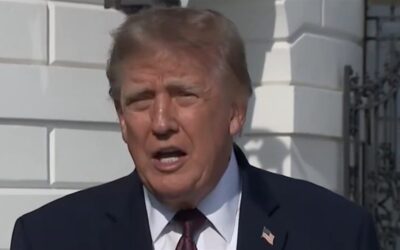
When Donald Trump returned to office, he did so with a hardline promise: secure the border and deport illegal immigrants—at scale and without apology. On day one, he declared a national emergency, repealed Biden-era catch-and-release policies, and reestablished a clear, legally grounded standard for entry into the United States.
The results were swift and striking. For the second month in a row, illegal border crossings hit record lows in June. Just as notably, not a single illegal entrant was released into the interior of the country. These numbers don’t just signal a return to past policies—they reflect what may now be the most secure border in U.S. history.
But Trump’s immigration agenda doesn’t end at the border. It’s a full-spectrum enforcement doctrine—arrest, detention, removal—backed by legal authority and cutting-edge technology. RJ Hauman, president of the National Immigration Center for Enforcement (NICE) penned an op-ed for Fox News Digital touting recent advancements. The future looks bright according to Hauman.
Now, with the passage of the “One Big Beautiful Bill,” which codifies new enforcement provisions, Trump’s administration has the statutory tools it needs to execute mass deportation operations efficiently and systematically.
Among the most critical tools in that arsenal? Artificial intelligence.
Just last week, the White House unveiled America’s AI Action Plan, positioning AI not as an abstract experiment but as a cornerstone of national strength. The plan outlines a bold course for integrating AI into national security operations—including immigration enforcement. The strategy emphasizes speed, sovereignty, and operational security, aligning precisely with the Department of Homeland Security’s (DHS) mission to detect, deter, and deport illegal entrants while upholding lawful pathways.
AI is no longer theoretical. DHS already runs over 200 AI systems. Some identify human traffickers in real time, while others manage fraud detection, enhance identity resolution, and synchronize fragmented case files. These tools cut bureaucratic delays and empower agencies to act swiftly and lawfully—crucial in an immigration system where paperwork is still routinely flown across the country.
The private sector has been key to this transformation. MetroStar’s overhaul of USCIS’s legacy application systems exemplifies how digitization can accelerate removals of visa overstays and block frivolous asylum claims. Airship AI, another player, provides object detection tech that helps border agents spot traffickers and illegal crossers in real time—offering eyes where manpower falls short.
The stakes have never been higher. Trump’s January 20 executive order demands that DHS “screen to the maximum extent possible” all individuals seeking visas or immigration benefits—eliminating ambiguity and backlog alike. The DHS Advisory Council’s AI Subcommittee has called integration of AI into immigration and border operations a “core mission imperative,” while think tanks like RAND have backed the move, identifying AI as key to detecting and disrupting illegal entry and smuggling networks.
But AI, like any tool, is only as effective as the policies guiding it. The same systems that can enforce immigration law can be twisted to process mass entry under a different administration. The Trump team is wary of this possibility. Officials stress the importance of building “statutory and programmatic guardrails” to lock AI systems into an enforcement-first framework—not one built on ideological discretion or humanitarian carve-outs.
This caution follows a chaotic period under President Biden, whose administration expanded quasi-legal entry programs via apps, allowed parole on an industrial scale, and oversaw employers quietly replacing American workers with cheap foreign labor. Even now, some within the current Trump administration are pushing back against efforts to allow illegal aliens to work under quasi-indentured status, warning that it echoes the same abuses seen over the last four years.
As conservative commentator Mark Levin recently put it, “The purpose of immigration is to serve the citizenry of the United States”—not to satisfy global humanitarian agendas or corporate bottom lines.
The path forward, Trump insists, must be one of full-scale detention, efficient removal, and clear, lawful entry protocols. Technologies like the Intensive Supervision Appearance Program (ISAP), if expanded, can help maintain custody alternatives while delivering high-volume deportations. But this must be paired with brick-and-mortar investments in detention facilities—not “pop-up tents” or temporary shelters.
Ultimately, AI isn’t a silver bullet—but it is a powerful weapon in the enforcement arsenal. It can help Immigration and Customs Enforcement (ICE) finish what the Border Patrol starts, keep U.S. Citizenship and Immigration Services (USCIS) focused on merit over mercy, and ensure that the entire immigration system runs with precision and authority.