President Donald Trump is putting America’s allies on notice: if they want the global economy to keep moving, they had better step up and help secure one of the world’s most vital shipping routes.
In a pointed interview with the Financial Times, Trump warned that the future of North Atlantic Treaty Organization could look “very bad” if member nations refuse to join the U.S. effort to reopen the Strait of Hormuz amid the escalating war with Iran.
The strategic waterway—through which about one-fifth of the world’s oil supply normally flows—has become the latest flashpoint as energy markets surge and tensions spiral in the Middle East.
Trump argued that many countries benefiting most from Gulf oil should be leading the charge to keep the route open.
“It’s only appropriate that people who are the beneficiaries of the Strait will help to make sure that nothing bad happens there,” Trump told the British outlet.
The president emphasized that both Europe and China depend far more heavily on energy shipments moving through the strait than the United States does.
And he didn’t mince words about the consequences if America’s allies refuse to help.
“If there’s no response or if it’s a negative response I think it will be very bad for the future of Nato,” President Trump told the Financial Times.
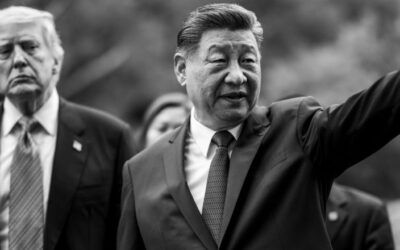
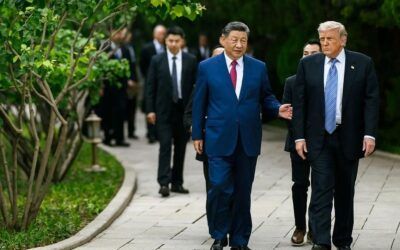
Trump is also applying pressure to Chinese leader Xi Jinping, signaling that a planned summit between the two leaders later this month could be postponed if Beijing fails to cooperate.
“I think China should help too because China gets 90 percent of its oil from the Straits [sic],” Trump told the Financial Times.
He indicated Washington wants an answer quickly.
“We’d like to know before that. It’s [two weeks is] a long time … We may delay,” he said, without elaborating on how long.
Meanwhile, Iran attempted to fracture international unity by announcing that all countries—except the United States and Israel—would still be allowed to pass through the strait. The declaration came just hours after American forces struck military targets on Kharg Island, a critical hub for Iran’s oil exports.
The rising tensions have already rattled global markets. Oil prices climbed to roughly $106 per barrel Sunday, marking a dramatic jump of about 45 percent since the Middle East conflict intensified.
Trump says NATO should contribute real military muscle to stabilize the region—from minesweeping operations to forces capable of eliminating threats along Iran’s coastline.
“We have a thing called NATO,” he told the Financial Times. “We’ve been very sweet. We didn’t have to help them with Ukraine. Ukraine is thousands of miles away from us . . . But we helped them.”
The president framed the moment as a test of whether America’s allies will return the favor.
“Now we’ll see if they help us,” Trump continued. “Because I’ve long said that we’ll be there for them, but they won’t be there for us. And I’m not sure that they’d be there.”
Trump also singled out United Kingdom, voicing irritation after speaking with British Prime Minister Keir Starmer earlier in the day.
Despite being widely viewed as Washington’s closest partner, Trump said London hesitated when the U.S. first called for support.
“The UK might be considered the number one ally, the longest serving, et cetera, and when I asked for them to come, they didn’t want to come,” Trump said.
Only after the United States had already struck Iranian targets did the British offer assistance.
“And as soon as we basically wiped out the danger capacity from Iran, they said, ‘Oh well, we’ll send two ships’, and I said, ‘we need these ships before we win, not after we win,’” he added. “I’ve long said that NATO is a one-way street.”
The president insisted that Iran’s military capabilities have already been severely weakened during the first two weeks of fighting, meaning European deployments would face limited risk.
The conflict continues to intensify across the region. A France soldier was killed Thursday in Iraq after an Iranian drone strike.
At the same time, Trump signaled the United States could escalate further by targeting Iran’s critical energy infrastructure.
“You saw we hit Kharg Island, everything but the pipes yesterday,” Trump said, referring to what he described as the “obliteration” of military sites on the island located roughly 16 miles off Iran’s coast.
He made clear that the remaining oil facilities could be destroyed quickly if Tehran continues its aggression.
“We can hit that in five minutes. And there’s not a thing they can do about it.”
As oil markets surge and the world watches the Gulf, Trump’s message to allies is unmistakable: if they rely on the flow of energy through Hormuz, they should be ready to defend it.