If you ever needed proof that Washington never misses a chance to spend your money—even in the middle of a crisis—look no further than the fallout from Saturday night’s chaos.
The annual White House Correspondents’ Dinner turned into a security nightmare when a gunman opened fire. Donald Trump and First Lady Melania Trump were rushed out, along with Cabinet officials, as the room descended into confusion.
The suspect, 31-year-old Cole Tomas Allen of California, now faces a laundry list of federal charges, including attempted political assassination. If convicted, he could spend the rest of his life behind bars.
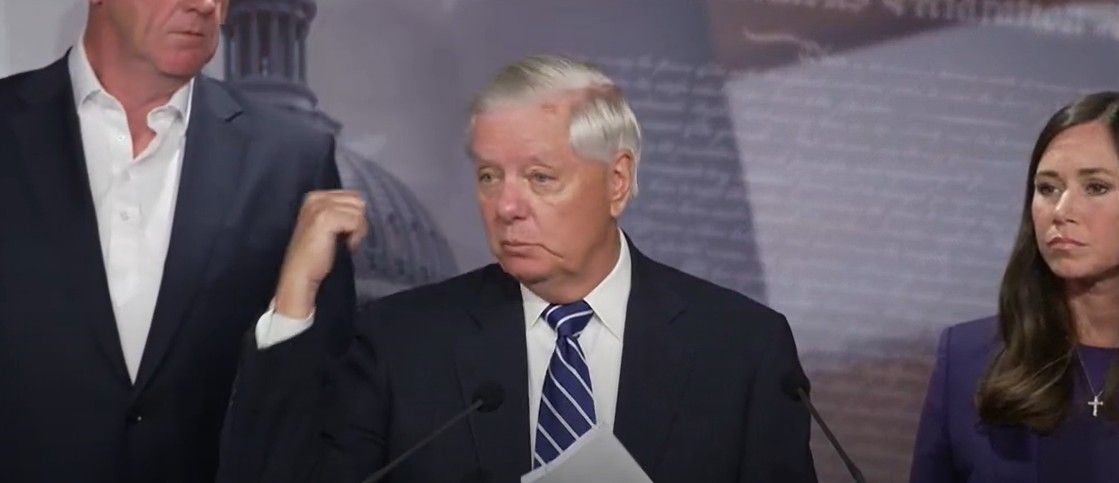
Enter Sen. Lindsey Graham—who, apparently, heard “crisis” and thought “perfect time to float a taxpayer-funded building project.”
Within hours of the shooting, Graham was already pushing a change in the pitch of Trump’s lavish White House ballroom. Graham seems to either misunderstand or conveniently gloss over—Trump’s proposal has consistently been framed around private funding, not sticking taxpayers with the bill.
That hasn’t stopped Graham from charging ahead anyway, floating a $400 million federally funded “secure” mega-venue as if that were the obvious takeaway from the situation.
According to Graham, Trump told him bluntly: “We need the ballroom, not just for me, but for future presidents.” Fair enough. But nowhere in that idea is a requirement that taxpayers foot the bill—something several Republicans have managed to grasp, even if Graham hasn’t.
The senator painted a picture of convenience and security—suggesting it would be far better if the president could simply stroll from his residence into a fortified event space rather than attend outside functions.
“That’s what needs to happen,” Graham declared, arguing that large gatherings of “one thousand, two thousand people” demand hardened, centralized security.
And just like that, a horrific incident became—at least in Graham’s telling—the latest justification for a massive federal spending proposal that wasn’t actually part of the original vision.
Graham, alongside Sen. Katie Britt, is preparing legislation to authorize roughly $400 million in taxpayer funds. The pitch? This isn’t just a ballroom—it’s a national security hub. Beneath the glitzy surface, he says, would sit a web of military-grade infrastructure, including a Secret Service annex and other “national security-centric” features.
The estimated cost? Already ballooning. Originally pegged at $332 million, Graham casually bumped it up, admitting, “I think it’s going to take more.”
And while he didn’t rule out private donations, Graham suggested those funds could go toward “buying china and stuff like that”—because in Washington, apparently, the public covers the structure while donors handle the dinnerware. A fascinating interpretation of “private funding.”
Not everyone in the GOP is buying it.
Sen. Rand Paul is on board with the idea of a ballroom—but not with sticking taxpayers with the bill. He’s pushing an alternative that would rely on private funding and streamline approvals without dipping into federal coffers.
“I am always conservative,” Paul said, noting that much of the money may already exist through private channels. Translation: if donors are willing to pay for it, why is Congress even in the conversation?
Sen. Rick Scott took an even harder line, delivering a reality check that’s rare in Washington these days.
“We have $39 trillion of debt,” he pointed out. “Maybe we ought to stop spending money.”
A novel concept.
Scott questioned the logic entirely: if private funding is available—as Trump himself had previously suggested—why on earth would Congress step in with taxpayer dollars?
Sen. Josh Hawley backed private funding over public spending and hinting at unresolved legal questions about whether Congress even needs to sign off on such a project.
Meanwhile, just weeks ago, this whole ballroom idea was politically radioactive. Lawmakers wanted nothing to do with it, reportedly spooked by terrible polling. Now, after a single tragic incident, it’s suddenly being repackaged—at least by some—as a must-have, taxpayer-funded security upgrade.
Convenient timing.
The White House Correspondents’ Dinner isn’t even a government event. It’s run by a private organization. Attendance by presidents and officials is a tradition—not a requirement. There’s no rule saying it has to happen, let alone inside a federally funded palace expansion.
And there’s certainly no rule saying taxpayers should bankroll a project that its own chief proponent has suggested could be privately funded.
Yet here we are—watching Washington do what it does best: take a crisis, introduce a price tag, and hope no one notices the difference between what was proposed… and what’s being sold.
Security matters. No serious person disputes that. But when the solution jumps straight to a $400 million taxpayer obligation—despite clear private funding options—it’s fair to ask whether this is about safety… or whether some in Washington just can’t resist spending money that isn’t theirs.