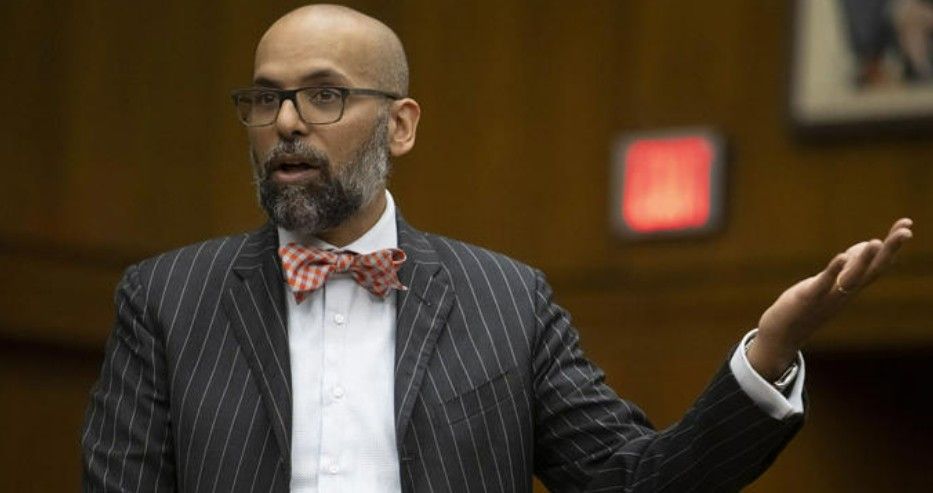
Meet Zia Faruqui, the federal magistrate judge who stunned observers when he apologized in open court to alleged would-be Trump assassin Cole Allen. That moment may have raised eyebrows—but it didn’t come out of nowhere.
Faruqui isn’t your typical low-profile magistrate quietly handling pretrial motions. Over the years, he’s built a reputation as a vocal advocate for diversity, equity, and inclusion— DEI.
Back in 2023, the Washington Council of Lawyers praised him as a jurist with a “deep commitment” to diversity and criminal justice reform, noting he had “devoted much of his career” to those efforts. Unlike many judges who keep their commentary tightly buttoned up, Faruqui has shown a willingness to speak out—sometimes sharply—on politically charged issues.
During a case involving an illegal immigrant arrest, he didn’t hold back: “I’d say we live in a surreal world right now… This is not consistent with what I understand the United States of America to be… We don’t have a secret police.” That kind of rhetoric has made him a favorite among reform advocates—and a target for critics who say judges shouldn’t sound like cable news commentators.
Faruqui’s tensions with the Trump orbit didn’t start with this latest case. When federal authorities moved to crack down on rising crime in Washington, D.C., he blasted the effort as a “constitutional crisis,” warning that “the rule of law is being flushed down the toilet.” “I am afraid right now,” he said at the time.
Then–U.S. Attorney Jeanine Pirro accused him of letting politics seep into his decisions, saying he has a “long history of bending over backwards” for defendants—including those charged with gun crimes.
Her zinger still echoes: he’s a judge who “has never really met someone with an illegal gun that he hasn’t found some compassion for.”
To understand Faruqui, you have to understand how he sees the system. He’s openly skeptical of traditional bail, arguing, “We should not incarcerate poverty,” and favoring alternatives like home confinement, surveillance, and community supervision over jail time.
In his own words, judging isn’t math—it’s interpretation. “It’s not as simple as… two plus two is four,” he said. “We’re getting art.” That philosophy extends to his courtroom approach, where he’s been known to involve families and communities in decisions about whether defendants should be released.
Before taking the bench in 2020, Faruqui spent more than a decade as a federal prosecutor—hardly the background of a soft-on-crime activist. But since becoming a judge, his record has drawn scrutiny from those who see a clear shift in tone and priorities. He’s clashed with prosecutors, questioned law enforcement tactics, and increasingly become a public voice in debates over policing, immigration, and incarceration.
Faruqui’s apology to an accused presidential assassin looked shocking—even unprecedented. Seen in context, it looks more like the latest chapter in a very consistent story.