The Supreme Court’s conservative majority just fired another warning shot in America’s endless redistricting war — and Justice Ketanji Brown Jackson is openly furious about it.
In a move likely to send voting-rights activists and Democrat-aligned legal groups into full meltdown mode, the high court ordered lower courts to reconsider a Mississippi case after its recent blockbuster ruling in Louisiana v. Callais, the decision that narrowed how race can be used in congressional mapmaking.
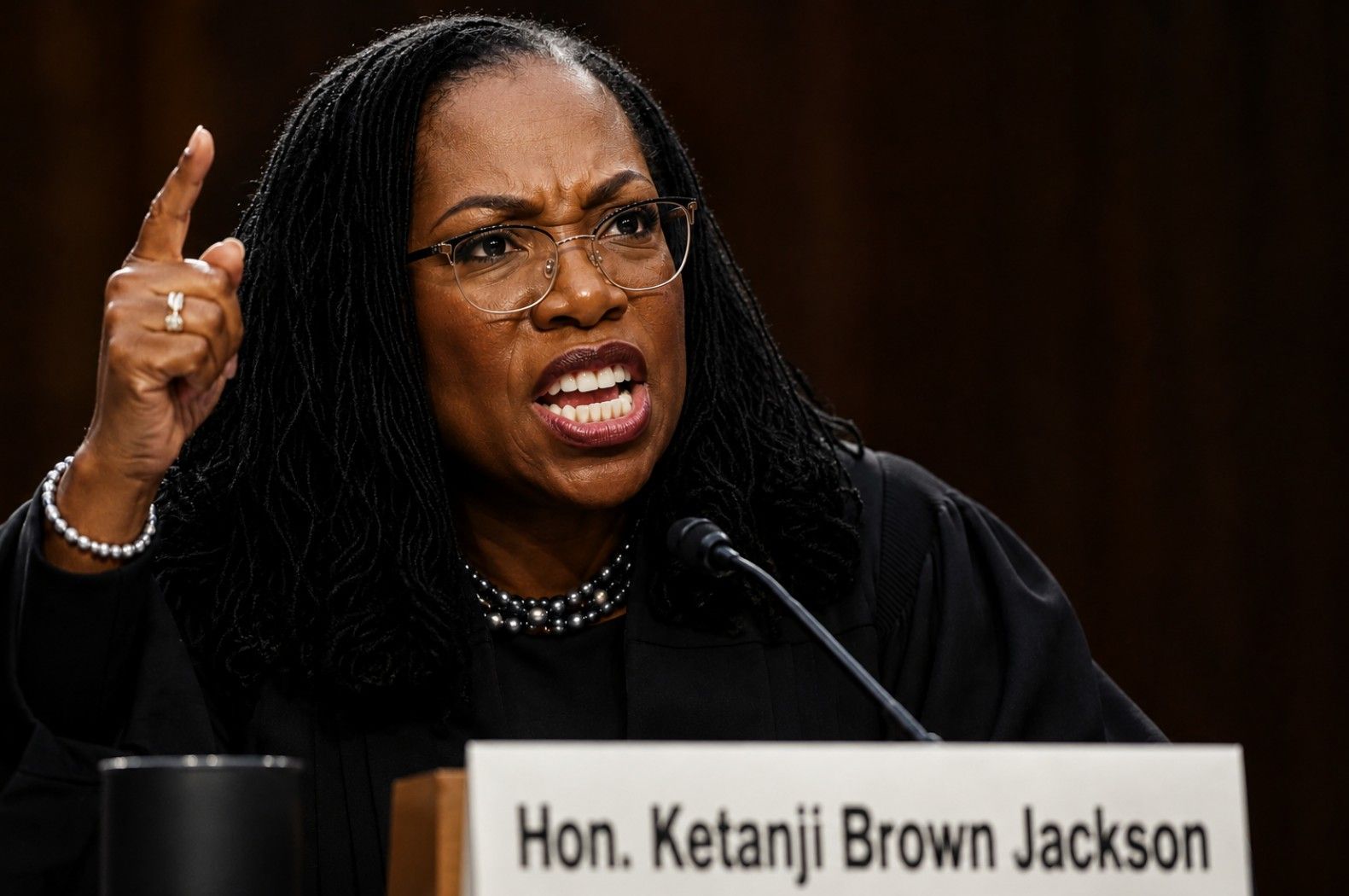
Jackson, one of the court’s most outspoken liberals, blasted the majority for connecting the two cases at all.
“This case presents only the question of Section 2’s private enforceability, which our decision in Louisiana v. Callais … did not address,” Jackson wrote in dissent. “Thus I see no basis for vacating the lower court’s judgment.” Jackson thinks the conservative majority is using the Louisiana ruling as a legal bulldozer to reshape other voting-rights cases that technically involve different questions. The court’s order sends the Mississippi dispute back to a lower federal court “for further consideration,” a phrase that sounds harmless in Supreme Court-speak but often means: try again using our new rules.
And those new rules are already rattling the political establishment. Last month’s Louisiana decision marked a major victory for conservatives who have argued for years that race-based district drawing has spiraled far beyond what the Voting Rights Act originally intended. The case centered on Louisiana’s 2024 congressional map, which added a second majority-Black district after pressure from activists and lower courts.
The Supreme Court ultimately said states may consider the Voting Rights Act when drawing maps, but they are not automatically required to carve up districts primarily around race. That distinction is huge.
Critics of aggressive racial gerrymandering say Democrats and activist groups have increasingly treated race as the dominant factor in redistricting — all while accusing Republicans of discrimination whenever maps don’t produce the “correct” political outcomes.
The ruling gives challengers a tougher road ahead because plaintiffs may now have to show intentional racial discrimination, not merely statistical disparities or political complaints dressed up as civil-rights claims.
That’s bad news for the litigation industry that has spent years dragging states into court over congressional maps.
Jackson, meanwhile, appears deeply concerned that the court’s conservative bloc is methodically shrinking the reach of Section 2 of the Voting Rights Act — the key provision used to challenge election maps and voting procedures.