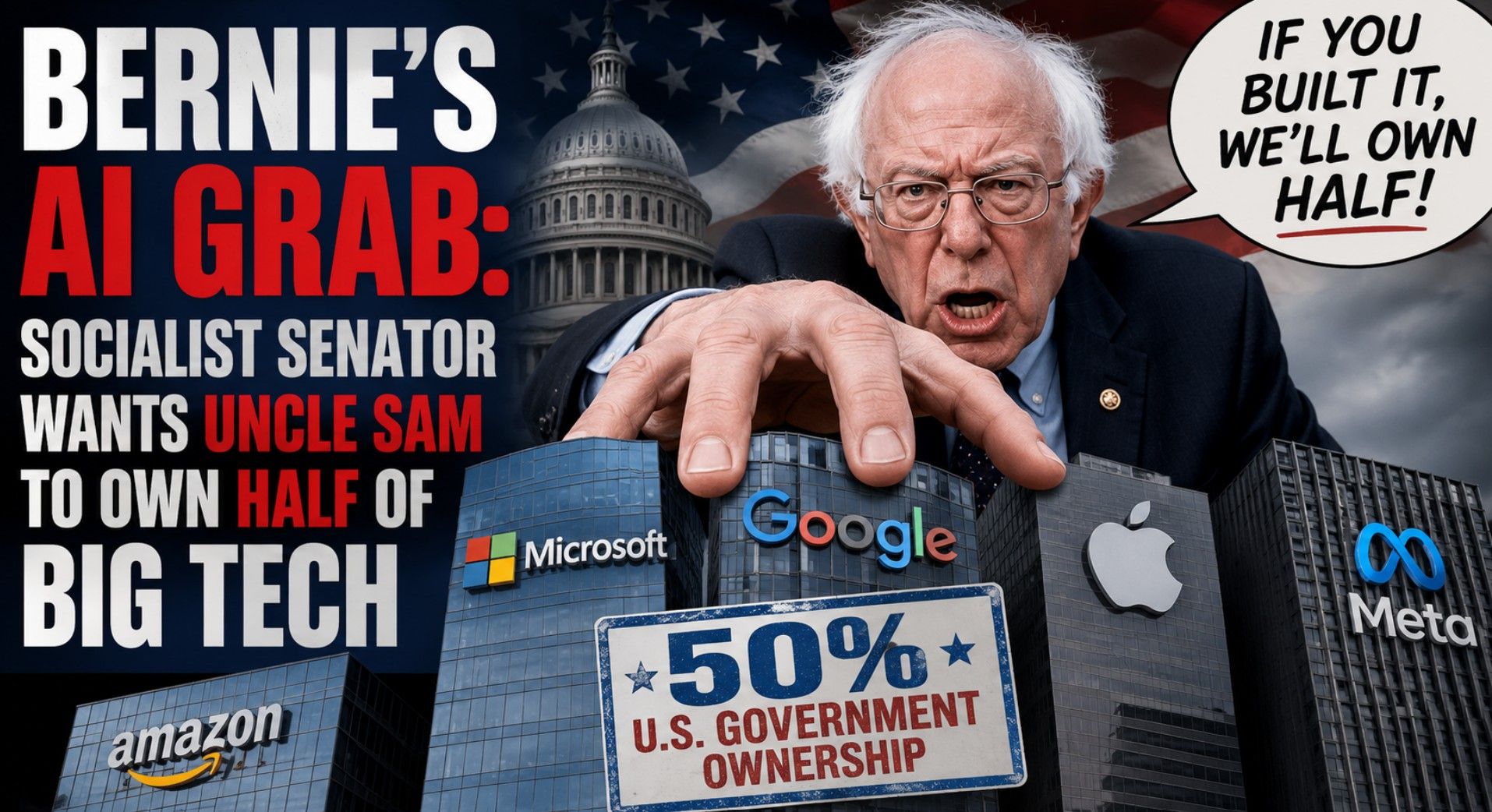
The artificial intelligence boom has created a new political obsession in Washington, and right on cue, Sen. Bernie Sanders has arrived with a proposal that sounds like it was drafted in a faculty lounge during the Cold War.
According to reports, Sanders is preparing legislation that would require the federal government — rebranded by supporters as “the public” — to receive a massive ownership stake in America’s largest AI companies. The reported figure? A staggering 50 percent.
Because apparently building a company, risking capital, hiring workers, developing technology, and competing in global markets are now optional details. The important part, at least in progressive circles, is deciding how much of somebody else’s success Washington should own.
The proposal arrives as artificial intelligence has become the hottest sector in the American economy. Tech giants are pouring hundreds of billions into advanced computing infrastructure, AI research, semiconductor development, and sprawling data-center projects. Investors see enormous opportunity. Entrepreneurs see the next industrial revolution.
Many on the Left, meanwhile, see a giant piggy bank.
Sanders has long argued that workers and the broader public should share more directly in the gains generated by emerging technologies. His latest idea appears to push that argument into territory critics say looks less like capitalism and more like a government-directed ownership model.
Even by modern progressive standards, demanding half of the equity in private companies is a breathtaking proposal. Supporters will undoubtedly market the plan as economic fairness. Critics will call it something else entirely: a government takeover dressed up in populist language.
The political reality is that Sanders has spent years introducing ambitious legislation that generates headlines, social-media applause, and cable-news segments, only to stall when it reaches the point where actual votes matter. Washington is littered with Sanders proposals that made for fiery speeches but never became law.
That history is one reason many observers view this latest AI ownership scheme as more political theater than imminent policy.
Still, the proposal highlights a growing divide in American politics over who should benefit from the AI revolution. One side sees innovation, investment, and competition as the engines that create prosperity. The other increasingly appears focused on how to redistribute the rewards after someone else has taken the risk.
The United States is locked in a technological race with global competitors, especially China, for dominance in artificial intelligence. Many economists warn that aggressive government intervention could discourage investment, slow innovation, and push capital elsewhere at the exact moment America is trying to maintain its edge.
That’s why even some skeptics of Big Tech may find themselves raising an eyebrow at the notion that Washington should automatically become a co-owner of the country’s most successful AI firms.
After all, if a startup founder spends years building the next breakthrough technology, should the reward be success in the marketplace — or a notice from the federal government claiming half the company?