Every election cycle, we’re told there’s an unstoppable wave coming. This year, the conventional wisdom says Republicans are doomed, Democrats are energized, and the outcome is practically pre-written.
Maybe. But politics has a funny way of humiliating people who think the script is already finished.
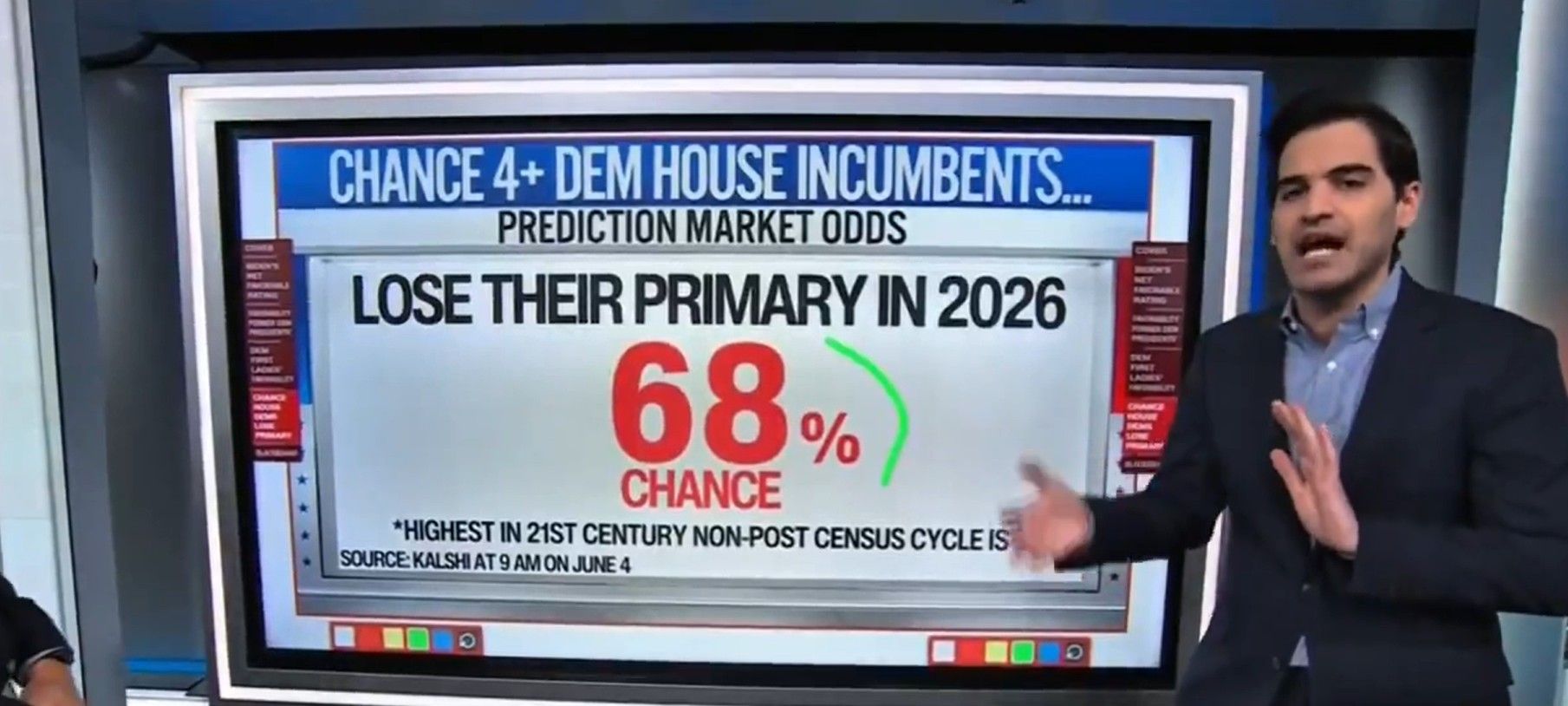
A fascinating observation surfaced in a recent CNN segment: there is a real possibility that four or more House Democrats could lose their primaries in 2026. According to the analysis cited, that would actually exceed any comparable non-redistricting cycle on record. That’s not a sign of a unified, confident party marching toward victory. That’s a sign of unrest.
The number itself is less important than what it represents. Democratic voters appear increasingly frustrated with their own leadership. Years of promises, internal feuds, ideological battles, and the lingering fallout from the Biden era have left many rank-and-file Democrats questioning the establishment that has been running their party.
When your own voters are looking to fire incumbents, that’s usually not a sign that everything is going according to plan.
What’s especially amusing is how quickly the political forecasting industry swings from one narrative to another. One day we’re shown a poll proving Democrats are headed for a landslide. The next day, another poll supposedly shows Republicans surging. The same analysts who confidently predict one outcome often seem perfectly comfortable predicting the exact opposite a week later.
It’s a pretty good business model, if we’re being honest. If every poll is “historic” and every week changes everything, there’s always another headline to sell.
But beneath the noise, there are some realities worth considering.
First, Republicans don’t need Democrats to agree with MAGA policies. They just need Democrats to remain divided. A party consumed by internal warfare spends less time persuading swing voters and more time attacking itself.
Second, anti-incumbent energy cuts both ways. The same anger that can fuel turnout against Republicans can also fuel rebellion against Democratic officeholders who are seen as part of the establishment.
Third, elections are ultimately choices, not referendums on media narratives. Voters may be unhappy with Republicans in some places. They may also be unhappy with Democratic leadership, progressive activists, economic conditions, or Washington generally.
That’s why treating the 2026 midterms as a foregone conclusion is premature. Republicans have challenges ahead. Nobody should deny that. But Democrats have their own problems, and some of those problems are coming from inside the house.
The political class keeps insisting the GOP is finished. Maybe they’re right. Then again, they’ve been saying that for years.
And if Democrats keep fighting each other harder than they fight Republicans, they may discover that victory isn’t as automatic as the pundits promised.