President Trump just delivered something Washington rarely sees, a public smackdown of Israel’s military strategy — and he aimed it squarely at Prime Minister Benjamin Netanyahu.
Speaking from the G7 gathering in France while discussing the broader effort to contain Iran, Trump brushed aside the long-running Israel-Hezbollah conflict as a sideshow compared to the region’s larger challenges. But what grabbed attention wasn’t his comments about Iran. It was his unusually blunt criticism of America’s closest Middle Eastern ally.
For years, Republican presidents and lawmakers have largely offered Israel unwavering support as it battled Hezbollah, the Iranian-backed terror group entrenched in southern Lebanon. Trump himself built much of his foreign-policy legacy around backing Israel, from recognizing Jerusalem as its capital to brokering the Abraham Accords. That’s what made his remarks all the more striking.
Asked whether an Iran agreement could survive renewed fighting between Israel and Hezbollah, Trump signaled that the Lebanon front was not his primary concern.
Then came the bombshell. Rather than praising Israeli operations, Trump argued that Syria’s government might be better positioned to eliminate Hezbollah than the Israeli military has been after years of conflict.
Referring to Syrian President Ahmed al-Sharaa, Trump said: “He’s done an amazing job of pulling it together. He’s not a Boy Scout. But he’s done an amazing job pulling it together. And he is very good with Hezbollah, does not like them. And I’ll tell you what, Israel’s fighting Hezbollah too long, and too many people are being killed. And you don’t have to knock down an apartment house every time you’re looking for somebody. Because there are a lot of people in those apartment houses, and they’re not all Hezbollah, that I can tell you. I suggested to Israel, ‘Let Syria take care of Hezbollah.’ Because to be honest with you, I think they’ll do a better job of doing it.”
In classic Trump fashion, the message wasn’t wrapped in diplomatic niceties. It was direct, provocative and certain to raise eyebrows in Jerusalem.
He doubled down moments later: “If Israel can’t do the job without killing everyone else, he’ll do the job, Syria will do the job.”
That’s the kind of language that would have been unthinkable from most Republican leaders even a few years ago.
To be sure, Trump insisted there is no personal rupture with Netanyahu. When reporters asked whether he was frustrated with the Israeli leader, he replied that the two still maintain a strong relationship and remain in close contact on regional matters.
But then came another public jab at “Bibi.”
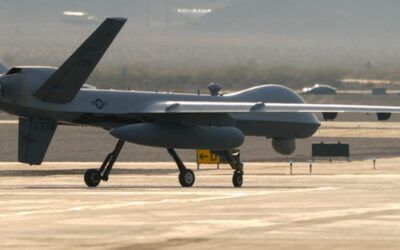
Trump criticized what he viewed as an excessive Israeli response to a relatively limited provocation, pointing to a recent strike that he believed crossed the line. “I did not like the fact he attacked, you know, very minor little thing with drones and he ends up, I saw that attack, I saw where that bomb went. That was vicious, too much, you can do too much also.”
And just in case anyone missed the point, Trump reminded listeners how central he believes his own presidency was to Israel’s security and diplomatic standing. “We have a very effective relationship, without the United States, there would be no Israel. Without me, there would be no Israel. No other president willing to do what I did.”
The president then turned nostalgic, lamenting what Lebanon has become after decades of war, corruption, terrorism and foreign interference. “I’ve had a great relationship with Bibi, now Bibi has to be more responsible with respect to Lebanon. Lebanon used to be a great country with professors, lawyers, doctors, great intellect. Now it is terrible.”
The political significance here isn’t that Trump suddenly became anti-Israel. Far from it. The significance is that he appears increasingly willing to criticize Israeli tactics when he believes they are counterproductive, especially if civilian casualties mount and regional stability remains elusive.
Israel has spent years arguing that Hezbollah embeds itself among civilian populations, making clean military operations nearly impossible. Israeli officials have long maintained that responsibility for civilian suffering ultimately rests with Hezbollah’s strategy of operating from residential areas.
Still, Trump’s comments signal growing impatience with a conflict that seems to have no endgame. And in a region where alliances shift faster than headlines, perhaps the most surprising development wasn’t Trump criticizing Hezbollah.
It was Trump looking at Syria — a country once treated as a pariah state by much of the West — and suggesting it might succeed where Israel has spent years trying.
That’s a headline few saw coming.