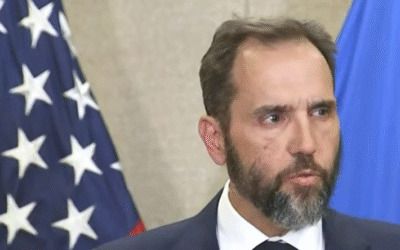
SOURCE: “Pete Hegseth’s private groveling for cash exposed by GOP senator spurned by Trump” — Alexander Willis
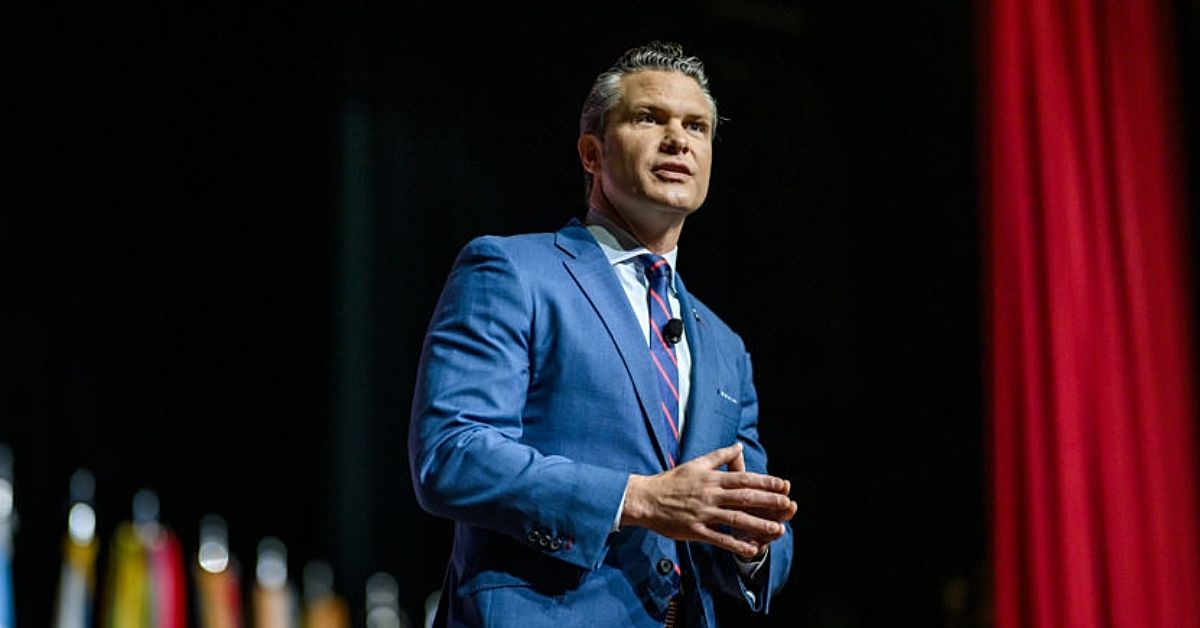
Apparently, we’ve reached the point where the Secretary of Defense acknowledging budget realities is treated like a clandestine confession in a spy thriller.
According to the piece, Defense Secretary Pete Hegseth “sounded the alarm” in meetings with Senate Republicans about funding levels for weapons systems, warning that the Pentagon is “running short on funding they need in order to acquire the weapons and missiles and things like that that they need to protect the nation.”
In Washington-speak, that’s called “Tuesday.”
In media-speak, it apparently becomes “private groveling for cash exposed.”
That’s quite a transformation. Somewhere between “briefing lawmakers” and “asking Congress to fund national defense,” the story mutates into a morality play where the Pentagon is cast as a supplicant and the narrative conveniently forgets that Congress controls the purse strings in the first place.
Sen. John Cornyn is quoted relaying the discussion, noting concerns about a proposed $350 billion defense package facing political resistance. Again—this is not exactly breaking news that Washington struggles to pass large spending bills. That’s like reporting that rain is controversial in Seattle.
But the framing here insists on turning a routine budget discussion into a kind of political tell-all, complete with the implication that internal GOP dynamics and Trump-era endorsements are the real headline.
Cornyn, described as a “spurned” senator, is treated less like a source and more like a narrative device—useful primarily because he can be folded into a broader story about Republican infighting. The policy discussion itself becomes background noise to the more important editorial goal, who is up, who is down, and who can be made to look awkward doing basic governance.
Even the most neutral detail—Pentagon officials warning about funding constraints—gets reinterpreted as emotional performance art. “Alarm” becomes “plea.” “Briefing senators” becomes “exposed begging.” At this rate, the next headline will probably treat reading a spreadsheet as a dramatic confession.
Meanwhile, the real underlying point gets buried, defense budgeting is a recurring, bipartisan headache, and disagreements over scale, timing, and priorities are not scandals—they’re standard operating procedure in a system that regularly struggles to pass even routine appropriations on time.
But that doesn’t fit the tone.
What fits better is turning a policy conversation into a morality tale where concern over military readiness is recast as political weakness, and where the act of requesting funding is treated as inherently suspect—unless, of course, it’s described in more flattering terms elsewhere on the political spectrum.
The “resistance” described in the piece isn’t unusual either. Large spending packages face resistance. That’s not news. That’s the legislative process. Yet in this telling, procedural friction becomes a sign of deeper dysfunction—rather than, say, the normal collision of competing fiscal priorities.
This story doesn’t just report tension—it packages routine defense-budget lobbying into a melodrama starring “groveling,” “exposed secrets,” and a conveniently politically radioactive messenger. The underlying facts are mundane Washington fare: a Defense secretary briefing senators on funding needs, and those comments making their way into the press through a political chain with obvious incentives.