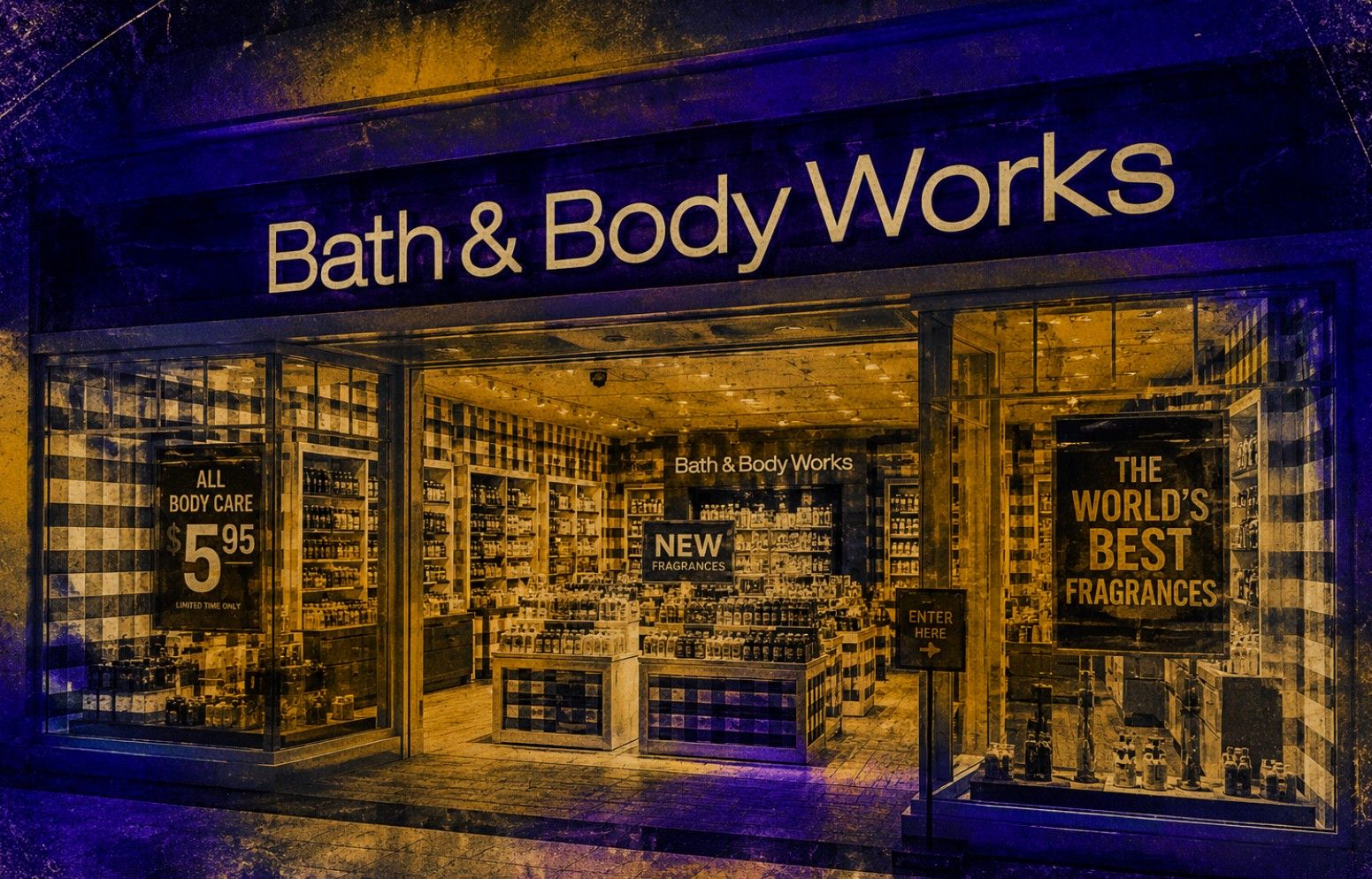
If you grew up in the 1990s or early 2000s, there’s a decent chance you can still identify a Bath & Body Works store from three hallways away without ever seeing the sign. One whiff of Japanese Cherry Blossom, Warm Vanilla Sugar, Cucumber Melon, or Juniper Breeze and suddenly you’re back at the mall, walking past the food court, debating whether your last twenty bucks should go toward body spray, a CD, or an Orange Julius. For an entire generation, Bath & Body Works wasn’t just a store. It was part of the mall experience itself.
Now one of America’s most recognizable mall brands is making a significant move beyond the mall. Bath & Body Works announced a new partnership with beauty giant Ulta Beauty that will place its products in more than 600 Ulta locations beginning July 12. The expansion marks one of the company’s largest retail moves outside its own stores and reflects a growing recognition that consumers don’t shop the way they did twenty years ago.
Company executive Maly Bernstein explained the strategy by saying, “What this strategic partnership reflects is an evolution in how we think about reach, meeting consumers wherever they choose to shop.” She added, “Ulta Beauty allows us to show up in a new, highly relevant environment where consumers are already exploring beauty and fragrance.”
Translated from corporate language into English, Bath & Body Works sees where retail is heading and doesn’t want to be left standing in an empty mall wondering what happened. The old retail model was simple: build stores and wait for customers to show up. Today’s retail environment is much different. Consumers still visit stores, but they’re also shopping on Amazon, discovering products on TikTok, ordering through apps, browsing websites, and expecting brands to be available wherever they happen to be. The companies succeeding today aren’t necessarily the ones with the most stores. They’re the ones showing up in the most places.
Bath & Body Works got an early glimpse of that reality through its recent Amazon expansion. According to the company, the online marketplace brought in younger shoppers and introduced the brand to consumers who may never have made a special trip to a traditional Bath & Body Works location. Bernstein said, “We are seeing Amazon bring in consistent growth and a younger, more affluent consumer, making it a strong customer acquisition channel that is expanding our reach.”
That’s an important detail because younger shoppers don’t necessarily have the same emotional attachment to malls that Gen X and older Millennials do. Many consumers now discover products online first and decide where to buy them later. The fact that Bath & Body Works is seeing growth through new channels suggests this strategy isn’t simply about convenience—it’s working.
But let’s be honest. The retail strategy may be smart, but for longtime Bath & Body Works fans, that’s probably not the most exciting part of the announcement.
That honor belongs to Juniper Breeze.
For anyone who spent time in American malls during the Clinton administration, that name probably triggered an immediate flashback. Juniper Breeze became one of the company’s signature scents during the late 1990s and early 2000s and developed an almost cult-like following. Like many discontinued products, its popularity actually seemed to increase after it disappeared. Fans spent years searching eBay, posting nostalgic tributes online, and begging the company to bring it back. Apparently somebody at Bath & Body Works was paying attention.
The company is reviving Juniper Breeze as part of its Ulta rollout, hoping nostalgia will help reconnect with longtime customers while introducing the fragrance to younger consumers who never experienced it the first time around. It’s a smart play because retailers have discovered something powerful over the past several years: nostalgia sells. Whether it’s vintage candy, retro sneakers, classic video games, old television shows, or fragrances from decades past, consumers love reconnecting with products that remind them of a simpler time.
And let’s face it, America seems to be in a nostalgic mood these days.
Bath & Body Works could have easily looked at its nearly 2,000 stores and declared victory. Instead, the company appears to be doing something much smarter. It’s paying attention to where consumers are headed and positioning itself accordingly. The best businesses don’t wait until foot traffic disappears before making adjustments. They figure out where customers are going and meet them there.
There’s also a broader lesson buried in this story. For years we’ve been hearing predictions about the death of brick-and-mortar retail, the collapse of malls, and the unstoppable rise of online shopping. Yet millions of Americans still enjoy walking into stores, smelling products before buying them, browsing shelves, and discovering things in person. Physical retail didn’t die. It evolved.
What’s changing isn’t shopping itself. What’s changing is convenience. Consumers want options. They want to buy online, buy in stores, buy through apps, and buy wherever it’s easiest at that particular moment. Companies that understand that reality tend to survive. Companies that don’t often become case studies in what went wrong.
As for Juniper Breeze, let’s just say there are probably a lot of Gen X shoppers who suddenly feel fifteen years younger. And judging by the reaction online, quite a few of them may find themselves wandering into Ulta next month whether they actually need body lotion or not.