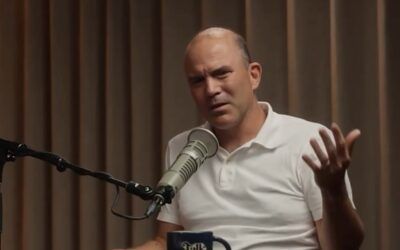
Few political transformations in Washington have been as surprising as the one involving Pennsylvania Senator John Fetterman.
Just a few years ago, Fetterman was celebrated by progressives as one of their rising stars. He was backed by many on the left, embraced by activist groups, and portrayed as a fresh voice for the Democratic Party.
Today, many of those same supporters can barely stand him.
The reason isn’t difficult to find. Fetterman has refused to follow much of his party’s activist wing when it comes to Israel, national security, and some of the ideological battles consuming modern politics. That growing divide was on full display this week during an appearance on Fox News.
Speaking with Sean Hannity, Fetterman delivered some of his strongest comments yet regarding anti-Israel sentiment inside segments of the American left.
The discussion began when Hannity pointed to the growing influence of Democratic socialists and anti-Israel activists within parts of the Democratic coalition. He specifically referenced politicians who have become increasingly critical of Israel and asked why hostility toward America’s longtime Middle East ally has become so common among some activists.
Fetterman’s answer left little room for ambiguity.
“Because you have such contempt for Israel, I mean, of course, you’re also anti-American, and you’re anti-Western civilian– civilization. And you’re anti-capitalism and the American way of life. Now, I mean, they’re all socialists, of course. Now there’s communists and now Marxists and now they’re proud of this.”
Predictably, those comments are already generating outrage in some corners of social media and political commentary.
But what makes the moment notable isn’t simply what Fetterman said. It’s who said it. This is the same senator who entered Washington with the enthusiastic backing of many progressive activists. Yet since taking office, Fetterman has steadily carved out a political identity that often puts him at odds with the loudest voices on the left.
His unwavering support for Israel following the October 7 attacks and throughout the ongoing conflict has become one of the clearest examples of that split. While many Democratic lawmakers have tried to balance criticism of Israel with support for the alliance, Fetterman has largely chosen a different path. He has repeatedly defended Israel’s right to respond to terrorist attacks and has shown little interest in appeasing activist groups demanding a harder break from the Jewish state.
The result has been political turbulence inside his own party. What once looked like a comfortable relationship between Fetterman and progressive voters has deteriorated rapidly. Political analysts have noted a sharp decline in his standing among Democratic activists, many of whom now view him as a disappointment or even a political turncoat. That frustration has become increasingly visible in media coverage and activist circles.
Adding to the intrigue are recent reports suggesting Fetterman may harbor ambitions beyond the Senate. A report published earlier this year claimed that during a staff meeting he floated the possibility of serving as a future Democratic vice-presidential nominee. The report sparked skepticism from critics and generated headlines largely because of how dramatically Fetterman’s relationship with parts of his own party has changed.
For conservatives watching from the sidelines, the spectacle has been fascinating.
After years of hearing Democrats insist that support for Israel represented a bipartisan American value, many are now witnessing an increasingly public struggle inside the Democratic coalition over exactly that question. Fetterman appears determined to remain on one side of that divide regardless of the political consequences.