


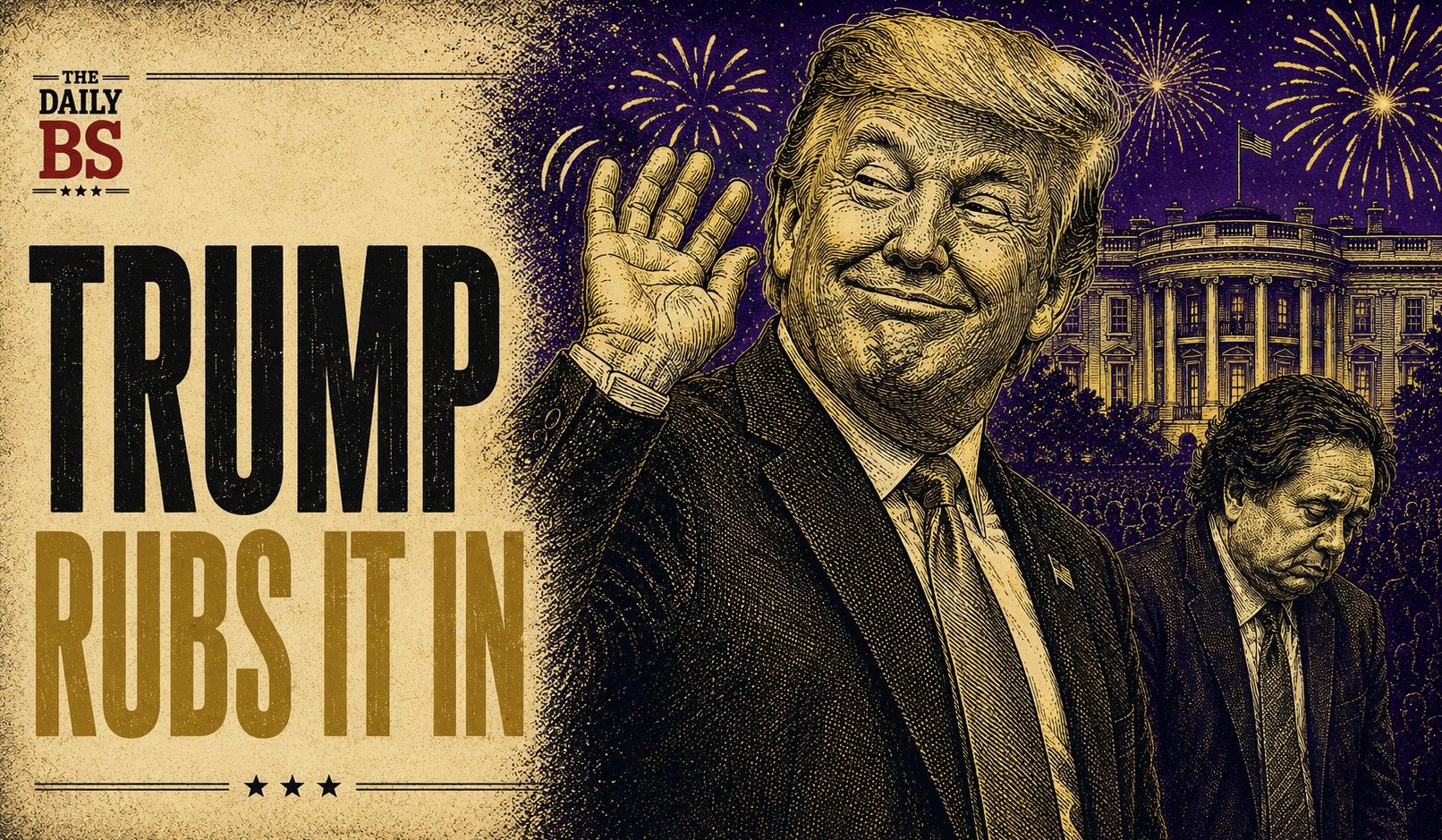
For years, George Conway built a national profile around one thing: opposing Donald Trump.
Television appearances. Social media posts. Cable news interviews. Newspaper columns. If there was an opportunity to criticize Trump, Conway rarely seemed interested in sitting it out.
This week, however, Conway found himself facing a much tougher audience than cable news panels.
The voters.
And the results were not kind.
Conway’s bid for Congress in New York’s 12th District ended with a disappointing finish in a crowded Democratic primary, where he placed near the bottom of the field. The race was ultimately won by New York State Assemblyman Micah Lasher following the retirement announcement of longtime Congressman Jerry Nadler.
While Conway entered the race with substantial name recognition among political observers, that visibility did not translate into support at the ballot box. At the time results were being reported, Conway had secured just over six percent of the vote, trailing multiple candidates in the contest.
It didn’t take long for President Donald Trump to notice. Within hours of the outcome becoming clear, Trump took to Truth Social to deliver a response that was vintage Trump—part political jab, part personal insult, and entirely lacking in subtlety.
Trump wrote:
“Wow, Mr. Kellyanne Conway, a Trump Deranged Loser at the highest level, is getting absolutely CRUSHED in the Primaries tonight. He’ll end up at about 5% of the vote in a rather weak field of young and aggressive Communists. No wonder his ‘husband’ dumped him like a dog! This is a truly unattractive person, both inside and out. Have a nice life, George! President DJT”
Love him or hate him, Trump’s ability to seize on moments like this remains one of the defining characteristics of his political style. He rarely misses an opportunity to publicly spar with longtime critics, and few critics have been more persistent than George Conway.
The feud stretches back years.
Ironically, Conway’s connection to Trump-world originally came through his former wife, Kellyanne Conway, who served as one of Trump’s most visible advisers during his first administration. As Kellyanne became one of Trump’s closest defenders, George Conway moved in the opposite direction, evolving into one of the president’s most vocal Republican critics.
The contrast made the Conways one of Washington’s most unusual political stories. Over time, George Conway became a favorite guest on anti-Trump television programs and a reliable source of criticism for media outlets eager to showcase Republican opposition to Trump. Yet his congressional campaign appeared to highlight a challenge that has surfaced repeatedly in modern politics, media attention and voter support are not always the same thing. Being popular with political commentators, social media users, and television producers does not necessarily translate into success with actual voters.
Conway attempted to center much of his campaign around opposition to Trump. One advertisement released during the race promised to hold the president accountable and featured rhetoric aimed directly at Trump himself.
In the ad, Conway declared:
“I know you like putting your name on everything, from your plane to the Kennedy Center. But the only thing your name is going to be left on when I’m done with you is the orange jumpsuit you’re going to have to wear in prison.”
The ad generated headlines but failed to generate enough votes. The White House responded sharply at the time, dismissing Conway and his campaign message.
In a statement released earlier this month, officials said, “Lightweight George Conway is a stupid person’s idea of a smart person. His severe and debilitating disease known as Trump Derangement syndrome has melted his brain and made him crazy in the head.”
Over the last several years, a number of anti-Trump figures have become cable-news regulars, social-media favorites, and darlings of the political commentariat. They are quoted, booked, praised, and treated as voices of moral clarity by the same media ecosystem that has spent years trying to understand — or explain away — Trump’s grip on Republican voters.
But the ballot box has been far less impressed.
The problem is simple. “I hate Trump” may earn applause in a green room, but it is not much of a governing agenda. Voters tend to want safer streets, lower prices, secure borders, good schools, and leaders who understand their daily lives. Endless Trump commentary might fill television segments, but it does not necessarily persuade a working voter trying to pay a grocery bill or keep a business alive.
That is the harsh reality many anti-Trump media personalities run into when they stop talking about voters and actually ask those voters for support. The audience that cheers them on online is often smaller, louder, and more politically insulated than they realize.






Connection trouble?