Texas Democrats have spent months portraying state Rep. James Talarico as a fresh-faced moderate capable of attracting voters from across the political spectrum.
The problem? The internet never forgets.
As Talarico’s U.S. Senate campaign gains national attention, a growing collection of old interviews, podcast appearances, and public comments are receiving renewed scrutiny. The latest resurfaced remarks have critics questioning whether the Democratic hopeful is really the bipartisan figure some supporters claim he is.
At the center of the latest controversy is a 2021 appearance on the “Activist Theology Podcast,” where Talarico made a statement that immediately grabbed attention.
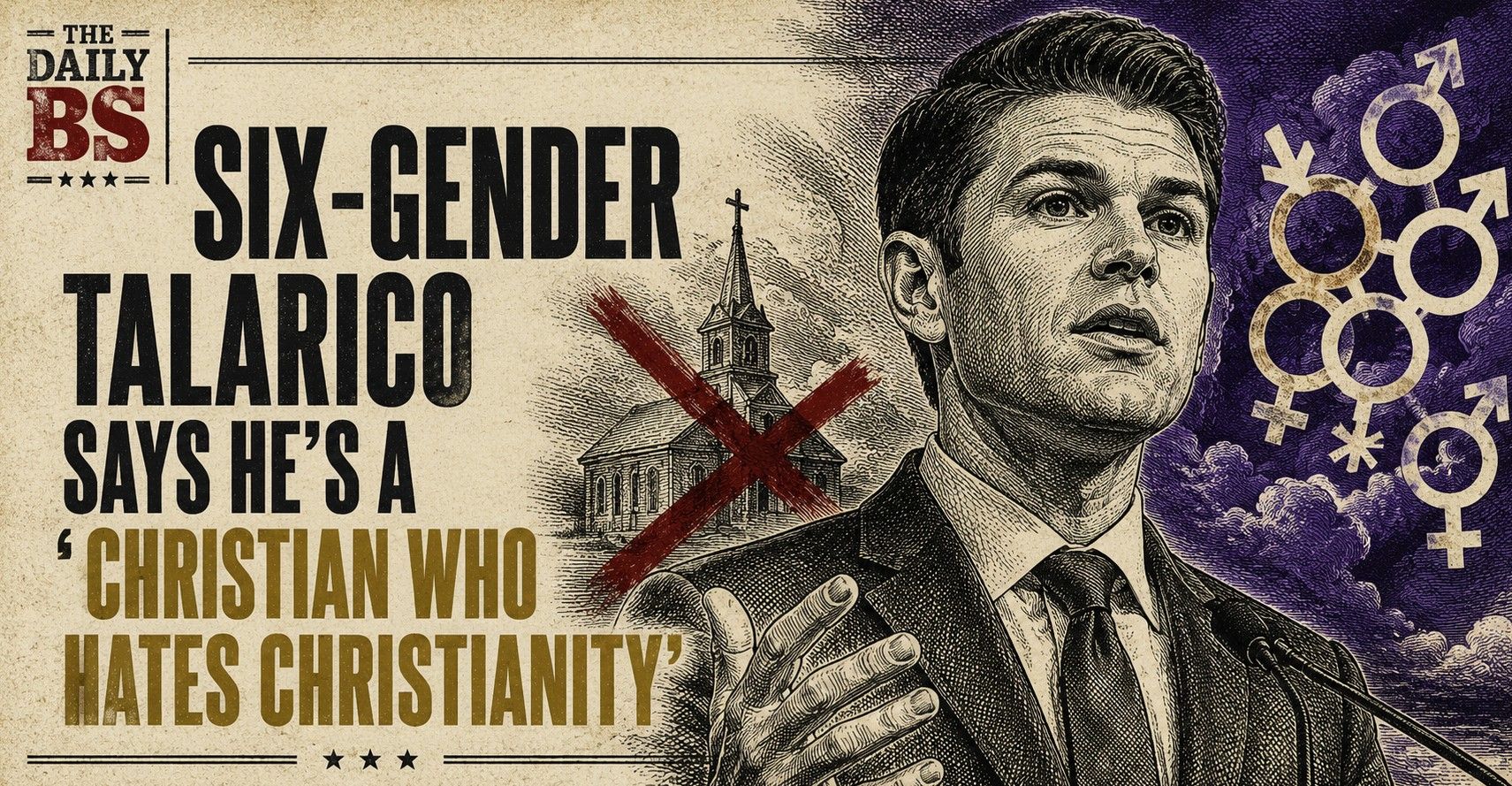
“I always think of myself as a Christian who hates Christianity.”
Moments later, he elaborated on his view of Christianity and religion more broadly, explaining that despite his frustrations with organized religion, he remains deeply drawn to the teachings of Jesus.
“I always get drawn back into it because nowhere else, in no other political philosophy and no other economic theory do I find anything nearly as truly radical or revolutionary as the teachings of that barefoot Rabbi.”
He then compared Christ’s teachings to other religious traditions.
“The teachings of the Buddha and other mystical traditions.”
The soundbite has become political ammunition in what is shaping up to be one of the nation’s most closely watched Senate races.
The stakes are enormous. Democrats see Texas as a long-term opportunity and believe Talarico’s youthful image and communication skills could make him a competitive statewide candidate. Republicans, meanwhile, view the race as another test of whether progressive activism can be packaged as moderation and sold to Texas voters.
The Christianity comments are hardly the only remarks drawing attention. In recent months, critics have highlighted Talarico’s past statements regarding gender identity, including comments in which he argued that “God is nonbinary” and suggested there are six genders. Other resurfaced clips have focused on his environmental views, including arguments that reducing meat consumption is an important part of combating climate change.
For many Texas conservatives, those positions may be more politically damaging than any single comment pulled from an old podcast. The interview itself offered additional insight into Talarico’s worldview. Speaking with podcast hosts Roberto Che Espinoza and Rev. Anna Golladay, Talarico praised their work and described himself as a longtime admirer.
“I couldn’t contain my inner fanboy because I had read your book last year, and it continues to inspire me, and y’all’s work continues to inspire me.”
He also discussed how his personal identity influences his political outlook.
“My imagination is also just limited by my own background and identity, my whiteness, my masculinity, all those things limit my imagination about what’s possible. So, I have to continually press against that to try to expand the limits of what I’m dreaming of for our community.”
The conversation later shifted to legislative debates involving transgender issues and bathroom policies. Talarico said that when he first entered public office, he viewed some political opponents as villains because of legislation they supported.
“I have to work with people who have passed these policies that threaten the existence of people that I love.”
He added:
“When I got elected, I went searching for those monsters, right?”
Yet Talarico also acknowledged that his perception changed after working alongside those lawmakers.
“I didn’t find monsters.”
Instead, he said:
“I found people who loved their kids, who loved their partners, who loved their colleagues, their immediate neighbors.”
The controversy has naturally become campaign fodder.
Republican National Committee spokesman Zach Kraft blasted Talarico’s record, arguing the candidate’s views are far outside the mainstream of Texas voters. Meanwhile, Talarico’s campaign insists critics are cherry-picking comments and ignoring the broader context of his faith.
Campaign spokesman JT Ennis pushed back strongly against the criticism.
“The Christian seminarian who’s dedicated his life to the teachings of Jesus Christ obviously doesn’t hate Christianity.”
Ennis added:
“James is a devout Christian who fights religious and political corruption when he sees it — because there’s nothing Christ-like about powerful people twisting the teachings of Jesus to justify hate, violence, and greed.”
Texas voters have shown they’re willing to forgive a lot. But calling yourself a Christian while publicly declaring that you “hate Christianity” is the kind of political contradiction that tends to follow a candidate long after the podcast microphones are turned off.