


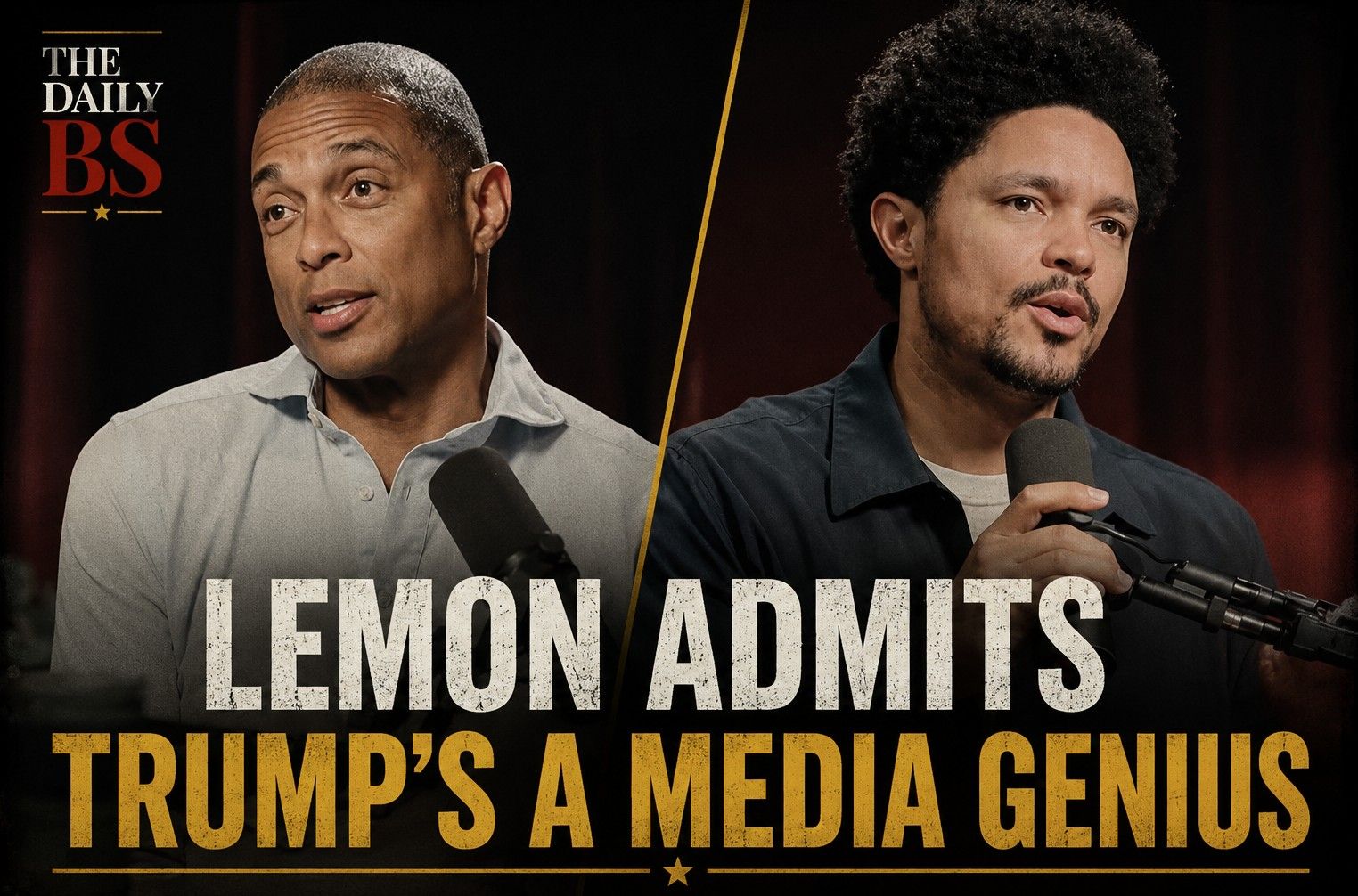
One of CNN’s best-known former anchors is making an admission that conservatives have argued for years.
Appearing on Trevor Noah’s What Now? podcast, Don Lemon said CNN executives recognized early on that Donald Trump was dominating the news cycle and benefiting from the network’s relentless coverage. According to Lemon, management understood what was happening—but the ratings were simply too good to ignore.
When Noah asked whether CNN realized Trump was “playing you guys like puppets,” Lemon didn’t hesitate.
“Oh, yeah.”
Lemon continued by suggesting that network leaders recognized the dynamic almost immediately.
“I think, honestly, they maybe knew somewhere in the beginning, but it was good for business.”
To reinforce his point, Lemon referenced a remark widely attributed to former CBS executive Les Moonves during the 2016 campaign.
“Trump is bad for the country, but he’s good for business.”
That quote has followed the television industry for years because it captured an uncomfortable reality: Donald Trump generated viewers, and viewers generated advertising revenue.
Noah added another reminder of just how valuable Trump became for cable television. He recalled former CNN president Jeff Zucker describing Trump as:
“A one-man ratings wrecking ball machine.”
Lemon largely agreed with that assessment, while also pushing back on the idea that CNN management dictated editorial positions. According to Lemon, Zucker never instructed anchors what opinions to express. Instead, his advice focused on interview strategy.
“Let him talk and fact check.”
Lemon said interviewers were encouraged to ask challenging questions while allowing Trump room to speak, even suggesting that opening with a compliment could encourage longer, more revealing answers.
One of the more interesting moments came when Lemon reflected on why he believed Trump would defeat Hillary Clinton in 2016. Rather than citing polling, campaign strategy or electoral math, Lemon pointed to something much simpler. Trump seemed to be everywhere. He described opening newspaper after newspaper and finding Trump on the front page, in the business section, in editorials and throughout the publication. Meanwhile, he wondered why Hillary Clinton appeared far less frequently. That observation led Lemon to conclude long before Election Day:
“This man is going to win… because he’s everywhere.”
Noah then offered his own theory about Trump’s media instincts. Rather than always appearing in studio, Trump frequently phoned into television programs, forcing entire panels to stop and listen while he remained off camera.
According to Noah, that wasn’t accidental.
“He liked how it made him seem like the Wizard of Oz.”
Noah argued that simply calling into programs projected authority because television hosts adjusted their entire broadcasts around Trump’s availability.
He continued:
“You don’t realize subconsciously, you are saying that this person is so important, they do not have to be here.”
Lemon admitted he had never viewed Trump’s strategy from that perspective before. Noah summarized his conclusion in simple terms.
“He knew the power… on a media level, he’s a genius.”
Trump’s relationship with television has been studied for years by journalists, political strategists and communications experts.
Long before entering politics, Trump understood something many candidates struggled to grasp, modern campaigns are fought not only through speeches and policy proposals, but through attention itself.
Every phone interview became an event. Every controversial remark generated another news cycle. Every debate over Trump’s latest comment often produced days of additional television coverage.








“Let him talk we will fact check” Why because we control the fact checkers.