


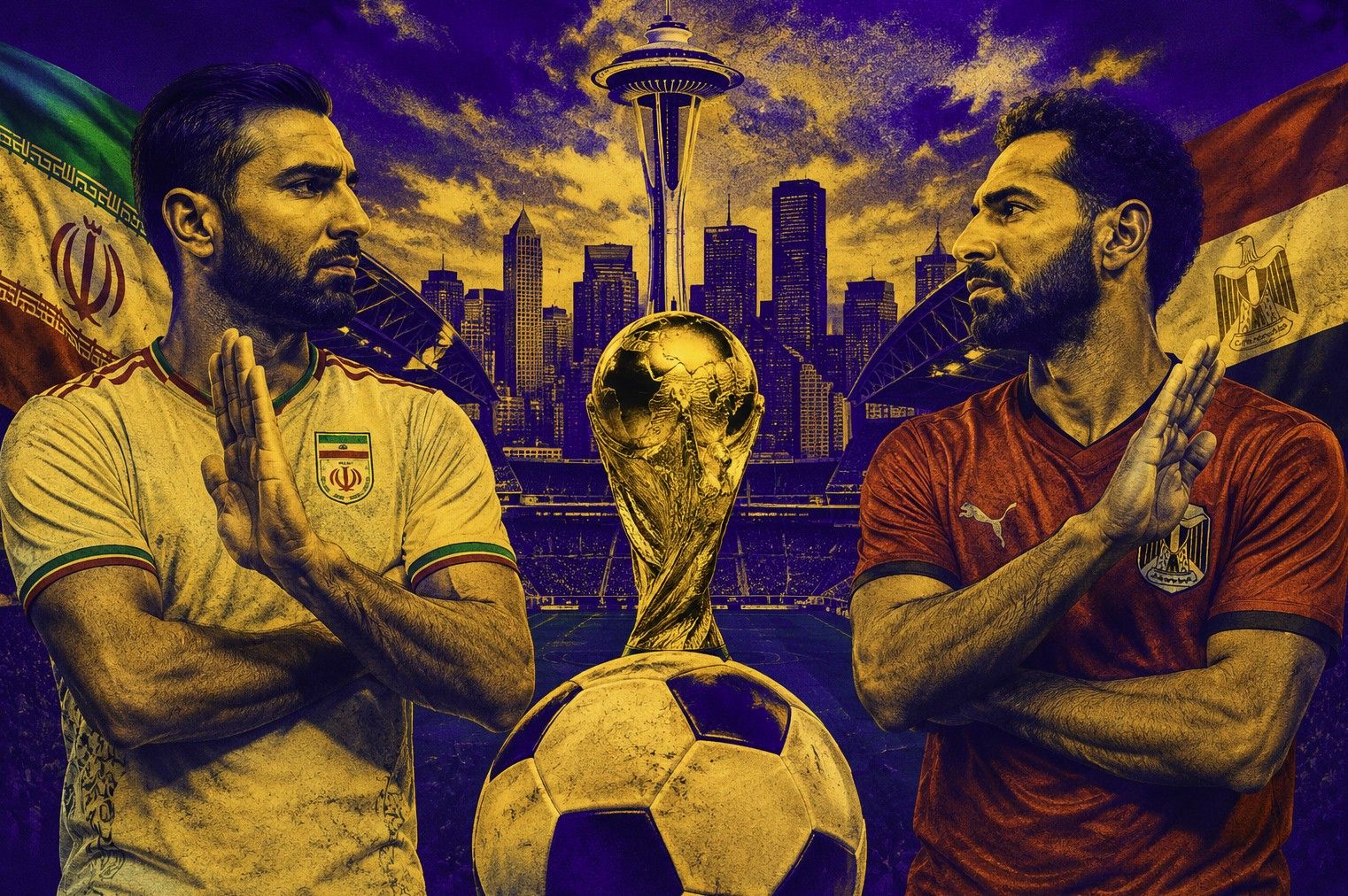
Sometimes reality writes a story that no committee could have scripted.
Months before anyone knew who would be playing, Seattle’s World Cup organizers decided one of the city’s tournament dates would coincide with Pride Month celebrations. On paper, it probably looked like an easy win—celebrate inclusion, showcase the city, and move on.
Then the tournament draw paired Iran and Egypt for that very date.
Now FIFA finds itself navigating one of the most obvious cultural collisions imaginable.
According to reporting by Mediaite, both national football federations have formally objected to any Pride-related activities being associated with their match, arguing such messaging conflicts with the religious and cultural values of their countries.
Iran’s football federation issued a statement saying:
“The Football Federation of the Islamic Republic of Iran takes this matter seriously and has clearly communicated its position to FIFA.”
The statement continued by emphasizing that Iran and Egypt share “deep cultural and religious commonalities,” adding that both federations oppose “ceremonies, or promotional activities associated with this movement” being part of the match environment.
Officials also argued:
“We believe FIFA should take into account the views and concerns of the participating teams when considering matters related to the match environment and stadium presentation.”
Egypt’s football federation voiced similar concerns, saying it would refuse to participate in activities supporting homosexuality because such events “directly contradict” the country’s religious, cultural and social values.
That creates a difficult balancing act for FIFA.
The organization has repeatedly promoted the World Cup as an event welcoming people “from all backgrounds.” Under tournament rules, spectators may bring rainbow flags into stadiums so long as they comply with the tournament’s code of conduct.
At the same time, FIFA has also attempted to distance the actual match from Seattle’s local Pride programming.
FIFA President Gianni Infantino recently clarified:
“There will be no ‘Pride Match’ at the FIFA World Cup. There will be a FIFA World Cup match in Seattle, and on the same day, events organised by external organizations will be taking place in the city. But that has nothing to do with the match itself.”
According to reports, Seattle’s planned Pride-related events are expected to remain outside the official stadium perimeter rather than being incorporated into FIFA’s match presentation. That distinction matters because both Iran and Egypt reportedly objected specifically to official ceremonies or promotional activities connected to the game itself.
The World Cup brings together nations with dramatically different legal systems, religious traditions and social values. Issues considered settled in one country can be deeply controversial—or even illegal—in another.
Iran, for example, criminalizes same-sex relationships, with penalties that can be severe under its legal system. Egypt also criminalizes same-sex conduct through various laws and prosecutions.










bj
hc