

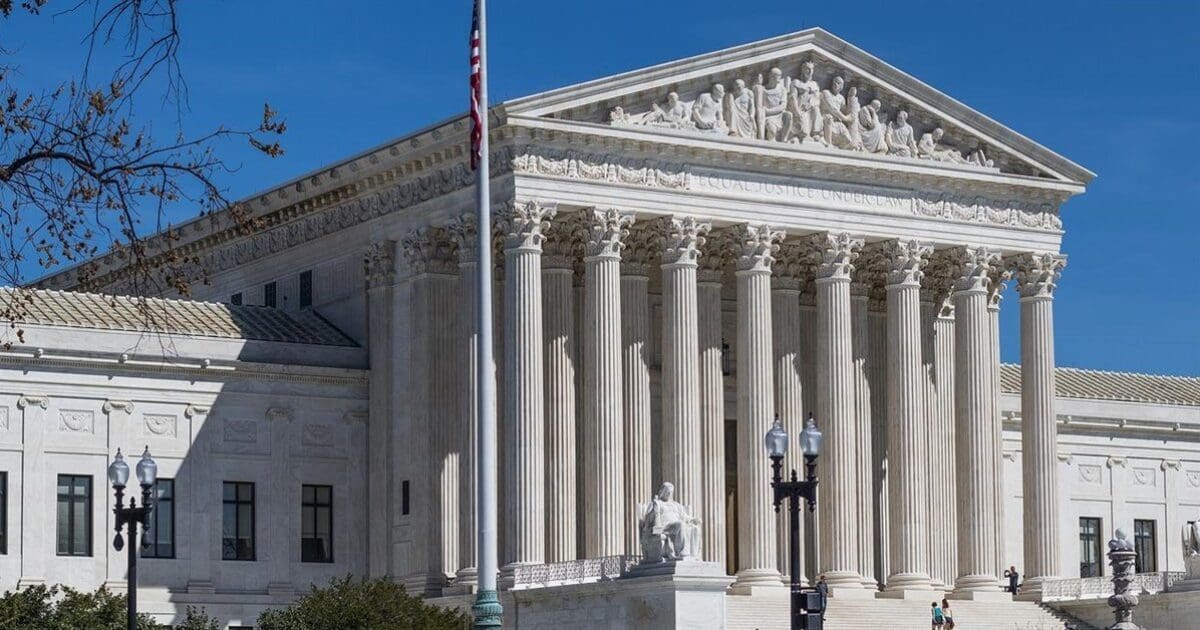
Every few years, America has the same argument: Who watches the watchers? For decades, one Supreme Court decision has been at the center of that question.
Now, Justice Clarence Thomas is once again saying the court should take another look at the landmark rule that makes it extremely difficult for public figures to win defamation lawsuits. And this time, he has company.
Justice Neil Gorsuch joined Thomas in arguing that the court should revisit the standard created by the 1964 case New York Times Co. v. Sullivan.
The case has long been considered one of the great protections for a free press. It has also become one of the great frustrations for critics who argue that powerful media organizations have been given too much legal protection when reporting on public figures.
The latest battle came after the Supreme Court declined to hear a challenge from Alan Dershowitz, the longtime Harvard law professor who sued CNN over coverage related to President Donald Trump’s first impeachment trial.
🚨 The Supreme Court declined to consider overruling NYT v. Sullivan, denying review in Alan Dershowitz’s defamation suit against CNN. Justice Thomas, joined by Justice Gorsuch, dissented, arguing the Court should reconsider the “actual malice” standard for public figures. pic.twitter.com/dNgQa4nJCW
— SCOTUS Wire (@scotus_wire) June 29, 2026
Dershowitz argued the network distorted his comments and damaged his reputation. Lower courts disagreed, finding that he failed to meet the high legal bar required under the current standard. That standard is known as “actual malice.”
No, it does not mean someone has to prove a reporter was literally angry, malicious, or sitting in a newsroom twirling a villain mustache while plotting destruction. In legal terms, it means proving that a statement was made knowing it was false or with reckless disregard for whether it was true.
Thomas believes that standard deserves another look.
In his dissent, he wrote:
“Instead, the founding generation believed that, if anything, public figures had stronger claims for damages when they were defamed.”
That is a direct challenge to one of the assumptions that has shaped American media law for more than half a century. Thomas has argued before that the court’s modern approach moved too far away from the understanding of the First Amendment held at the time it was adopted.
In 2019, he wrote:
“We did not begin meddling in this area until 1964, nearly 175 years after the First Amendment was ratified.”
He argued that states were historically capable of balancing free speech protections with the right to protect one’s reputation. The debate is especially heated because the media landscape of 1964 barely resembles the media landscape of today. Back then, Americans were dealing primarily with newspapers, television networks, and a handful of major broadcasters.
Today? Anyone with a phone can publish instantly to millions of people. The problem, depending on who you ask, is that the old legal rules remained.
Supporters of the Sullivan standard argue it protects investigative journalism and prevents wealthy or powerful figures from intimidating critics with endless lawsuits. Critics counter that the system can leave ordinary people and public figures with little recourse when false claims spread rapidly. And there’s the political reality, trust in media institutions is already at historic lows.
Every accusation of misinformation, every correction, every disputed headline adds another layer of public suspicion.
The Supreme Court did not overturn anything Monday. The existing standard remains.
But Thomas and Gorsuch have made it clear this issue is not going away.
The next time a controversial story erupts, and the question becomes whether someone crossed the line from reporting into defamation, expect this debate to come roaring back.









Free press should not be exempt from libel. I’ve witnessed uncalled for bias and confrontational abuse by the media.
If I said it and it would be actionable in court, why does the “press” get a pass? Wrong is wrong!