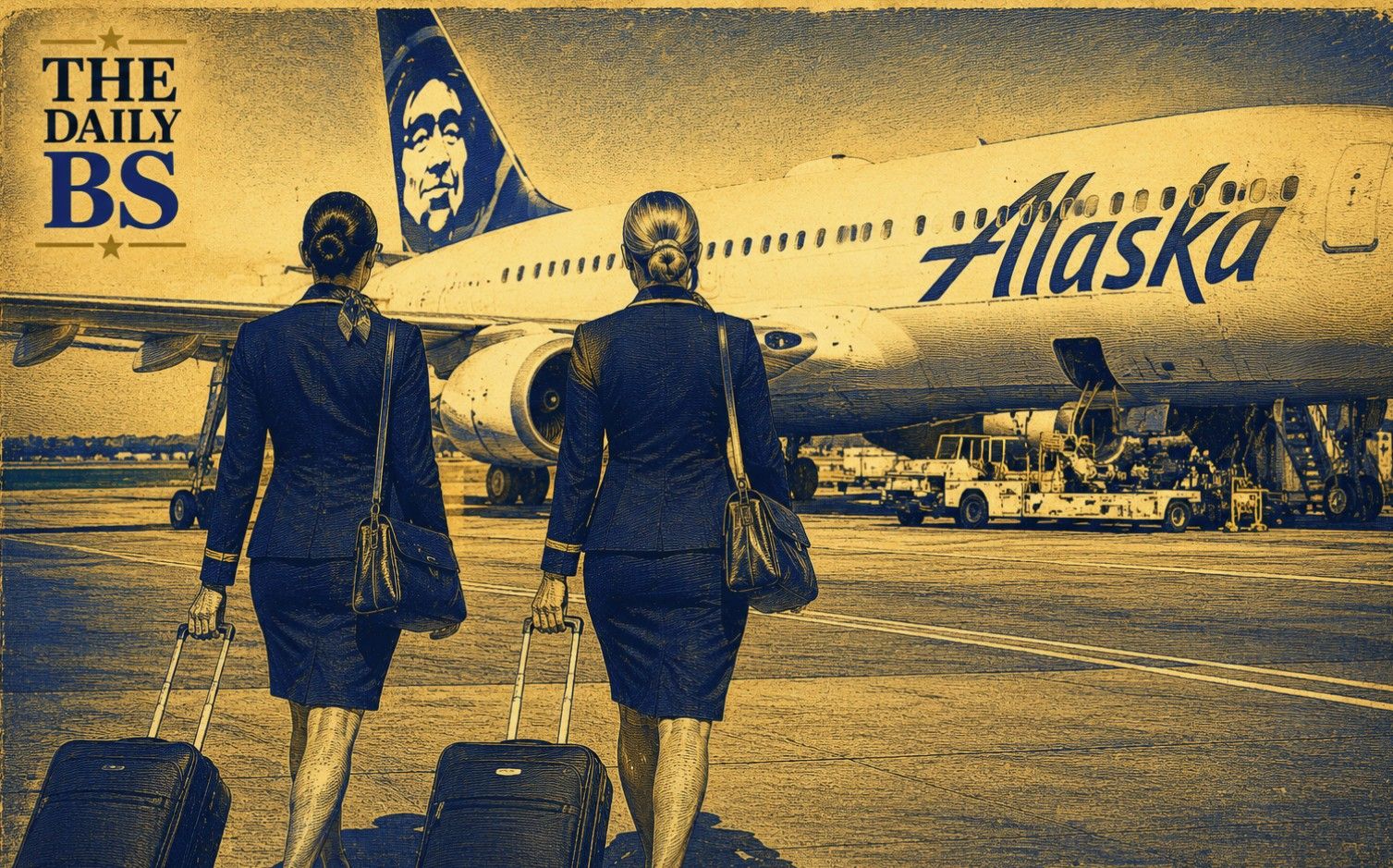
A federal appeals court has revived a lawsuit filed by two former Alaska Airlines flight attendants who claim they were terminated after expressing religious concerns about the Equality Act in an internal company forum.
In a decision that could have broader implications for workplace speech and religious accommodation disputes, the U.S. Court of Appeals for the Ninth Circuit ruled there is enough evidence for a jury to determine whether the women were subjected to unlawful religious discrimination.
Former flight attendants Lacey Smith and Marli Brown sued Alaska Airlines after being terminated following comments they made during an employee discussion about the airline’s support for the Equality Act, a proposal that sought to expand federal civil rights protections to include sexual orientation and gender identity.
The case dates back to 2021 when Alaska Airlines encouraged employees to discuss the legislation through an internal company forum.
During the discussion, Smith asked, “As a company, do you think it’s possible to regulate morality?”
Brown posted comments expressing concerns that the legislation could negatively affect women, girls, and people of faith based on her religious convictions.
The airline later investigated both employees and terminated them, describing their comments as “discriminatory,” “hateful” and “offensive.”
The Ninth Circuit’s ruling does not determine whether Alaska Airlines violated the law. Instead, the court concluded that sufficient evidence exists for a jury to examine whether religious discrimination played a role in the company’s actions.
Stephanie Taub of First Liberty Institute, which represents the women, welcomed the decision. “We are grateful the court recognized the clear evidence of religious discrimination against Marli and Lacey by both Alaska Airlines and the flight attendants’ union,” Taub said. “The Ninth Circuit’s decision today reinforces that federal civil rights laws protect people of faith from discrimination by their employer or their union.”
Taub added, “You cannot be fired because your employer does not like your religious beliefs.”
Smith said the ruling extends beyond her own case. “Even though the lawsuit is between Alaska and myself, the win in the Ninth Circuit is for a nation of people who have also been facing religious discrimination in the workplace,” she said.
Brown described feeling emotional after reading the decision. “When I read the decision from the Ninth Circuit, I was overwhelmed with gratefulness,” Brown said. “I’m hopeful that with this favorable ruling, no one else will have to go through anything like what I’ve been through.”
Alaska Airlines has maintained that its actions were based on workplace conduct concerns rather than religious beliefs. The company had not publicly commented on the latest ruling at the time of publication.
The case now returns to lower court proceedings, where a jury could ultimately decide whether the women were unlawfully discriminated against because of their faith.
Can employees respectfully disagree with an approved corporate position without risking their careers?
That’s ultimately what makes this lawsuit significant.
For years, corporate America has encouraged workers to bring their “whole selves” to work. The challenge comes when someone’s sincerely held religious beliefs conflict with a position embraced by management.
The answer cannot simply be that some viewpoints are welcome while others are not. If companies want diversity, that principle should include diversity of thought and belief as well.
People should not lose their livelihood merely because they asked a question or expressed a viewpoint rooted in their faith.
A jury will ultimately determine what happened in this case. But the fact that the lawsuit is moving forward sends a message that courts are taking these concerns seriously.