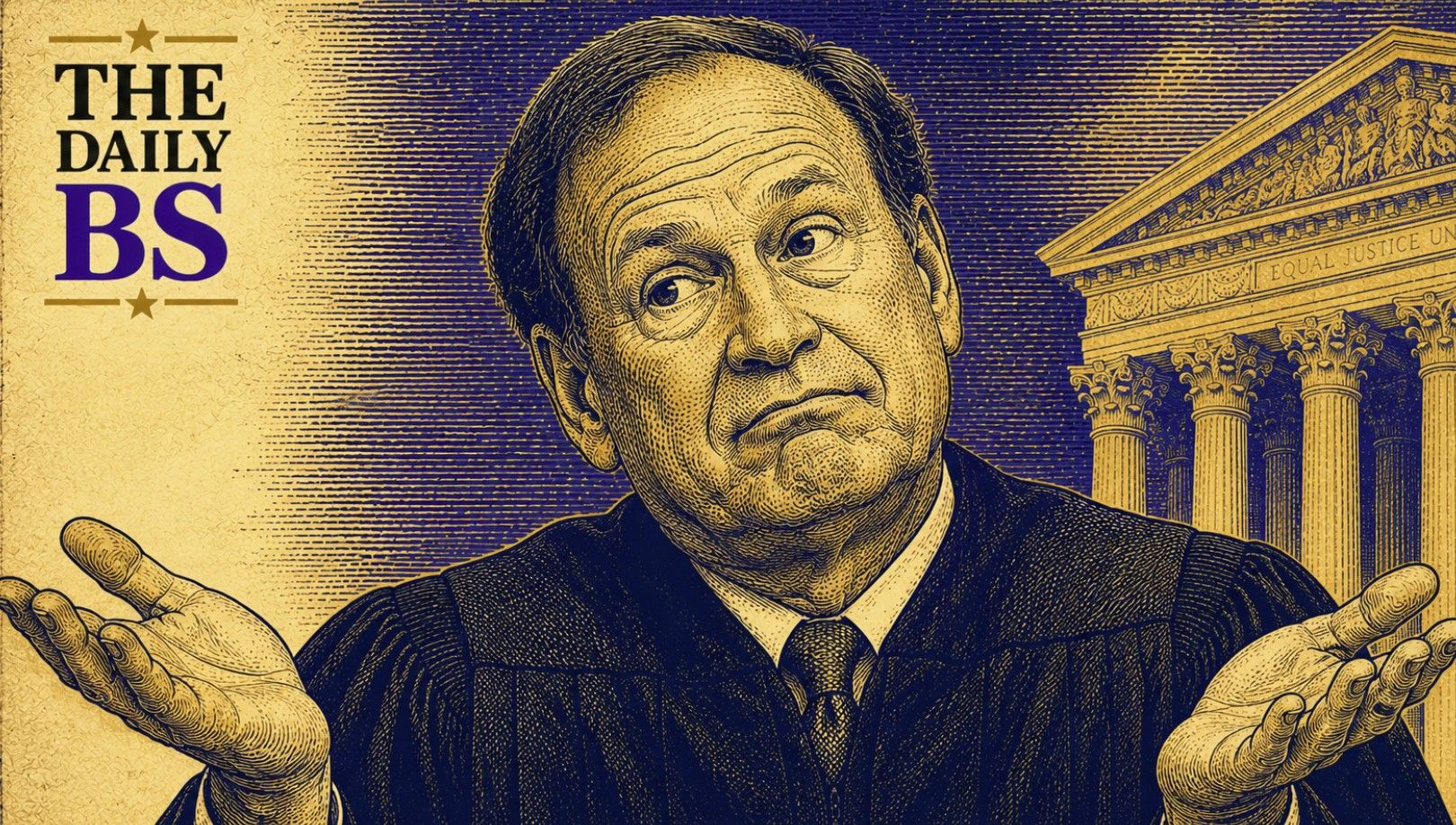
WASHINGTON — One of the most experienced names in Supreme Court journalism is publicly owning up to a major reporting mistake after NPR was forced to retract a story claiming Justice Samuel Alito was retiring from the nation’s highest court.
The unusual episode unfolded Tuesday when NPR published a report stating that Alito was stepping down from the Supreme Court. Within hours, the story was withdrawn after it became clear that no retirement announcement had actually been made.
NPR attached an editor’s note to the retracted report acknowledging the error. “Neither Alito nor the court’s public information office has announced his retirement, and we have retracted the story,” the network said.
Later in the day, longtime Supreme Court correspondent Nina Totenberg addressed the mistake on NPR’s “All Things Considered,” offering a remarkably candid explanation of how the false report made its way into publication.
Totenberg said she had personally written a letter to Alito apologizing for the incident.
“There are no words to adequately apologize for today’s error in reporting your retirement,” she said while reading the letter aloud. “It was entirely my fault.”
According to Totenberg, the confusion occurred after she left the courtroom following the release of Supreme Court opinions. Noticing unusual activity, she asked someone what was happening inside.
“I asked somebody what was going on inside, to which the answer was retirement announcements,” she explained.
The problem, she said, was that she misunderstood what she heard.
“I didn’t hear the ‘s’ on announcements, and assumed something no reporter should ever do, that you were retiring.”
Totenberg did not attempt to shift blame elsewhere. “It was the worst professional mistake of my more than 50 years in journalism,” she said. “I am so, so sorry.” The incident immediately became one of the most talked-about media mistakes in Washington because of both the subject matter and the journalist involved.
Alito, appointed to the Supreme Court by President George W. Bush in 2006, remains one of the most influential members of the Court’s conservative majority. Any retirement announcement from the 76-year-old justice would instantly become one of the biggest political stories of the year, potentially giving President Donald Trump another opportunity to shape the Court’s future.
Because of those stakes, retirement rumors surrounding Supreme Court justices are treated as extraordinarily sensitive reporting.
For NPR, the rapid correction likely prevented a bad situation from becoming worse. But the story has already sparked renewed discussion about verification standards, anonymous sourcing, and the race to publish major developments before competitors.
As of Tuesday evening, Alito remained firmly on the Supreme Court bench, and no retirement announcement had been made.
Totenberg admitted the mistake, explained exactly what happened, and took full responsibility.
No anonymous editor. No mysterious technical glitch. No corporate word salad about “process failures.” Just a veteran reporter saying, “I got it wrong.”
That’s the good part.
The bad part is that a story this explosive made it all the way to publication before somebody stopped and asked the most basic question imaginable: “Has Justice Alito actually announced he’s retiring?”
Apparently not.
Imagine if this had happened in reverse. Imagine a conservative outlet had falsely reported the retirement of a liberal justice. The media reaction would have looked like a five-alarm fire combined with a congressional hearing and three documentaries on democracy.
The reality is that every newsroom, regardless of ideology, is vulnerable to the same problem: speed. Being first has become so important that sometimes being right gets treated like a secondary objective.
And somewhere, Justice Alito probably had the most surprising retirement party that never happened.