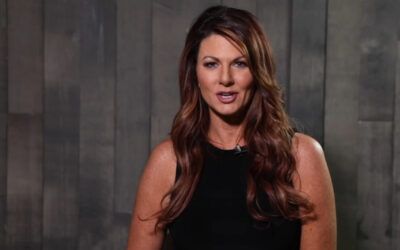
Former Georgia congresswoman Marjorie Taylor Greene says she is engaged in discussions about creating a new political party aimed at voters dissatisfied with both Republicans and Democrats.
Greene made the remarks during an appearance on Piers Morgan’s online program, where she described growing frustration among voters who feel disconnected from the nation’s two major political parties.
“There is a group of us that have literally fought the system,” Greene said. “I think there’s a group of us that if we decide to align, we could launch a true America-focused party that doesn’t fall into the traps of Democrats and Republicans.”
Greene acknowledged that launching a viable third party would face significant logistical and political challenges, but said conversations are taking place about what such an effort might look like.
“I am in talks with people, and there are serious conversations happening, looking at what are the mechanics of that and the reality of it,” she said.
The former lawmaker argued that any successful third-party effort would require broad grassroots support rather than relying solely on prominent political figures.
“It’s going to take the American people to get involved,” Greene said. “It’s not going to be a couple of players and a few others that can roll up our sleeves and get this done. It’s going to take a serious effort from everyone.”
During the interview, Greene also discussed media personality Tucker Carlson, suggesting he could attract support from voters across the political spectrum if he chose to become more directly involved in electoral politics.
The comments come amid a highly publicized split between Greene and President Donald Trump, ending a political alliance that had lasted for years.
Greene sharply criticized Trump’s handling of foreign policy, particularly military action involving Iran, accusing the president of prioritizing foreign interests over American interests.
“A traitor is someone who is working on behalf of a foreign country,” Greene said during a separate appearance. “I would argue that’s what Donald Trump has been doing with war in Iran.”
Trump and Greene have exchanged public criticism for months, with tensions reportedly escalating over disagreements involving foreign policy, government spending, and other issues.
The dispute ultimately led Greene to leave Congress and distance herself from the Republican Party, transforming one of Trump’s most visible former allies into one of his most outspoken critics.
Political analysts note that third-party efforts have historically struggled to gain traction in the United States because of ballot-access laws, fundraising challenges, and the dominance of the two-party system. However, dissatisfaction with both major parties has periodically fueled interest in alternative political movements.
Whether Greene’s discussions evolve into a formal political organization remains unclear.
For now, the former congresswoman says conversations are continuing, but any potential movement remains in the exploratory stage.
Bo’s Take
American politics has a long history of third-party dreams colliding with political reality.
Every few years, somebody looks at the state of Washington, throws their hands in the air, and declares that voters are ready for a brand-new political movement. The frustration is real. The obstacles are even more real.
What’s noteworthy here isn’t simply that Marjorie Taylor Greene is talking about a third party. It’s that she’s doing so after one of the most dramatic political divorces in recent memory.
Just a few years ago, Greene was one of Trump’s most loyal allies. Today, she’s publicly accusing him of betraying core principles and discussing alternatives to the party he leads.
That alone is a remarkable political turn.
The challenge facing any third-party effort is straightforward: millions of Americans may tell pollsters they dislike both parties, but translating that frustration into a functioning national movement is an entirely different matter.
Ballot access, fundraising, organization, and candidate recruitment have ended many political revolutions before they ever left the drawing board.
Still, moments of political realignment often begin with conversations that initially sound impossible.
Whether this becomes a serious movement or simply another chapter in the ongoing Greene-Trump feud remains to be seen.
For now, one thing is certain: the political drama isn’t ending anytime soon.