Former Florida Gov. Jeb Bush delivered a message this week that would have sounded almost impossible during the bruising 2016 Republican primary.
Donald Trump was right.
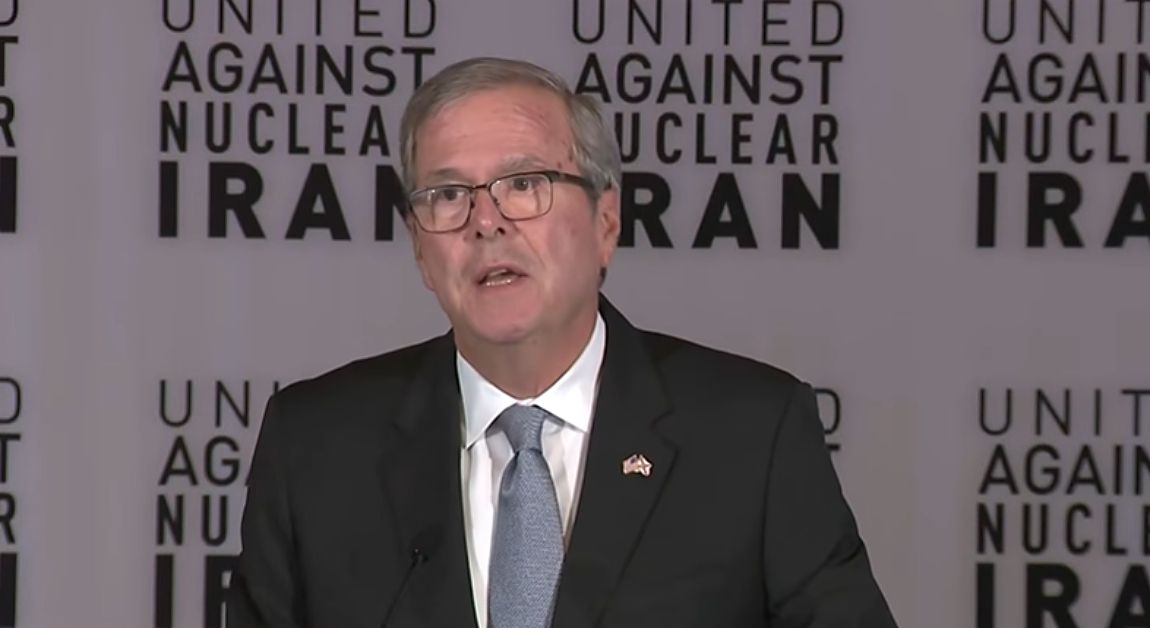
Speaking at a United Against Nuclear Iran event in Coral Gables, Bush praised the Trump administration’s campaign against the Iranian regime, arguing that Tehran’s military capabilities have been severely degraded following months of escalating pressure and military action.
“We have decimated Iran’s capability to make mischief in the region. There’s no doubt about it,” Bush said. “I applaud the Trump administration for their work.”
That’s not a sentence many expected to hear from Trump’s former rival.
Great being with Congressman Gimenez and Ambassador Wallace highlighting the Iran/Cuba connection and threat to the US. https://t.co/w3rtyo6Qmi
— Jeb Bush (@JebBush) July 8, 2026
But while Bush credited Trump for hammering the world’s leading state sponsor of terrorism, he quickly pivoted to what he described as a growing threat much closer to home: reports that hundreds of Iranian-made Shahed drones may be sitting in Cuba.
Standing beside a recovered Shahed-136 drone, Bush warned, “I also want to point out that the press reports are that there are 300 of these in Cuba.”
The Shahed drone has become one of Iran’s most notorious exports. Cheap to manufacture, difficult to stop in large numbers, and capable of carrying explosive payloads, the drones have been used by Iranian proxies throughout the Middle East and by Russia in Ukraine. Military analysts have repeatedly described them as one of the defining weapons of modern conflict.
Bush stopped short of predicting imminent danger.
“We have very good defense capabilities, so this is not a press conference to scare the bejesus out of people,” he said. “The United States does have capabilities of defending the homeland, for sure.” Still, he added, the drones represent “a threat.”
Florida Congressman Carlos Gimenez echoed those concerns and argued Americans should pay close attention to what is unfolding in modern warfare. “This is the face of warfare,” Gimenez said while pointing to the drone. “This is how war is going to be carried out in the future, and it’s being carried out right now.” Gimenez noted the massive role drones have played in Ukraine, where inexpensive unmanned aircraft have reshaped battlefields and allowed smaller forces to inflict significant damage on larger military formations.
Former U.S. Ambassador to the United Nations Mark Wallace, now CEO of United Against Nuclear Iran, was even more direct. “This drone has struck our allies across the region, killed American troops, our allies across the region … and has been raining terror across the Middle East at our bases and the like,” Wallace said.
Calling the Shahed platform “the ubiquitous terror weapon of mass destruction in modern warfare,” Wallace warned that the technology’s proliferation should concern policymakers far beyond the Middle East.
The Cuba connection is drawing particular scrutiny because of Havana’s long-standing relationship with both Tehran and Moscow. Reports regarding Iranian military cooperation with Cuba have circulated for years, but renewed attention comes as the Trump administration continues its aggressive posture toward Iran following the recent military campaign that significantly damaged the regime’s nuclear infrastructure and military assets.
Trump’s pressure campaign against Iran achieved results that years of diplomatic engagement never produced.