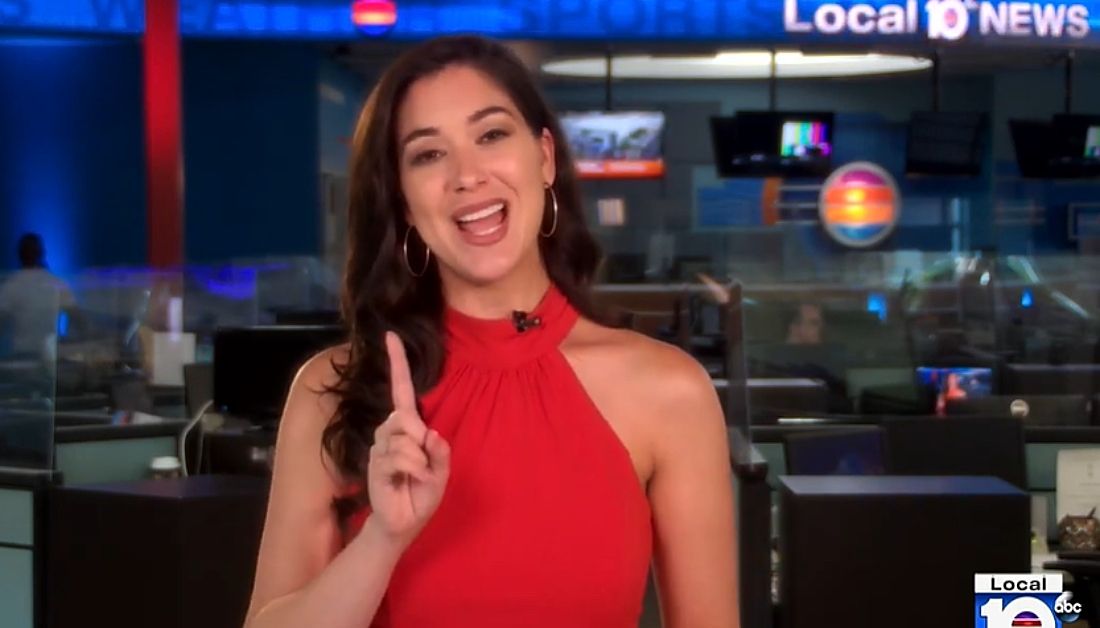
Florida TV boss blasts ‘foolish nonsense’ as newsroom social media culture comes under fire
A South Florida television news executive is making waves after an internal memo criticizing what he called “foolish nonsense” on journalists’ social media accounts resurfaced amid online chatter over vacation photos posted by one of the station’s anchors.
According to reports from media industry outlets and subsequent coverage by the New York Post, WPLG Vice President of News Bill Pohovey reminded newsroom employees that the public increasingly views journalists as unserious and that social media behavior is contributing to the problem.
“I have emailed about this numerous times in the past, but we seem to be going in the wrong direction again,” Pohovey reportedly wrote in the memo.
The controversy gained attention after vacation photos posted by longtime WPLG anchor and reporter Jenise Fernandez during a trip to Fiji circulated online. Fernandez, a veteran journalist at the station and former Miss Miami, shared images from the tropical getaway on her personal Instagram account.
Miami news anchor’s social media bikini photos prompt crackdown: ‘Foolish nonsense’ https://t.co/ZOtJuBR7Np pic.twitter.com/EyPwn6e3WV
— New York Post (@nypost) July 8, 2026
Some reports initially suggested Pohovey’s memo was connected to the photos. Pohovey pushed back on that narrative, telling the New York Post that the memo “was not a response to one individual post” and was instead a reminder of existing newsroom standards.
“This had nothing to do with a current employee,” Pohovey said. “The memo was sent out many months ago and is not new.”
He went further, defending Fernandez and rejecting claims that her posts crossed any professional line.
“The memo didn’t tell employees they couldn’t post vacation photos or other daily life activities on their personal social pages,” Pohovey told the Post. “We do live in Florida and people wear bikinis on the beach. These photos were tasteful and completely fine.”
The larger issue, according to the memo, was not vacation photos but the growing trend of journalists behaving more like social media influencers than reporters.
“Too many of our social media accounts are being used for foolish nonsense,” Pohovey reportedly wrote.
“We don’t want dance videos with our staff. We don’t want fashion shows, outfits of the day, or other silly content that detracts from you as journalists.”
The veteran news executive also reportedly warned staff against filming content inside the newsroom for social media engagement, writing that stations should “absolutely NEVER create such content inside the station, in our newsroom or studios, using our news set as the background.”
That tension has become particularly visible over the past several years as journalists across the country have embraced TikTok-style videos, behind-the-scenes content, lifestyle posts, political commentary, and personality-driven social media strategies that would have been unthinkable in most newsrooms a generation ago.
Pohovey’s memo acknowledged the growing skepticism facing the industry.
“People are losing trust in the news, and the nickname ‘fake news’ is beginning to stick,” he reportedly wrote. “We’re seen as not serious and this unprofessional behavior only adds fuel to that fire.”
“The likes and follows are not worth eroding your credibility and the credibility of this news organization.”
You know what? Bill Pohovey may have stumbled onto something the rest of the media industry desperately needs to hear.
This story was never really about a bikini.
Florida has beaches. People wear swimsuits. Nobody outside of the faculty lounge at an Ivy League university thinks that’s a scandal.
The real story is that a veteran news executive looked around modern journalism and noticed that half the industry seems to be auditioning for reality television. Somewhere along the line, reporters stopped competing to break stories and started competing for followers, likes, dance trends, and personal branding opportunities.
When local news personalities are posting “outfit of the day” videos from the newsroom set while trust in the media is scraping bottom, perhaps somebody should ask whether priorities have become a little inverted.
The public doesn’t distrust the press because an anchor went on vacation. The public distrusts the press because too many news organizations spent years acting like political activists, celebrity influencers, and social engineers instead of journalists.
Americans can handle a reporter enjoying Fiji. What they can’t handle is being lectured nightly by people who appear more interested in cultivating an online persona than pursuing the truth.
The irony is rich. A news executive trying to preserve journalism’s credibility becomes the story, while much of the press remains baffled about why trust keeps collapsing.
Maybe the answer is staring them right in the mirror—right next to the ring light.