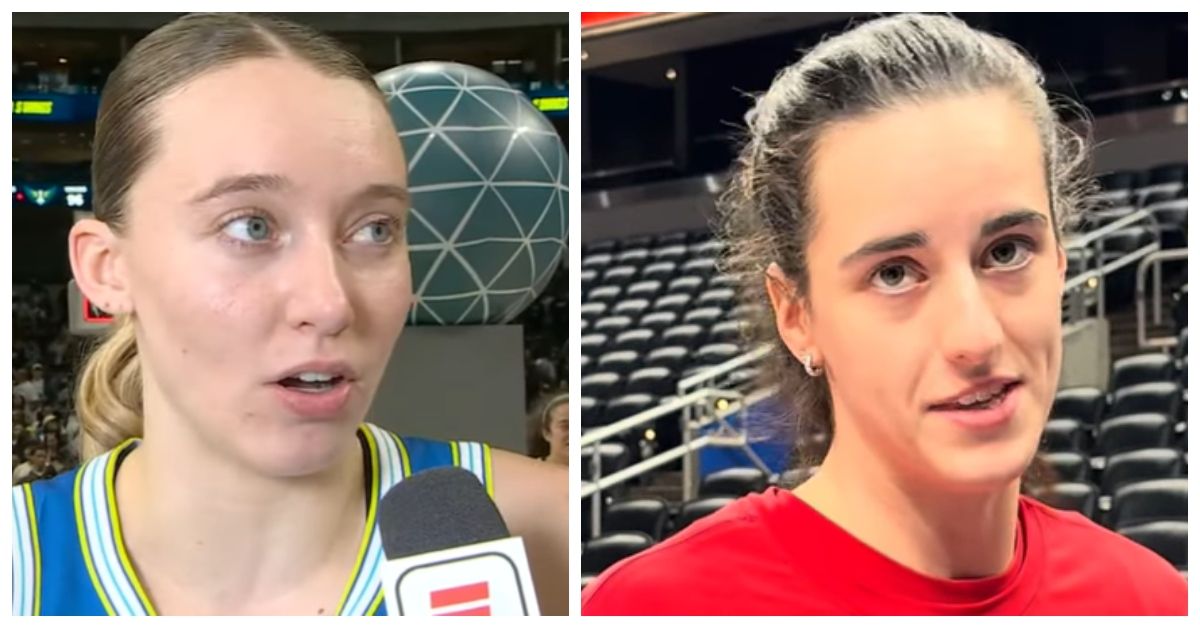
Caitlin Clark and Paige Bueckers have a lot in common.
Both are Midwestern basketball prodigies. Both were No. 1 overall draft picks. Both are white stars who arrived at the top of women’s basketball with enormous expectations. Both have proven they belong among the elite players in the game.
Yet somehow they have become symbols of entirely different things.
Clark has evolved into the most polarizing figure in women’s sports, generating television ratings, ticket sales and social media engagement on a scale the WNBA had never previously experienced. Bueckers, meanwhile, has become one of the league’s most celebrated young stars without attracting nearly the same level of controversy.
The contrast says as much about modern American culture as it does about basketball.
Clark’s rise began with a simple formula: spectacular play and mass appeal. Her long-range shooting, competitive swagger and record-breaking performances transformed Iowa women’s basketball into a national event. By the time she entered the WNBA, television networks were rearranging schedules, arenas were moving games to larger venues and millions of casual sports fans were tuning in specifically to watch her play.
The economic impact was impossible to ignore.
League attendance surged. Merchandise sales exploded. Television audiences shattered previous records. Team owners openly acknowledged Clark’s influence on league revenue. Even critics generally agreed on one point: no player had ever brought more eyeballs to women’s professional basketball.
But with that popularity came something else.
Clark increasingly found herself at the center of debates she never appeared eager to join. Discussions about race, media coverage, privilege and league politics often swirled around her despite her repeated efforts to redirect attention toward basketball.
During her college years, Clark largely avoided political activism and public social commentary. Her focus remained on the court, her teammates and winning games. Supporters viewed that approach as refreshing. Critics sometimes interpreted it differently.
Caitlin clears Paige everyday. https://t.co/M5yS4Qayg4 pic.twitter.com/Zs4HzfIODC
— Jenny (@jortizie) July 10, 2026
Bueckers took a different path.
The former UConn star became outspoken on social issues while still in college. Following the death of George Floyd, she participated in demonstrations in Minnesota and later used her 2021 ESPY acceptance speech to draw attention to Black women in the sport.
“As a White woman who leads a Black-led sport and celebrated here, I want to show a light on Black women,” Bueckers said during that speech. “They don’t get the media coverage that they deserve.”
The remarks earned praise from many figures throughout women’s basketball and helped establish Bueckers as someone aligned with the prevailing cultural views that dominate much of the sport’s leadership.
Those differing approaches may help explain why the two stars have experienced such different receptions.
Bueckers has largely been embraced by the league establishment, players, media figures and activists who shape many of the conversations around the WNBA. Clark, despite generating unprecedented business success for the league, has often been viewed through a more complicated lens.
That divide became especially visible during Clark’s rookie season.
Hard fouls, heated rivalries and repeated controversies surrounding officiating fueled an ongoing debate among fans. Some argued Clark was receiving standard treatment for a highly publicized rookie. Others believed resentment toward her popularity and mainstream appeal was influencing how she was perceived and discussed.
Whatever side one takes, the numbers tell a remarkable story.
Clark remains the league’s biggest television draw. Her games consistently rank among the most watched in league history. Road attendance spikes wherever she plays. Sponsors continue pouring money into women’s basketball because of audiences she helped create.
At the same time, Bueckers has quickly emerged as one of the league’s brightest young talents while avoiding many of the cultural battles that seem to follow Clark everywhere she goes.
Two elite players. Two successful careers. Two very different public identities.